


Introduction
As awareness of the importance of addressing the climate crisis has grown [1], climate change education has come to be regarded as a key lever for promoting behavioral change among citizens. Although research on climate change education is rapidly increasing [2], major international climate assessment reports such as those of the Intergovernmental Panel on Climate Change (IPCC) still do not fully reflect the importance of education [2]. Climate change is already exerting serious impacts on ecosystems, local communities, and economic activities through rising temperatures, prolonged drought, and more frequent extreme weather events, yet there remains a clear gap between the public’s scientific understanding and the behavioral changes needed for adaptation [3].
Correcting misconceptions and misunderstandings about climate change plays an important role in reducing people’s tendency to remain passive observers of the issue [4]. For example, Cordero et al. [5] reported, in a survey of graduates five years after they had completed a climate change course, that having received such education had positively influenced their environmentally friendly decisions, such as automobile purchases and dietary choices. The CO2 emissions of those who participated in the course were estimated to have decreased by an average of 2.86 tons per person per year [5]. However, many teachers who attempt to implement climate change education face practical difficulties: they fear backlash from parents or local communities, and they often feel that their own content knowledge and pedagogical competence related to climate change are insufficient [1].
Because climate change is inherently so broad and complex that it is difficult to fully comprehend, the K–12 Science Education Framework [6,7] recommends using models to understand and predict system behavior through the crosscutting concept of systems and system modeling [8]. This approach requires systems thinking, which enables learners to integrate and make sense of the interactions among diverse components within the Earth system to which humans belong [9]. In particular, it is essential to understand the connections between natural systems—such as the carbon and water cycles—and social systems such as politics and economics [10]. It is also important for learners to recognize that sustaining human societies requires identifying pathways for sustainable development that balance natural environmental constraints with socioeconomic growth [11].
In recent climate change education research, simulations have been actively introduced to support learners’ understanding of the relationships among complex variables [10,12–15]. Educational simulations are used in a wide range of fields, from simulation games for children, to student modeling–based curricula, science learning using laboratory simulations, and flight simulators for training commercial airline pilots [16]. There are various interpretations of the scope and meaning of simulations [17]. In this study, following Alessi’s [16] definition, simulations are defined as programs that contain a model that learners can manipulate and are expected to understand as part of the learning goal. From this perspective, simulations for climate change education are developed to help learners understand climate models through their own manipulation. More specifically, such simulations enable learners to experiment with interactions and changes among variables in the climate system and to visualize them [8], and they help learners to predict future climate conditions [18].
Given the complex nature of climate phenomena, previous studies have argued for the need to introduce simulations as a way to promote systems thinking in learners [14,15,19–22]. Fisher & Systems Thinking Association [20] contend that, to deal with complex systems such as climate change and the spread of infectious diseases, learners need to become systems thinkers, and they propose building simulation models that allow learners to construct and test their mental models. Studies advocating systems thinking through the manipulation of simulations argue that when learners themselves control the process of adjusting simulation variables and drawing conclusions, they are able to construct knowledge autonomously [8], and that the repetitive nature of simulations and their provision of analogies and alternative representations can facilitate the learning of difficult concepts related to system dynamics, thereby helping to correct climate-related misconceptions [21].
Arguments for the introduction of simulations to climate change education have also been made from a methodological perspective. In the literature emphasizing the need for experiential learning in climate change education [13,14,23–25], it has been suggested that when simulations are incorporated into climate change education, learners can deeply understand problems, develop problem-solving abilities, and contextualize and construct scientific conceptual knowledge as they manipulate variables and explore multiple failure and success scenarios. Moreover, discovery learning [26] becomes possible as learners generate questions and then repeatedly test their hypotheses using simulations, naturally uncovering cause–effect relationships; in this process, they can also come to recognize that hypothesis generation and testing are core aspects of scientific inquiry [25]. VR-based simulations have been proposed as tools to support more vivid, immersive forms of experiential learning [27].
In this way, introducing simulations into climate change education is expected to help learners understand underlying principles, explore prediction and response scenarios, and, at the same time, strengthen scientific inquiry in the classroom. Exploring and sharing effective strategies and outcomes of simulation-based climate change education can provide concrete support for educators who struggle with the practical implementation of climate change education. Existing literature reviews on serious games for climate change education [3], effective strategies [1], and technologies [18] have highlighted simulations as powerful tools and strategies, but there has been no review that focuses specifically and exclusively on simulations. Therefore, considering the importance of simulations in climate science and climate change education [18], this study conducts a systematic literature review to comprehensively analyze the types, characteristics, and effects of simulations used in climate change education. This study aims to derive implications that can inform the design of future simulations and the implementation of instruction. The specific research questions are as follows:
Methods
A systematic literature review synthesizes existing evidence through a comprehensive examination of prior studies while also identifying directions for future research. Following PRISMA guidelines, relevant literature was systematically collected and selected for this study (Fig. 1). First, a search was conducted in the academic literature databases Web of Science and Scopus for publications with “climate change” (AND) “simulation” (AND) “education” in the title, keywords, or abstract (as of February 1, 2025). The search was limited to journal articles, written in English, and published as final print versions. As a result, 150 records were retrieved from Web of Science, 153 from Scopus, and 48 from ERIC.
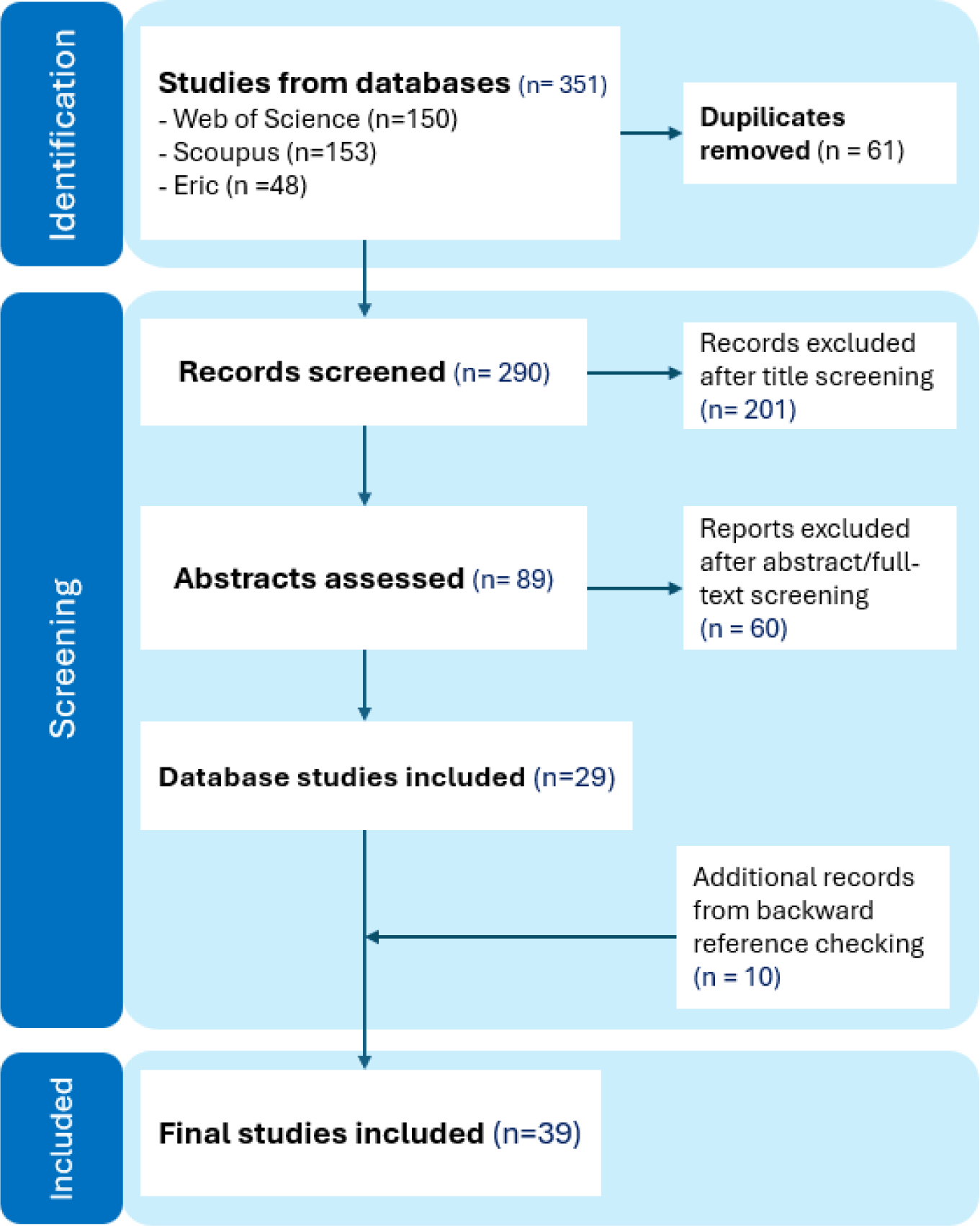
From the total of 351 records, 61 duplicates across the databases were removed, leaving 290 unique records. Titles were screened first, and 201 articles unrelated to climate change education were excluded. Abstracts of the remaining 89 articles were then reviewed using the inclusion criteria presented in Table 1, yielding 29 eligible articles. A full-text review of these articles was subsequently conducted to determine final eligibility. In addition, backward reference checks identified 10 additional articles aligned with the focus of this study. In total, 39 articles were included for final analysis(Supplementary Table S1).
After the eligible studies were selected, the unit of analysis for classification was defined as the simulation case reported in each article. For each simulation case, the following information was extracted: publication year, target learners, simulation name or platform, climate-related topic, learner input variables, forms of output or feedback, degree of model transparency, main learning activities, and reported educational outcomes. Educational outcomes were subsequently grouped into cognitive, affective, and behavioral domains.
The classification framework was developed through a hybrid deductive–inductive process. Alessi [28] provided an early conceptual basis for characterizing instructional simulations, while Alessi [16] further considered how educational simulations differ according to how learners engage with models, including distinctions related to model visibility, learning purposes, and discovery-versus expository-oriented use. Maier & Größler [17] provided a more systematic taxonomy of computer simulations for learning, organizing simulation characteristics around dimensions such as the underlying model, human–computer interface, and functionality. These prior frameworks were used as theoretical sensitizing frameworks rather than as ready-made classification systems.
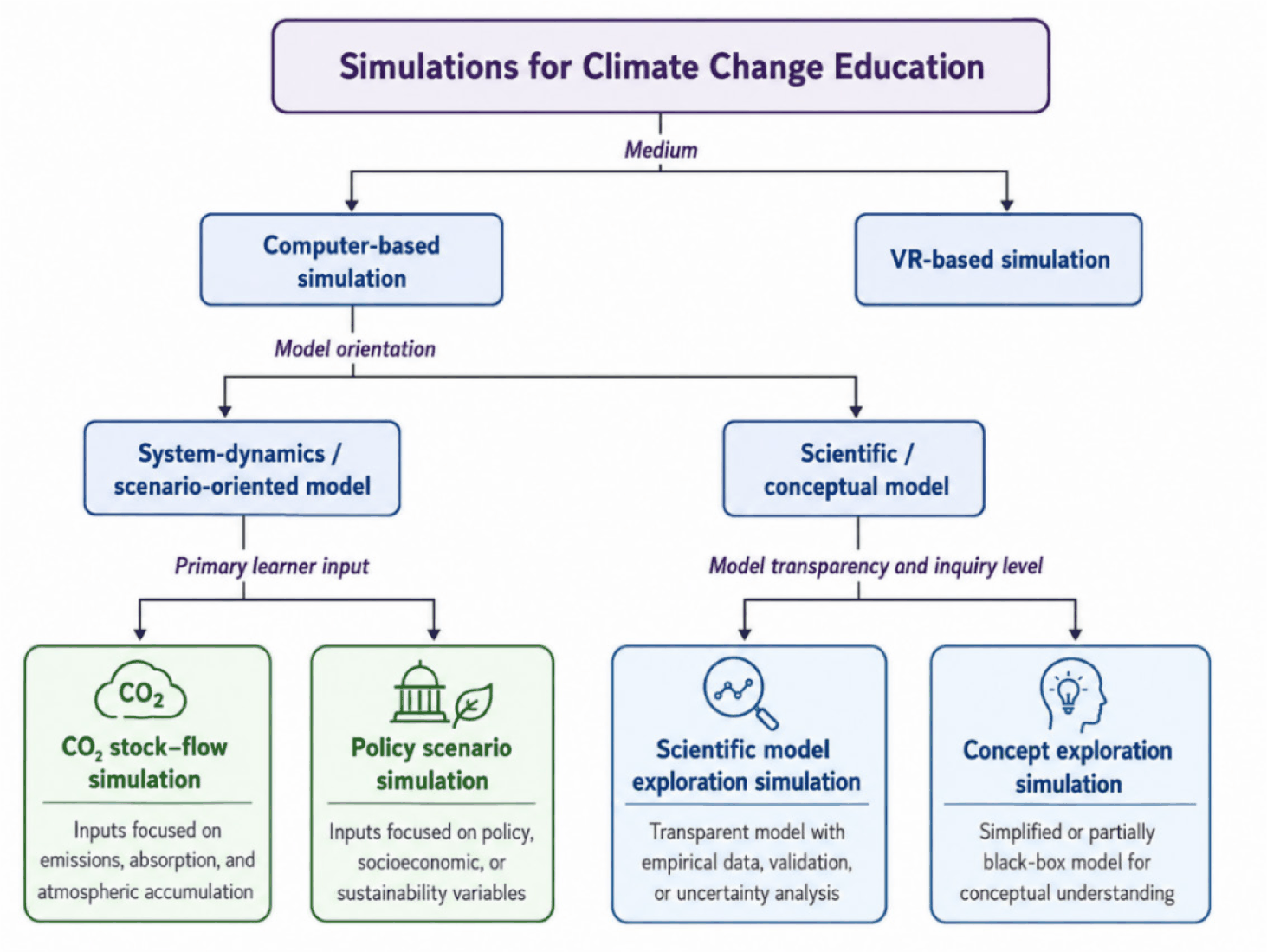
The first criterion, ‘medium,’ distinguished computer-based from VR-based simulations. This criterion was introduced inductively because the reviewed studies included immersive VR environments that differed from conventional computer-based simulations in their presentation and interaction.
For the remaining computer-based simulations, model orientation was used as the second criterion, drawing on Maier & Größler’s [17] emphasis on the characteristics of the ‘underlying model.’ Examination of the included studies revealed two recurring orientations. One group primarily represented system dynamics, accumulation processes, or the consequences of socioeconomic and policy decisions. The other primarily represented scientific processes or conceptual relationships within climate systems. These patterns led to two intermediate branches: ‘system-dynamics/scenario-oriented models’ and ‘scientific/conceptual models.’
Within the system-dynamics/scenario-oriented branch, ‘primary learner input’ [17] was used as the third criterion. Simulations were classified as CO2 stock–flow simulations when learners manipulated CO2 emissions, absorption, or other stock–flow variables, and as policy scenario simulations when learners manipulated social, economic, energy, land-use, or policy variables and examined their hypotheses.
Within the scientific/conceptual branch, the distinction was based on ‘model transparency’ and ‘inquiry level.’ While model transparency was theoretically informed by Maier & Größler [17], inquiry level was refined inductively from recurring differences in the learning activities identified across the reviewed studies. Simulations were classified as scientific model exploration simulations when learners worked with relatively transparent scientific models or empirical datasets through activities such as model comparison, calibration, validation, uncertainty analysis, or data-based reasoning. In contrast, a simulation was classified as a concept exploration simulation when a simplified or partially black-box model was primarily used to support understanding of core conceptual relationships through variable manipulation and visual feedback. The sequential classification process produced the five simulation types shown in Fig. 2.
The author coded all cases using this decision-tree framework. Because this was a single-author review, no second coder or formal inter-rater reliability coefficient was used. Instead, the framework and preliminary results were discussed at academic conferences and research seminars. Feedback from researchers was used to refine the criteria, clarify category boundaries, and reconsider ambiguous cases. Final coding decisions were made by the author after this iterative peer-feedback process.
Results
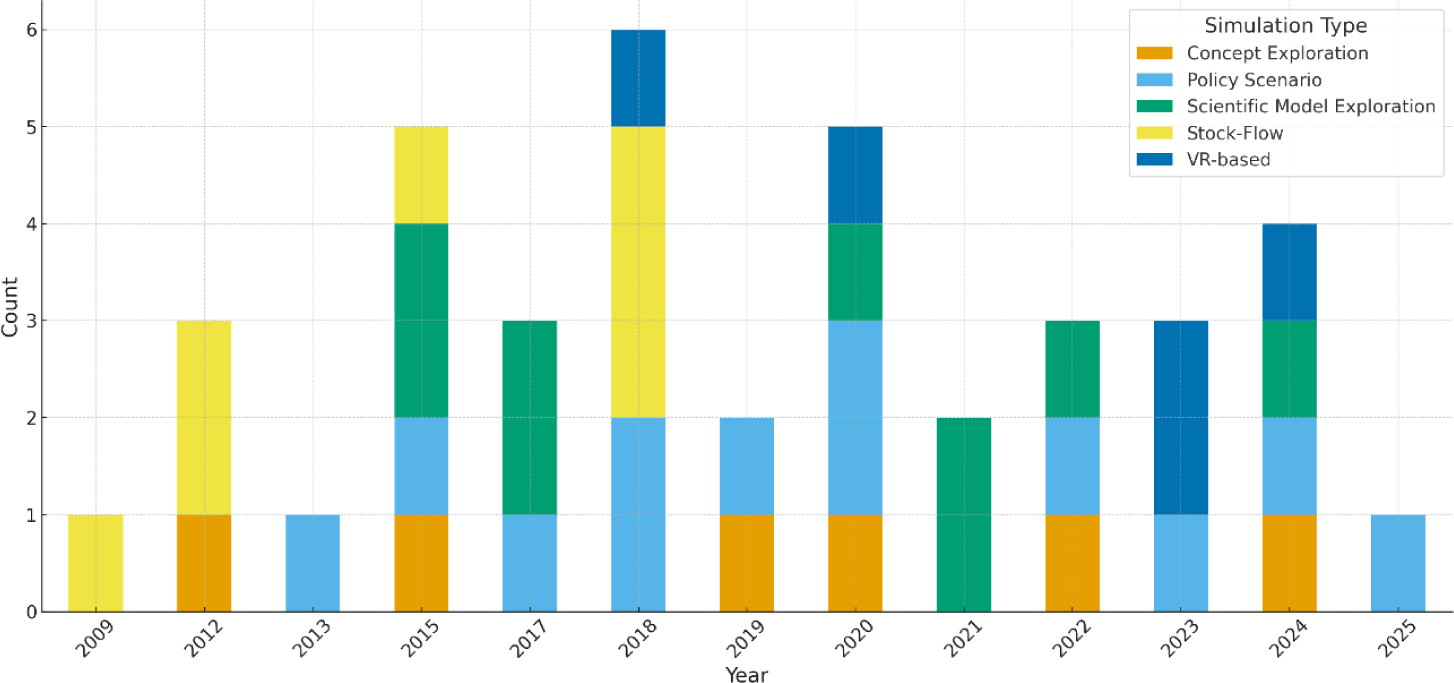
An analysis of the number of publications by year revealed that, although no restrictions were placed on publication year during the database search, academic studies utilizing simulations for climate change education only began to appear in 2009, with research activity becoming more established from 2012 onward (Fig. 3). While no clear pattern of consistent increase or decrease was observed, 2015, 2018, and 2020 marked notable surges in publication frequency; in particular, CO2 stock-flow simulations were prominently featured from 2009 to 2018. Since 2018, VR-based simulations have appeared more frequently. Other simulation types were used steadily throughout the period.
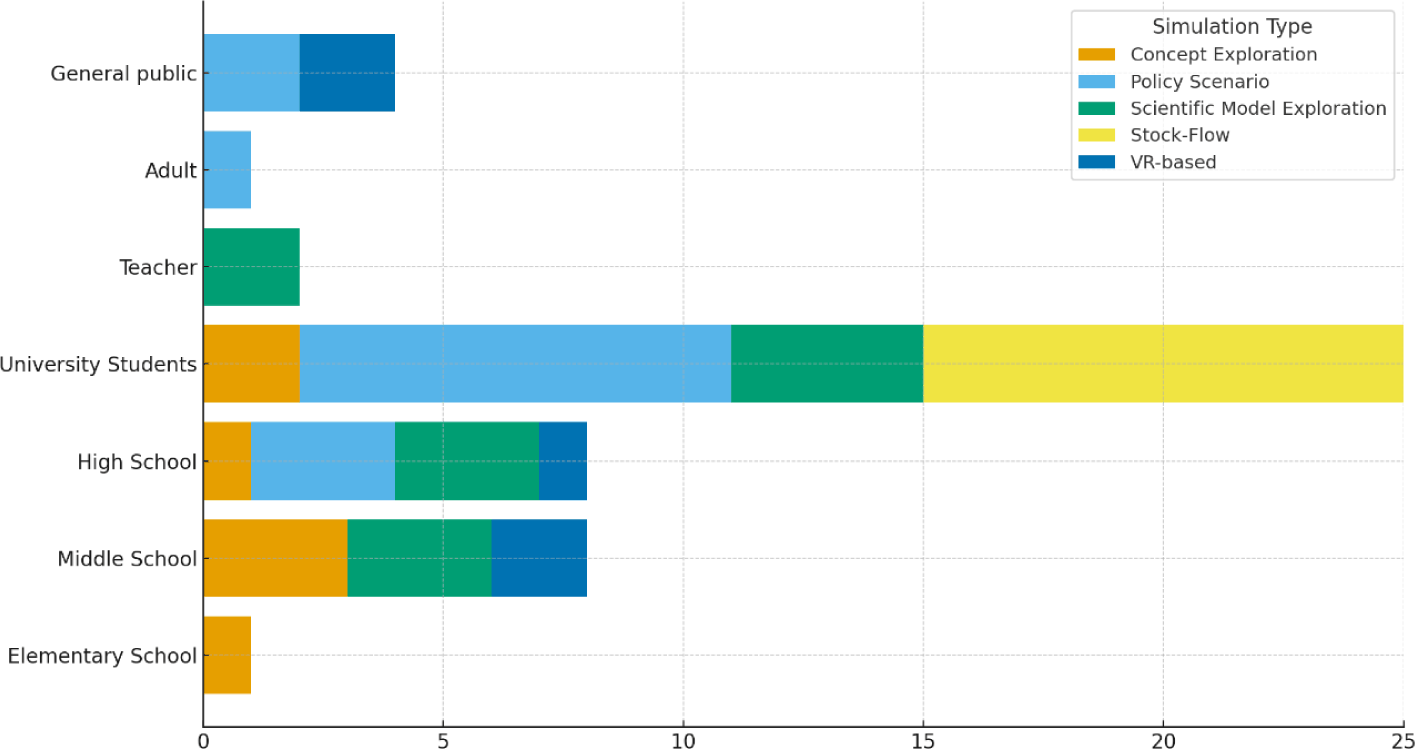
As shown in Fig. 4, university students constituted the largest portion of the cases, and this group predominantly engaged with cognitively demanding simulation types such as policy scenario, scientific model exploration, and stock-flow. For high school students, policy scenario simulations were also highly represented, accompanied by moderate use of model exploration activities. Middle school students showed higher engagement with concept exploration, scientific model exploration, and VR-based simulations. In the elementary school group, only a small number of cases were identified, mostly within concept exploration. Studies targeting the general public predominantly used policy scenario and VR-based simulations. Studies focusing on teachers showed a strong emphasis on scientific model exploration.
CO2 stock–flow simulations visualize the accumulation of resources within a system (stock) and the movement or change of those resources over time (flow), enabling learners to effectively grasp system dynamics as they unfold [29]. These simulations are grounded in system dynamics models, which allow users to understand the structure and behavior of complex systems, model causal relationships and feedback loops among multiple variables, and predict long-term system behavior [30]. Because learners typically set hypotheses and conduct repeated simulations to test the resulting outcomes, these tools take the form of iterative, experiment-based simulations [31].
CO2 stock–flow simulations are primarily designed to help learners understand carbon cycling, accumulation, and feedback loops. A substantial body of research has examined their role in correcting misconceptions about changes in atmospheric CO2 concentrations resulting from cumulative emissions and absorption. Simulations provide learners with concrete experiences of causal relationships and thus assist in refining flawed mental models and correcting misconceptions [21]. Dynamic systems in which concentrations change as a result of accumulated flows are often counterintuitive for learners to understand [32], and repeated simulation attempts support the gradual correction of these misunderstandings [33].
For example, Dutt & Gonzalez [4,34] and Kumar & Dutt [21,33] found that many learners incorrectly infer—based on a correlation heuristic—that “if CO2 emissions are stabilized at current levels, atmospheric CO2 concentration will also quickly stabilize.” Learners tend to also fail to apply mass-balance principles and believe that atmospheric concentration can be stabilized even when emissions exceed absorption. To address these misconceptions, the studies introduced the Dynamic Climate Change Simulator (DCCS), a visualization tool that displays stock–flow relationships of CO2. DCCS provides graphical feedback on how atmospheric CO2 concentrations change in response to emission and absorption levels set by the learner, enabling users to judge whether their decisions align with achieving target CO2 levels [4,33,34]. Similarly, Moxnes & Saysel [35] presented a simulator in which learners input projected CO2 emissions for each upcoming decade, and the resulting CO2 concentration trajectory up to the year 2100 is visualized.
Policy scenario simulations model the impacts of various social and economic policies on the environment to help users forecast future outcomes and compare alternative decisions [36]. These simulations typically visualize how policy decisions influence greenhouse gas emissions, global mean temperature, and sea level rise, enabling learners to understand the relationships between policy choices and climate change.
A representative set of simulators developed by Climate Interactive integrates human organizational behavior and policy–economic factors that affect climate systems [37]. Among them, C-Learn is a simplified version designed to help learners understand how changes in climate policies—such as reducing fossil fuel use, decreasing deforestation, or planting trees—affect long-term climate outcomes including CO2 concentration, global temperature, and sea level rise [38]. A more advanced version, C-ROADS, examines the impacts of national and regional greenhouse gas reduction scenarios on long-term temperature increase and sea level rise [39–41]. The most sophisticated version, En-ROADS, enables learners to explore how a wide range of policies—including electrified transportation, carbon pricing, renewable energy expansion, energy efficiency, and improved agricultural practices—affect hundreds of factors such as energy prices, temperature increase, and sea level rise [23,42,43].
Sterman et al. [41], Rooney-Varga et al. [40], and Rooney-Varga et al. [14] introduced the World Climate program, which combines role-play with the C-ROADS computer model. Participants assume the roles of national representatives in a UN climate negotiation, aiming to reach an agreement that limits global warming to below 2°C above preindustrial levels. After being assigned to country blocs (e.g., the United States, Europe, China, developing nations), participants set their own climate targets, negotiate carbon reduction goals and renewable energy investments, and adjust their commitments through discussion. Agreed policy decisions are then entered into the C-ROADS model to obtain immediate climate projections, after which participants renegotiate to reach an improved collective agreement. Following the simulation, a full-group debriefing supports reflection on participants’ decisions and encourages commitment to real-world climate action [14].
Based on the MEDEAS-World system dynamics model developed by Capellán-Pérez et al. [22], Global Sustainability Crossroads focuses on the interactions within the energy–economy–climate system. The simulator models diverse policy-driven scenarios by reflecting dynamic changes in technological transition rates, resource depletion, and cumulative greenhouse gas emissions. Unlike En-ROADS, which provides intuitive visualizations of projected temperature increases, Global Sustainability Crossroads offers more detailed economic–environmental outcomes, such as energy return on investment and annual energy losses caused by climate change, and supports long-term quantitative assessments of policy sustainability.
Several policy scenario simulations incorporated gamification elements—such as role assignment, competition, and mission completion—to enhance learner engagement. These simulations adopt characteristics of situational simulations [31], modeling human behavior within a social context and allowing learners to engage in negotiation, resolve ethical dilemmas, or practice emergency decision-making. For example, Climate BufferNet by Thompson et al. [44] focuses on the impacts of climate and economic factors on ecosystems. Set on a virtual Midwestern U.S. farm, learners decide the arrangement of farmland areas—such as cropland, grassland, shelterbelts, windbreaks, and wetlands—and receive immediate feedback on projected yields and biodiversity indicators 5 or 10 years into the future. Advanced rounds introduce more complex missions that allow learners to experience indirect interactions between economic factors and ecological systems.
Climate Adaptation Game [13] places learners in the role of a climate adaptation coordinator in the virtual city of Weatherton, where they must minimize damage from extreme weather events while achieving the Sustainable Development Goals (Agenda 2030). Developed using Minecraft, the simulation requires learners to make sequential climate adaptation decisions—from 2020 to 2100—concerning heat waves, floods, and droughts, designing urban planning strategies such as housing development, industrial construction, and hospital protection to minimize economic loss and casualties.
Energy Choices, developed by Scarlatos et al. [45], addresses trade-offs between GDP and carbon emissions, as well as the impacts of energy policies on climate. Because Energy Choices uses an agent-based modeling approach, the initial conditions of 25 major countries are randomized at the start of each simulation. Learners take the role of national leaders and undertake missions to optimize each country’s resource and energy policies while balancing economic growth with carbon reduction. Participants compete to achieve their goals by choosing between fossil fuels and renewable energy sources, implementing carbon taxes, reducing energy consumption, fostering economic growth, or supporting development in low-income countries.
Although learners input variables into the simulation and observe the resulting outputs in a manner similar to other simulation types, scientific model exploration simulations are distinguished by the fact that their underlying models are based on scientifically validated modeling approaches and can be modified when parts of the foundational dataset are altered. In several cases incorporating scientific model exploration simulations, learners examined not only the relationships among climate-related variables but also engaged in quantitative evaluation of simulation outputs and consideration of model uncertainty and error. Furthermore, some studies included activities in which learners designed models based on data, thereby providing opportunities to engage directly with data manipulation and model construction.
Scientific model exploration simulations largely focused on modeling interactions among climate-related Earth system variables and hydrological processes. Among climate-model-based simulations, EzGCM, developed by researchers at Columbia University and NASA, enables “reality-based scenario” experiments by incorporating NASA satellite and observational data [12,46–48]. A key feature of EzGCM is that learners can select from dozens of variables—such as CO2, methane, and solar radiation—to explore how variables relate to one another. It also visualizes various climate scenarios using maps and graphs, allowing learners to simulate and compare temporal trends across scenarios. Major outputs include surface temperature, precipitation, sea-ice extent, and jet stream patterns presented through time-series plots, maps, and animations, enabling learners to infer correlations and causal relationships among variables.
For example, High-Adventure Science, developed by Pallant & Lee [8], is a sophisticated online module based on seven dynamic computer climate models. As in prior work, learners manipulate climate-related variables and observe system changes, with particular emphasis on feedback loops—such as increased CO2 leading to rising temperatures and additional water vapor, which further amplifies warming.
Hydrologically focused simulations were developed to examine the impacts of climate change on phenomena such as heavy rainfall and drought. Hydrological Model of École de technologie supérieure (HMETS) was introduced by Martel et al. [49] in an engineering problem-solving activity involving bridge design under changing precipitation patterns. By using the simulation, learners investigated precipitation–runoff relationships and experienced authentic engineering practices. Losing the Lake [10,50] addressed drought-related issues by visualizing the effects of climate change on water levels in the fictional Lake Heed. In studies with undergraduate and graduate learners, participants used the simulation to configure lake models and examine future water-level changes by forcing the model with climate scenarios they designed [50].
Pérez-Sánchez et al. [51] employed the Témez hydrological model, enabling learners to quantify spatial and temporal variability in hydrological cycles. Learners developed, calibrated, and validated the Témez model using streamflow station data and precipitation–temperature datasets, evaluating model performance using statistical indicators and graphical diagnostics. They also assessed uncertainty in precipitation estimates, examined parameter sensitivity, and analyzed the effects of climate-change scenarios (RCP 4.5/8.5) on streamflow.
Studies using scientific model exploration simulations demonstrated that learners developed data-driven thinking, diagnosing the causes and impacts of climate change objectively through extensive data analysis and drawing evidence-based insights for climate management. Structured inquiry cycles—prediction → simulation experiment → results examination → discussion—were common. Through climate-model-based simulations, learners engaged in authentic scientific practices similar to those of climate scientists, including scenario development, simulation experimentation, and interpretation of outputs [12]. Such simulations have been described as providing opportunities for more authentic forms of scientific inquiry that contribute to new knowledge construction [50]. Learners moved beyond simple input–output patterns and engaged in higher-order inquiry by validating models and evaluating model credibility [51].
Concept exploration simulations correspond to the characteristics of conceptual model simulations proposed by De Jong & Van Joolingen [26]. These simulations aim to support learners’ understanding of scientific or theoretical concepts and to facilitate the correction of misconceptions. By manipulating variables, learners can explore and internalize the operational principles of a system as well as the core structure and relationships of the target concept [26,52].
Simulations classified as concept exploration types allowed learners to visually explore concepts by manipulating variables related to the greenhouse effect and receiving immediate feedback [53]. These simulations were provided across three platforms—PhET Interactive Simulations, NetLogo, and the Concord Consortium. Common across these platforms is an emphasis on visualizing input–output relationships to support intuitive understanding, particularly for younger learners, along with user interfaces that are simple to operate. These simulations generally offer limited transparency regarding the underlying models and tend to simplify climate-related variables and equations.
The simulation introduced in Pallant et al. [15], Modeling Earth’s Climate, was developed within the NetLogo environment and is grounded in an Earth radiation energy balance model. NetLogo, a programmable multi-agent modeling environment [54], is considered well suited for simulating complex systems. This simulation encourages learners to manipulate climate variables to observe changes in global mean temperature and to understand feedback loops and cumulative effects within the Earth system. In particular, it emphasizes systems thinking by guiding learners to examine ice–albedo feedback, lag effects in temperature decline, and networks of interacting feedbacks, rather than having learners focus on isolated components.
Because concept exploration simulations aim to support learning of causal relationships among key variables influencing climate change, they typically incorporate similar sets of variables. Modeling Earth’s Climate allows manipulation of CO2 concentration, atmospheric water vapor, cloud cover, and ice area. PhET’s Greenhouse Effect simulation includes adjustable CO2 and CH4 concentrations, cloud presence, and pathways of solar and infrared radiation. Similarly, the Concord Consortium module described by Thacker & Sinatra [52] visualizes infrared reabsorption caused by CO2, helping learners grasp foundational concepts of the greenhouse effect. These simulations highlight the roles of greenhouse gases and ice-related solar radiation processes to help students understand the greenhouse effect as a central driver of climate change.
VR enables learners to experience complex concepts or situations within immersive environments [55], and because it emphasizes media engagement and physical movement, it differs substantially from other simulation types not only in modality but also in learning context. VR-based simulations used in climate change education often situate learners in high-risk or otherwise inaccessible environments—such as polar regions or underwater ecosystems—allowing intuitive exploration through immersive experiences. In this study, only cases in which learners actively interacted within the virtual environment, rather than merely observing it, were included in the analysis. Thus, the selected VR simulations involved learner-centered activities where users wore VR devices, manipulated elements within the environment, and received direct feedback.
Pimentel & Kalyanaraman [56] developed a VR simulation centered on the relationship between ancient atmospheric CO2 and temperature. When learners wear the VR headset, they assume the role of an Antarctic climate scientist, visiting polar regions, interacting with virtual scientists, extracting ice cores, and examining geological markers to predict future climate change. Petersen et al. [57] introduced a VR simulation in which learners virtually explore Greenland and investigate the relationship between albedo feedback—arising from melting snow and ice—and the greenhouse effect by observing changes in radiative balance.
Queiroz et al. [58] and Markowitz et al. [55] presented VR content that allows learners to experience how increasing atmospheric CO2 and the resulting ocean acidification affect calcifying marine organisms. The Stanford Ocean Acidification Experience (SOAE), introduced by Queiroz et al. [58], visualizes CO2 and water molecules at the molecular level to clarify the chemical principles underlying ocean acidification. Learners act as scientists, counting sea butterflies and assessing coral bleaching to experience the degradation of marine ecosystems first-hand. Similarly, the VR content described by Markowitz et al. [55] had learners collect marine organisms from both healthy and acidified reefs, compare species counts through infographics, and observe how ocean acidification reduces biodiversity. Across these studies, learners actively navigated virtual spaces and interacted with objects, engaging in hands-on exploration within the immersive environment [55].
Studies applying CO2 stock-flow simulations report that they are effective in correcting learners’ misconceptions, particularly the belief that atmospheric CO2 concentrations will stabilize immediately once emissions are held at current levels. For example, Kumar & Dutt [21] found that, after instruction using the DCCS simulation, far fewer students exhibited the misconception that reducing emissions would directly lead to a direct decrease in atmospheric CO2. Similarly, Qudrat-Ullah & Kayal [24] showed that learners moved away from the mistaken assumption that even slight emission reductions would quickly stabilize atmospheric CO2, and instead came to understand that stabilization requires sufficient time for net inflows to approach zero or below. Learners often used CO2 stock-flow simulations in a manner similar to using a calculator [33], engaging in cycles of hypothesis generation, execution, immediate feedback, and repetition. This experiential sequence is interpreted as accelerating the correction of learners’ mental models [24].
At the same time, several studies indicate that the educational effectiveness of CO2 stock-flow simulations varies depending on how they are introduced. Kumar & Dutt [33] reported no significant correlation between the number of simulation runs and a reduction in misconceptions. Likewise, Stave et al. [25] found that learners who ran the simulation a moderate number of times exhibited greater gains in knowledge and attitudes compared to those who used it excessively or minimally. When simulation activities were followed by debriefing sessions—during which learners compared results, exchanged feedback, and engaged in reflective dialogue—metacognitive activation and knowledge transfer were enhanced [24]. Collectively, these findings suggest that simply increasing the number of simulation runs is less important than supporting learners in interpreting results, discussing outcomes, and integrating new insights into their existing knowledge structures.
Studies applying policy scenario simulations reported two primary educational effects: enhanced systems thinking and emotional engagement. Although various definitions of systems thinking exist, Arnold & Wade [59, p. 675] define it as “a set of synergistic analytical skills used to improve the ability to identify and understand systems, predict their behaviors, and modify them to produce desired outcomes.” Forrester [60] similarly argued that systems thinking becomes possible when learners use simulation models to understand the complexity of social and economic systems—such as families, communities, corporations, national economies, or international relations. Indeed, several studies revealed that learners participating in simulation-based climate change education developed a deeper understanding of climate change as a phenomenon shaped by the interactions of multiple systems [10].
Learners who engaged with policy scenario simulations gained insight into how social and economic policies intersect with—and sometimes conflict with—environmental outcomes [13], and recognized that policy changes directly influence environmental conditions [37]. For example, research demonstrated improved understanding of the effectiveness of climate mitigation measures—such as carbon pricing or zero-emission technologies—and of the ways in which human decisions can either exacerbate or mitigate climate change [43]. Similar findings emerged in studies using scientific model exploration simulations, where data-driven decision-making activities helped learners integrate natural processes and societal issues, thereby promoting more holistic reasoning [12,23,51].
Emotional outcomes were also frequently reported in studies applying policy scenario simulations. Learners experienced perspective-taking and empathy as they engaged in the decision-making processes of different stakeholders, and their sense of urgency regarding climate change increased [14,22,40]. Notably, when simulations were combined with role-playing activities, learners exhibited stronger changes in beliefs, concerns, and behavioral intentions [43]. By negotiating policies, exploring solutions, sharing perspectives, and collaboratively constructing knowledge from their assigned roles, learners were exposed to diverse stakeholder values and trade-offs, gaining a deeper appreciation for the complexity of climate change and the importance of ethical judgment and compromise.
Debriefing was emphasized as a crucial component, as it facilitated articulation of ideas, understanding of others’ viewpoints, and expansion of conceptual understanding [13]. Furthermore, learners who were assigned roles and engaged in policy related decision-making often reported increased self-efficacy in engaging with climate policy [23,43] or experienced a sense of empowerment regarding their ability to address climate-related problems [14]. However, the outcomes were not uniformly positive. Marhraoui & Ojubanire [23] noted that some participants developed greater skepticism or concern that current societal responses to climate change may be insufficient.
Studies applying scientific model exploration simulations frequently reported improvements in learners’ scientific reasoning skills. Research emphasizing quantitative analysis of real-world data further demonstrated that these simulations promote data-driven inquiry. Scientific model exploration tools such as EzGCM, HMETS, and Losing the Lake enabled learners to engage in more authentic scientific practices, including generating and collecting data, formulating hypotheses, and testing them to construct new scientific knowledge [46,50]. Through organizing, analyzing, and visualizing large datasets, learners developed quantitative reasoning and data interpretation skills [50]. In addition to conceptual understanding, these simulations also provided opportunities to engage with various computational tools and technologies. For example, by working with Microsoft Excel spreadsheets, text and Comma-Separated Values (CSV) files, R statistical software, and distributed computing tools, learners strengthened their computational proficiency and quantitative analysis capabilities [50].
Scientific model exploration simulations also demonstrated potential in supporting learners’ understanding of uncertainty. In Martel et al.’s [49] study using HMETS, uncertainty analysis was incorporated at each stage of the model-building process, allowing learners to establish confidence intervals for their final models. This approach stimulated higher-order thinking through probabilistic reasoning and consideration of error and uncertainty in simulations [49]. Similarly, Pallant & Lee [8] encouraged learners to compare simulation outputs with real data, helping them recognize model uncertainty and discrepancies between models and real-world phenomena. These studies emphasized guiding learners to understand that models and datasets may be imperfect, and to develop scientific reasoning by making decisions regarding the treatment of outliers and analytical choices. However, Pallant & Lee [8] found that when working with models of varying complexity, students produced simpler explanations and demonstrated lower awareness of uncertainty as model complexity increased, suggesting that selecting models with an appropriate level of complexity is essential in model-based instruction.
Studies examining the effects of scientific model exploration simulations on learners’ logical reasoning found enhancements in learners’ model-based explanations and scientific argumentation [12,51]. These improvements are attributed to the simulations’ support for identifying patterns in data, proposing plausible causal hypotheses, and engaging in evidence-based prediction. Follow-up tasks requiring learners to answer questions or write explanations based on simulation outputs may also have contributed to these gains [8]. Bhattacharya et al. [47] investigated improvements in scientific argumentation by comparing groups using the EzGCM simulation with groups working directly with raw data, applying the evidence-based reasoning framework. Bhattacharya et al. [47] found that learners using EzGCM produced more mathematically grounded claims and incorporated model-use processes and climate science–specific information, indicating superior performance. The simulator’s built-in noise reduction and computational processing features were found to meaningfully support students’ evidence-based reasoning and the quality of their arguments.
Concept exploration simulations designed for younger learners use interactive interfaces to help students focus on core scientific ideas. Whereas real laboratory equipment often contains numerous variables that may overwhelm novice learners, concept exploration simulations provide a scaffolded environment grounded in simplified scientific models, allowing students to engage in scientific inquiry without requiring expert-level knowledge [61]. In particular, because these simulations emphasize visualizations of the results that follow from variable manipulation, they promote verification and revision of existing conceptions through visual exploration rather than through quantitative calculations [62].
Because of these strengths, many studies reported improvements in conceptual accuracy and in learners’ understanding of the causal mechanisms of the greenhouse effect after using concept exploration simulations [19,62–64]. Thacker & Sinatra [52] found that several participants initially confused the greenhouse effect with ozone depletion before instruction, but the number of such misconceptions decreased after using the simulation. Misconceptions such as smog being a cause of climate change were also corrected, and more learners identified the correct variables responsible for the greenhouse effect [52].
Although concept exploration simulations offer simpler manipulations and results compared to scientific model exploration tools, several studies achieved outcomes that went beyond basic conceptual understanding. Pallant et al. [15] had learners compare simulation outputs with real scientific datasets, enabling them to understand the relationship between models and reality and to evaluate the limitations of models. This process strengthened students’ scientific reasoning and critical analysis skills and promoted higher-order thinking. Furthermore, students developed systems thinking by exploring interactions and feedback loops within complex Earth systems and examining how human activities influence the climate [15]. Çetinkaya & Kırılmazkaya [63], who implemented a simulation-based prediction–observation–explain lesson, also reported gains in conceptual accuracy and positive attitudes toward science. Collectively, these findings demonstrate that even when dealing with relatively simple topics, the intuitive visualizations and interactive structure of concept exploration simulations were commonly associated with students’ understanding of climate change mechanisms [52].
VR-based simulations were found to enhance learners’ empathic understanding and strengthen their intentions to engage in climate change mitigation behaviors. Through the immersive experiences provided by VR media, learners visually observed the environmental impacts of climate change, which increased their climate science knowledge and curiosity, and fostered more positive environmental attitudes compared to before the intervention [55]. The high degree of realism afforded by VR environments [56] contributed to shifts in learners’ perceptions and attitudes toward climate change [27,56]. Exposure to various scenarios depicting the severity of climate change elicited strong empathic responses [27]. For instance, virtual scenes depicting dying coral reefs and other ecologically distressing conditions evoked emotional reactions and effectively reinforced learners’ awareness of the seriousness of climate change [55].
Several studies also reported strengthened behavioral intentions related to climate change action following VR-based learning experiences [27,58]. In Queiroz et al. [58], participants demonstrated significant improvements in specific pro-environmental behavioral intentions—such as reducing their carbon footprint, supporting or engaging in policy actions, and adopting environmentally friendly consumption behaviors—after participating in VR simulation activities. Hayes et al. [27] further found that learners who experienced the same simulation through VR, rather than on a PC, showed greater intentions to advise friends and family, purchase flood insurance, support climate education initiatives, and donate to organizations addressing climate change. However, concerns have been raised regarding the cognitive load associated with VR simulation design [58,65]. Excessive multimedia elements—particularly visual, auditory, and textual information presented simultaneously—can impede learners’ information processing and reduce educational effectiveness. These findings highlight the importance of designing VR environments that minimize extraneous information and focus on content directly aligned with learning objectives.
Across the reviewed studies, educational outcomes were not evenly distributed across simulation types. Rather, each type tended to support outcomes aligned with its dominant representational features and learner activities. CO2 stock–flow and concept exploration simulations primarily supported conceptual restructuring by making causal relationships visible through repeated manipulation and immediate feedback. Policy scenario simulations foregrounded trade-offs among social, economic, and environmental variables and were therefore commonly associated with systems thinking, perspective taking, and climate-related decision-making. Scientific model exploration simulations required learners to analyze data, evaluate models, and consider uncertainty, and were correspondingly associated with quantitative reasoning, model-based explanation, and scientific argumentation. VR-based simulations provided immersive encounters with otherwise inaccessible climate phenomena and were most consistently associated with empathy, risk awareness, and pro-environmental behavioral intentions. Table 2 summarizes how the activities supported by each simulation type, together with its representational and interactive affordances, were related to commonly reported cognitive, affective, and behavioral outcomes.
| Simulation type | Primary model or input focus | Learning activities and educational affordances | Reported educational outcomes | Representative studies |
|---|---|---|---|---|
| CO2 stock–flow | CO2 emissions, absorption, atmospheric accumulation, and stock–flow balance | Repeated manipulation with immediate visualization of stock–flow relationships | Understanding relationships between emissions and atmospheric concentration; correction and refinement of stock–flow and mass-balance misconceptions | Kumar & Dutt [21,33]; Qudrat-Ullah & Kayal [24] (n = 7) |
| Policy scenario | Climate mitigation and adaptation policies; energy and land-use choices; socioeconomic–environmental trade-offs | Policy comparison and decision-making across socioeconomic–environmental trade-offs | Systems thinking; perspective taking; understanding policy consequences; climate-related decision-making; self-efficacy and behavioral intentions | Capellán-Pérez et al. [22]; Neset et al. [13]; Rooney-Varga et al. [14,40] (n = 12) |
| Scientific model exploration | Greenhouse-gas concentrations, precipitation, radiant energy, water vapor, cloud cover, albedo, and average temperature | Data analysis, model testing, and evaluation of uncertainty and model credibility | Quantitative and data reasoning; understanding uncertainty; computational proficiency; model-based explanation; evidence-based argumentation | Nussbaum et al. [10]; Carey & Gougis [50]; Martel et al. [49]; Bhattacharya et al. [46,47] (n = 9) |
| Concept exploration | CO2 concentration, albedo, solar radiation, and other simplified climate variables | Simplified variable manipulation with visual feedback on causal relationships | Understanding the greenhouse effect and related causal mechanisms; correction of misconceptions; in some cases, systems thinking and critical evaluation of models | Thacker & Sinatra [52]; Özcan et al. [64] (n = 6) |
| VR-based | Geological markers, ocean acidity, ecosystem change, and climate-related hazards | Immersive exploration of inaccessible climate environments and impacts | Climate knowledge and curiosity; empathy; awareness of climate impacts; perceived urgency; pro-environmental behavioral intentions | Pimentel & Kalyanaraman [56]; Hayes et al. [27] (n = 5) |
Discussion
The publication pattern was uneven, but simulation-based climate change education became increasingly diverse in both media and model complexity. Earlier studies primarily used CO2 stock–flow and computer-based scientific models, whereas more recent work increasingly incorporated VR and advanced modeling tools. Research nevertheless remained concentrated at the university level, with limited application in elementary and middle school settings. Policy scenario simulations were not used with younger learners, and only one elementary-level study was identified. Although several middle school studies appeared in the 2020s, the findings indicate that technological, infrastructural, and pedagogical barriers continue to constrain the expansion of simulation-based climate education in K–12 contexts.
The findings indicate that educational outcomes are more effectively achieved when simulation types are intentionally selected based on instructional goals. For example, CO2 stock-flow and concept exploration simulations are particularly well-suited for improving conceptual understanding and correcting misconceptions related to climate change. Policy scenario simulations are appropriate when the instructional objective is to foster systems thinking, highlight socio-economic–environmental interactions, and cultivate affective engagement. Scientific model exploration simulations are valuable when the goal is to enhance scientific reasoning and deepen understanding of climate processes through data-supported explanations and argumentation. VR-based simulations can be effective for eliciting shifts in environmental attitudes in a relatively short period through immersive, affectively rich experiences.
Moreover, combining multiple simulation types within a single lesson design may offer additional pedagogical benefits. For instance, Scarlatos et al. [45] integrated both a multiplayer game mode and an individual simulation-based experiment to illustrate how cooperation and competition among countries leads to national CO2 emissions scenarios. The studies also demonstrated the effectiveness of sequencing computer-based experimentation with role-playing negotiations, enabling students to first learn key mechanisms and then apply them in a situated social context. Such hybrid approaches provide learners with multifaceted experiences and help them develop a more holistic understanding of climate change.
Across simulation types, however, learning outcomes depended less on the frequency of simulation use than on the quality of instructional support. Repeated trials alone did not necessarily improve knowledge or correct misconceptions [25,33]. Learning was strengthened when simulations were combined with cognitive conflict, analogies, explicit goals, discussion, and reflection, as illustrated by Moxnes and Saysel’s [35] use of guided problem-solving to clarify CO2 accumulation. Learner autonomy was also beneficial only when exploration remained purposeful. Although exploratory activity was associated with knowledge gains in some studies [55], physical interaction or engagement alone did not guarantee learning [58]. Moderate guidance generally produced better outcomes than either highly prescriptive instruction or fully unguided exploration [43,66,67]. Effective simulation-based instruction therefore requires a balance between learner agency and strategic scaffolding, including prior-knowledge activation, inquiry prompts, and post-simulation explanation or debriefing.
Conclusion
This study conducted a comprehensive review of research on the use of simulations in climate change education, synthesizing research trends, simulation types and characteristics, and associated cognitive, affective, and behavioral outcomes. The findings suggest that different simulation types provide learners with distinct forms of experience and support different educational goals. Across the reviewed studies, positive outcomes were often associated with instructional strategies such as data-based explanation, small-group collaboration, and structured post-activity tasks. These findings indicate that the educational value of simulations depends not only on the technological affordances of the simulation itself but also on how it is embedded within instructional design.
These findings suggest that simulations can support climate change education when their affordances are aligned with pedagogical goals and embedded in well-structured instruction. Educators should therefore select simulation types according to intended learning outcomes and provide opportunities for active engagement and reflection. The cognitive, affective, and behavioral outcomes identified in this review may also contribute to hazard literacy, conceptualized as a multidimensional competency involving knowledge, informed judgment, and action [68].
This review was limited to English-language journal articles indexed in Web of Science, Scopus, and ERIC, excluding conference proceedings, theses, reports, and stand-alone non-digital simulations. These criteria may have introduced publication bias and limited the scope of the review. In addition, because this was a single-author review, no independent double coding or formal inter-rater reliability analysis was conducted.
Future studies should evaluate simulation-based climate change education using multidimensional measures rather than relying only on isolated indicators of knowledge or attitudes. The hazard-literacy scale developed by Sim et al. [69] may provide a useful reference, although age-appropriate measures are needed for K–12 learners. Further research should also examine sustained behavioral change and develop more developmentally appropriate simulations for elementary-aged learners.


