


Introduction
Disaster search and rescue (SAR) operations constitute one of the most complex and risky areas of emergency management, requiring rapid decision-making, coordinated teamwork, and the integration of diverse technical, medical, and interpersonal competencies. In recent years, the frequency and severity of both natural and man-made disasters have increased globally, placing an unprecedented burden on SAR personnel [1–3]. The United States, with its diverse hazard profile, including hurricanes, earthquakes, floods, wildfires, and industrial accidents, presents an operational environment in which SAR teams must demonstrate a high level of preparedness, adaptability, and resilience.
Current research emphasizes that effective SAR performance goes beyond technical proficiency to include situational awareness, safety and risk management, communication, and psychosocial support for survivors [4,5]. However, despite the acknowledged multidimensionality of SAR studies, there is limited empirical evidence regarding the precise set of competencies experienced experts deem necessary for successful disaster response. This lack hinders the development of standardized, competency-based and/or skill-based training frameworks applicable across institutions and contexts.
From an educational perspective, identifying these competencies is a critical step in designing curricula that align learning outcomes with the operational realities of disaster response. Competency-based and/or skill-based and/or skill-based education frameworks, widely adopted in other high-reliability professions such as medicine, aviation, and firefighting, emphasize the importance of defining clear, measurable skill and knowledge domains validated by subject matter experts [6,7]. In particular, Karacaoğlu’s skill-based disaster education and competency-based program development studies have inspired this research [8]. To address the fragmented nature of disaster competencies, this study utilizes the disaster literacy core skills (DLCS) framework as its fundamental conceptual framework. Originally designed to bridge the gap between theoretical knowledge and functional disaster response, the DLCS framework defines disaster literacy not merely as possessing information, but as the ability to access, understand, and, most importantly, apply core skills in high-pressure environments. Unlike traditional models that focus on institutional roles, the DLCS emphasizes a ‘skills-based’ approach by dividing competencies into practical, social, and adaptive domains. By applying this framework to the context of SAR, this research aims to verify whether these core literacy domains are aligned with the operational demands identified by field professionals. In the SAR context, such frameworks can serve to ensure that training programs systematically address not only technical abilities but also the cognitive, emotional, and psychomotor domains necessary for optimal performance in high-pressure environments.
Furthermore, the rapidly changing nature of disaster environments requires continuous improvement of SAR training programs based on real-world feedback from experts and practitioners [9–11]. Interprofessional collaboration, adaptability under uncertainty, and psychological resilience have emerged as critical success factors in contemporary emergency management [12,13]. However, these “soft” skills are often given less importance in formal training compared to procedural and equipment-based training, creating potential gaps in response team preparedness [14].
In this context, the current study aims to identify and categorize the core competencies required for disaster SAR operations as perceived by experienced professionals across the United States. By integrating quantitative frequency analysis with qualitative thematic analysis, this research aims to provide an empirically grounded, expert-informed competency framework. Such a framework can inform curriculum development, guide instructional design, and serve as a benchmark for program evaluation and policy formulation in SAR education.
While the disaster management literature has made significant progress in recent years, existing competency frameworks are fragmented and unevenly developed across disciplines. Systematic reviews such as Gallardo et al. reveal that most competency sets identified for disaster management and humanitarian assistance are predominantly geared towards the health sector, have limited cross-sectoral applicability, and are characterized by inconsistencies in terminology [7]. Similarly, Walsh et al. emphasize the critical role of clearly defined, consensus-based competencies in ensuring workforce readiness; however, like much of the existing literature, their study focuses primarily on healthcare professionals in disaster medicine and public health, with relatively little exploration of operational SAR roles [16]. Within specific professional fields, targeted reviews highlight the importance of domain-specific competencies, such as disaster plan familiarity, communication, and ethical decision-making in nursing [17] or micro-, meso-, and macro-level skills for social workers [18]. While these studies provide valuable frameworks, they remain profession-specific and do not fully encompass the interdisciplinary, field-level, and community-wide competencies required in SAR operations. Consequently, there is a clear gap in the literature for empirically derived, interdisciplinary competency models that integrate technical, operational, medical, security, communication, and resilience capacities specific to SAR contexts. This study addresses this gap by drawing on direct testimony from experienced experts and scholars to develop a comprehensive, skills-based, evidence-based competency framework that integrates academic theory with the operational realities of disaster response.
The primary objective of this study is to identify, classify, and conceptualize the core competencies required for effective SAR operations, as perceived by experienced experts. The primary objectives of the study are as follows:
-
To identify the most frequently cited SAR competencies through quantitative frequency analysis of semi-structured interview data obtained from subject matter experts.
-
To synthesize these competencies into broader thematic areas using qualitative thematic analysis to reveal the conceptual structure underlying operational skills.
-
To develop an empirically grounded competency framework that integrates both technical and non-technical skills, including medical expertise, safety and risk management, communication and coordination, and psychological and physical resilience.
-
To align training content with the operational realities of disaster environments by contributing to the design of competency-based and/or skill-based training curricula for SAR personnel.
To this end, this study aims to answer the following research questions:
RQ1: What are the most critical competencies perceived by subject matter experts as required for disaster SAR operations?
RQ2: How do these individual competencies cluster across broader thematic areas within the operational context of SAR?
RQ3: To what extent do the competencies identified by experts balance technical skills with “soft” skills such as communication and psychological resilience?
RQ4: How can an empirically based competency framework contribute to the development of standardized, skills-based training curricula for SAR personnel?
The research aims to contribute to the development of standardized, evidence-based training programs that enhance the preparedness, operational efficiency, and overall effectiveness of disaster response efforts.
Method
This section summarizes the methodological framework used in identifying and conceptualizing the essential competencies required for SAR operations. A mixed-methods approach was adopted to capture both the prevalence of specific competencies and the core conceptual framework guiding expert assessments. By combining quantitative frequency analysis with qualitative thematic analysis, the study provided a rigorous, systematic, and application-based examination of SAR competencies.
This study employed a qualitative research design supplemented by quantitative descriptive analysis to identify and categorize the core competencies required for SAR operations. A mixed-methods approach was employed, in which data from expert interviews were first analyzed through content analysis to generate frequency counts of specific skills and then synthesized into broader competency areas through thematic analysis. This sequential design allowed for both quantification of skill prevalence and examination of conceptual relationships.
The study sample consisted of 19 disaster experts with extensive experience in various disaster situations across the United States. Participants were selected through purposive sampling to ensure representativeness of participants from diverse professional backgrounds, including disaster management and science, fire and rescue services, emergency medical services, and non-governmental disaster relief organizations (Appendix A).
Data were collected through semi-structured interviews conducted between January 2025 and May 2025. Interviews followed an open-ended question protocol designed (Appendix B) to elicit detailed descriptions of the competencies participants perceived as necessary for effective SAR in disaster settings. Topics included SAR skills such as technical skills, medical interventions, safety practices, communication, and resilience. Each interview lasted approximately 40–60 minutes, was conducted in person or via secure video conferencing, and was audio-recorded with the participant’s consent.
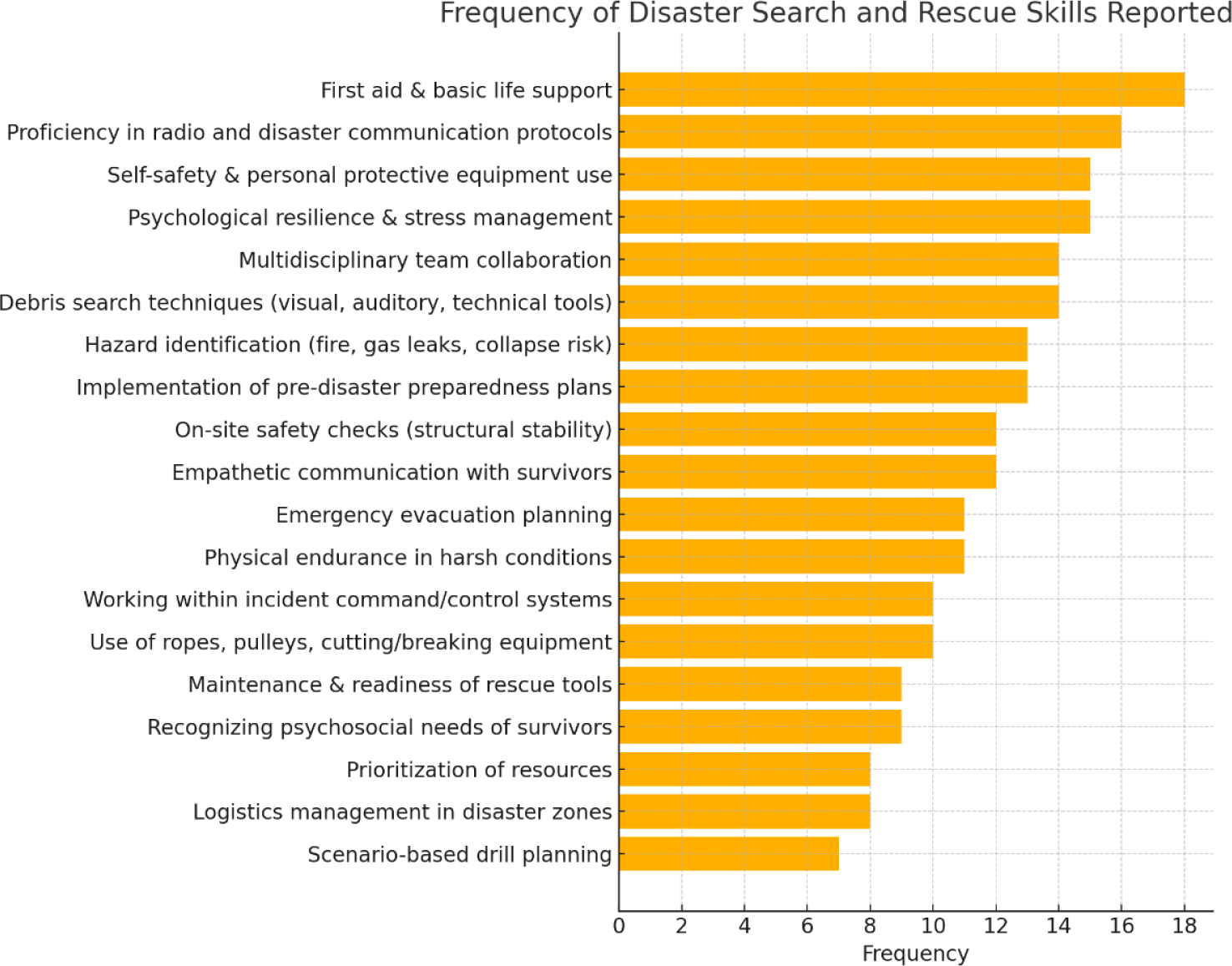
The first stage of the analysis involved systematic content analysis of the interview transcripts. The skills reported by each participant were identified as discrete units of meaning and coded accordingly. Each skill was then counted across 19 interviews to determine the frequency of mention. This process generated a quantitative dataset representing the prevalence of specific competencies. The results were visualized using a bar chart (Fig. 1) to facilitate interpretation of the most salient skills.
Following the frequency analysis, a thematic analysis was conducted to determine the conceptual structure underlying the identified skills. This process consisted of three stages:
-
Open coding – Initial codes were assigned to all skill references in the transcripts.
-
Axial coding – Related codes were grouped to form broader categories representing common conceptual elements.
-
Theme development – These categories were synthesized into five overarching themes: (i) technical and operational search and rescue skills, (ii) health and medical response skills, (iii) security and risk management, (iv) communication and coordination, and (v) psychological and physical resilience.
To ensure the objectivity of the thematic analysis, the two researchers independently coded the transcripts. Following the independent coding phase, the researchers met to compare their findings, discuss any inconsistencies in code assignments, and reach consensus on the final thematic construct. This collaborative, negotiated agreement process was used to minimize individual researcher bias and ensure that the themes accurately reflected expert testimony. NVivo 12 software was used to assist with data organization, retrieval, and coding consistency.
This section presents the findings from a mixed-methods analysis of expert interview data. The results are reported in two consecutive phases. First, a quantitative frequency analysis was used to identify the most frequently cited SAR competencies, providing an overview of skill importance among experts. This was followed by a qualitative thematic analysis that organized these competencies into broader conceptual domains and demonstrated how individual skills collectively function in disaster SAR operations.
The first stage of the analysis involved identifying and counting all discrete competencies mentioned by 19 subject matter experts during semi-structured interviews. Based on expert opinions, 19 basic skills were identified (Appendix C). Fig. 1 summarizes the frequency with which each skill was referenced in the dataset. This quantitative overview provides a clear picture of which competencies are most salient to experts in the SAR context.
The bar chart shows the frequency with which various SAR competencies were mentioned by subject matter experts (f = 19) during semi-structured interviews. Results show that first aid and basic life support were the most frequently mentioned skills (f = 18), followed by proficiency in radio and disaster communication protocols (f = 16), self-safety and use of personal protective equipment (f = 15), and psychological resilience and stress management (f = 15). These findings demonstrate a strong emphasis on both operational preparedness and responder well-being in high-stress disaster environments.
In particular, technical competencies such as debris search techniques (f = 14) and hazard assessment (f = 13) were ranked alongside critical planning skills such as implementing pre-disaster preparedness plans (f = 13) and emergency evacuation planning (f = 11). Less frequently cited, but still important, Scenario-Based Exercise Planning (f = 7) and Disaster Zone Logistics Management (f = 8), while operationally vital, may be perceived as secondary priorities during the emergency response phase.
The frequency counts presented in Fig. 1 and throughout the findings are descriptive and exploratory, rather than intended to establish a statistical hierarchy of importance. Higher frequencies indicate competencies mentioned more prominently and consistently across diverse expert groups, while lower frequencies do not imply that skills are less operationally important. Instead, these frequencies reflect a shared awareness among experts regarding the most urgent and visible demands of disaster response.
Overall, the breakdown highlights the multifaceted nature of SAR operations, requiring a balance between medical expertise, security awareness, communication skills, technical operations, and resilience capabilities. This multi-thematic skill profile highlights the need for comprehensive training programs that integrate both technical and soft skills for optimal disaster response outcomes.
Thematic analysis of expert interview data revealed five overarching themes encompassing the core competencies required for disaster SAR operations. These themes synthesize the most frequently cited skills derived from the frequency analysis into broader conceptual categories.
Based on a quantitative frequency analysis that identified the most salient SAR competencies perceived by experts, a thematic analysis was then conducted to examine the conceptual structure underlying these skills. This approach organized individual competencies into broader, interrelated domains, providing a deeper understanding of how these skills operate collectively in operational contexts. The resulting themes address not only the technical and procedural aspects of SAR but also illuminate critical human, organizational, and resilience-focused capacities required for effective disaster response.
This theme reflects the field-level competencies required for effective physical response in disaster settings. Experts emphasized the importance of debris search techniques, including the use of visual, auditory, and technical aids (f = 14) and the use of specialized equipment such as ropes, pulleys, and cutting/breaking tools (f = 10). Additionally, maintenance and operational readiness of rescue vehicles (f = 9) and on-site structural safety checks (f = 12) were identified as critical to ensuring both operational efficiency and the safety of responders during rescue missions. This theme is supported by views that emphasize the necessity of physical intervention and field rescue:
“Search and rescue is a physical job. You need to have the physical ability to get through the rubble, understand the geography, and know exactly where the risks are before taking a step.” — (p. 13)
“It’s not just about finding someone; it’s about technical awareness of unstable environments. You need to be able to recognize when a structure is shifting while you’re inside it.” — (p. 14)
Lifesaving skills were among the most frequently emphasized competencies in emergency situations. First aid and basic life support skills emerged as the most frequently cited skills (f = 18), highlighting their universal importance in disaster situations. Furthermore, the ability to recognize the psychosocial needs of survivors (f = 9) is vital for supporting both physical and mental health during and after rescue operations. The cornerstone of medical intervention and survival has been described by experts as follows:
“We often overlook the psychological needs of survivors. A rescuer needs to be able to identify signs of acute stress and provide immediate emotional stability in addition to physical assistance.” — (p. 1)
“The most basic skill is basic first aid. If you cannot stop bleeding or secure an open airway within the first few minutes, the world’s most advanced rescue technology is meaningless.” — (p. 12)
This theme encompasses competencies aimed at reducing risk and maintaining a safe operational environment. Experts emphasized self-safety practices and the use of personal protective equipment (f = 15), hazard identification for risks such as fire, gas leaks, and structural collapse (f = 13), and the implementation of pre-disaster preparedness plans (f = 13). Emergency evacuation planning (f = 11) was also deemed important for ensuring rapid and organized response in critical situations. Safety and risk assessment are considered critical by experts for the sustainability of the operation:
“Safety and security are paramount. You must be able to identify threatened areas and ensure that both the rescuer and the rescued are protected from environmental hazards such as gas-powered appliances or fire risks.” — (p. 1)
“Knowing your geographical environment is a safety skill. If you don’t know where the high ground is or how to identify hazardous materials in a particular area, you too become a victim.” — (p. 13)
Effective communication was consistently linked to operational success. Participants emphasized proficiency in radio and disaster communication protocols (f = 16), interdisciplinary team collaboration (f = 14), and empathic communication with disaster survivors (f = 12). Competencies such as operating in incident command/control systems (f = 10) and managing logistics in disaster areas (f = 8) are also vital for coordinated, efficient, and adaptable response operations. Experts have emphasized the operational success of information flow and teamwork as follows:
“Communication is the backbone of rescue efforts. Community coordination with professional rescuers ensures that food, water, and medical resources actually reach the at-risk population.” — (p. 4)
“Effective search and rescue requires informing rescuers of your exact location and situation. Coordination fails when there is no common language or protocol between different agencies on the ground.” — (p. 14)
Given the physically and emotionally demanding nature of disaster operations, psychological resilience and stress management (f = 15) and physical endurance in challenging conditions (f = 11) were repeatedly emphasized. Furthermore, resource prioritization (f = 8) and scenario-based exercise planning (f = 7) were recognized as key strategies for maintaining preparedness and optimizing response effectiveness over time. Experts have focused on the ability to prioritize and make decisions under challenging conditions as follows:
“You must prioritize. In a mass disaster, the ability to mentally process which actions will save the most lives and stick to that plan under pressure is a fundamental resilience skill.” — (p. 6)
“Physical resilience in challenging conditions is not negotiable. Whether it’s the extreme heat of a wildfire or purifying water to avoid dehydration, your body and mind must be prepared for a prolonged struggle.” — (p. 12)
The integrated findings from frequency and thematic analyses indicate that SAR competencies are multidimensional in nature, encompassing technical proficiency, medical expertise, security awareness, communication skills, and resilience capacities. This comprehensive skills framework provides a solid foundation for developing targeted training programs and competency-based and/or skill-based curricula that can enhance disaster response preparedness and effectiveness.
The relationship between community-based SAR components, required training, infrastructure, and participation culture is examined in Table 1.
In recent years, unmanned aerial vehicles (UAVs) have become an important support element in SAR operations. They contribute particularly to areas such as rapid scanning of large areas, temperature detection, and image transmission. As shown in Table 1, drone use is only one aspect of SAR. Drones do not remove debris, rescue people, or provide medical care. Furthermore, their uncoordinated use in the field can lead to communication confusion, accidents, and mission conflicts. Therefore, within the DLCS Framework, technology-based skills are only meaningful when integrated with human-centered operational skills. Volunteers must be included in pre-planned training and coordination systems to incorporate technologies such as drones.
To better interpret the practical outcomes of the identified competencies, Table 1 has been developed as a holistic synthesis of the previous frequency and thematic analyses. It conceptually organizes how the identified search and rescue competencies can be translated into community-based operational components, necessary training structures, and participation roles. In this way, it extends the analytical findings to an applied training and preparedness perspective.
Discussion
The current study provides a comprehensive, evidence-based framework for SAR competencies by integrating both quantitative and qualitative analyses to capture the multifaceted nature of effective response operations. From an educational sciences and curriculum development perspective, these findings highlight the critical importance of aligning training programs with the operational realities as understood by experienced disaster management experts faced by SAR professionals.
Existing research in disaster response has repeatedly emphasized the need for a multidimensional skill set encompassing technical proficiency, situational awareness, and interpersonal competencies [1,2,5]. The current study’s identification of five core themes—Technical and Operational Skills, Health and Medical Response Skills, Security and Risk Management, Communication and Coordination, and Psychological and Physical Resilience—aligns with previous competency frameworks proposed for emergency management [12] while providing greater operational detail by basing categories on direct expert testimony. These findings also address several gaps noted in the previous literature. Systematic reviews of disaster management competencies have revealed that most frameworks are focused on the health sector, have limited cross-sectoral applicability, and lack operational specificity [15,16]. While profession-specific studies such as nursing [17] and social work [18] provide valuable domain knowledge, they lack the integrated technical, operational, communication, and resilience competencies necessary for SAR contexts. Furthermore, Gallardo et al. highlight persistent inconsistencies in competency terminology, emphasizing the value of the current study’s empirically derived, expert-informed thematic framework in providing conceptual clarity and cross-disciplinary applicability [15].
Based on these findings, several practical implications emerge regarding the integration of technological, medical, and community-based competencies in search and rescue training. In the context of “Communication and Coordination” (Theme 4), emphasized in the interviews, UAVs should now be considered a central component of coordination rather than merely an auxiliary tool. The training curriculum should present UAV operations not only as a technical skill but also under the discipline of “knowledge-based coordination.” This approach ensures that technological data is transformed into an academic decision-making protocol, preventing potential “mission conflicts” in the field. The “Health and Medical Intervention” (Theme 2) skills, most frequently highlighted by experts, should be population-sensitive rather than a homogeneous set of interventions. In particular, the diverse physiological needs of infants and children (Pediatric CPR) should be addressed with academic depth as an integral part of the medical intervention curriculum. This necessitates restructuring first aid training, presented under the heading “Practical Skills,” into “age-specific intervention strategies.” Community-based SAR components (Table 1) should be considered not merely as individual volunteering, but as a social extension of the “Communication and Coordination” theme. Programs like “Stop the Bleed” serve as an example of a “gradual skills acquisition” model for curriculum developers; academic training should include “social coordination” skills that integrate these time-sensitive interventions for the public into a professional SAR system.
Although community-based interventions in disasters are increasing in importance, direct and untrained participation in SAR activities can create serious security risks. Spontaneous unaffiliated volunteers (SUVs) arriving on the field without coordination with professional teams can jeopardize both their own safety and the institutional response [19]. Therefore, the “Practical” and “Social” skills included in the DLCS Framework only become effective with organized, trained, and coordinated participation. For volunteers to contribute to SAR, they must acquire basic skills (safe evacuation, first aid, coordination) through programs such as Community Emergency Response Teams (CERT) [20]. Furthermore, organizations such as the Civil Air Patrol (CAP) in the United States include pre-licensed individuals in SAR processes within specific protocols. These models allow individuals to contribute to the post-disaster response while also becoming part of the system [21].
A significant portion of trauma-related deaths in disasters result from bleeding that cannot be stopped within the first 5 minutes. In this context, the “Stop the Bleed” program, developed in collaboration with the U.S. Department of Defense, the American College of Surgeons, and the Department of Homeland Security, is a short-term but highly effective training module aimed at enabling the public to perform these critical interventions [22]. In this program, based on Hartford Consensus reports, individuals learn skills such as tourniquet application, wound pressure, and the use of bleeding control devices [23]. These time-sensitive medical intervention skills, defined under the heading “Practical Skills” in the DLCS Framework, are critical for vital post-disaster interventions [24]. Expanding such short, intensive training programs for volunteers and first responders will strengthen the impact of DLCS in the field.
The practical, social, and adaptive skills defined in the DLCS Framework can be implemented through structured community-based training programs [25]. In this context, the CERT program, conducted by Federal Emergency Management Agency (FEMA), is a successful example of increasing the applicability of disaster training in the field. The CERT program provides individuals with competencies in basic SAR skills, firefighting, basic medical intervention, disaster psychology, and the incident command system after a 20-hour training period. Additionally, topics such as personal protective equipment (PPE) use and volunteer safety are also included in the training, directly reflecting the skill sets defined in the DLCS Framework in the field. The program’s free and widespread accessibility allows volunteers to be integrated into the organized disaster response system [20]. This structure plays a vital role in the transition from individual awareness to collective response, reducing the risks posed by spontaneous responses.
In disaster situations, children and infants have physiologically very different emergency response needs than adults. Therefore, cardiopulmonary resuscitation (CPR) and automated external defibrillator (AED) applications require different procedures depending on age group. Two-finger chest compressions are generally used for infants (0–1 year), while one-handed or two-handed techniques are used for children. Similarly, pediatric modes or pediatric pads should be used for AED devices [26]. Including age-specific intervention techniques under the “Practical Skills → First Aid” component defined in the DLCS Framework is crucial for effective disaster preparedness in the field. Organizations such as the American Heart Association [27] and the Red Cross offer age-segregated CPR/AED training modules, and integrating these modules into community-based disaster education programs is recommended.
In terms of training program design, the emphasis on first aid and basic life support, disaster communication protocols, and psychological resilience aligns with the competency-based and/or skill-based education literature in high-reliability professions such as firefighting, aviation, and healthcare [6,7]. Competency-based and/or skill-based education principles suggest that learning outcomes should be clearly defined, performance-based, and validated by expert consensus [8,28] ; these criteria were met by the empirically derived competencies in this study. Furthermore, the scaffolding of learning experiences from basic to complex tasks, as advocated in constructivist pedagogy [29,30], is directly applicable here.
The finding that scenario-based exercise planning and resource prioritization are less frequently cited by experts, despite their recognized importance in the operational literature [3], points to a potential training gap. This is consistent with observations in emergency training research that higher-order cognitive skills, such as decision-making under uncertainty, are often underemphasized compared to procedural exercises [14]. Integrating these competencies into training through simulation-based learning, tabletop exercises, and problem-based scenarios can address this gap while also enhancing metacognitive awareness.
Another theme identified in this study, interdisciplinary collaboration, is well supported in the disaster management literature as a determinant of operational success [4]. From a curriculum design perspective, integrating interprofessional education interprofessional collaborative education strategies, such as joint exercises among fire department, emergency medical services, law enforcement, and non-governmental organization personnel, can strengthen teamwork skills and foster a common operational language [13].
Furthermore, the theme of psychological and physical resilience aligns with a growing body of research advocating for the integration of stress inoculation training and resilience-building interventions into emergency response training [31,32]. Incorporating reflective practice, peer review, and mental health literacy modules into SAR curricula will not only ensure performance sustainability but also long-term well-being.
From a program evaluation perspective, the competency framework developed here provides a benchmark for assessing the comprehensiveness of existing SAR training programs. Mapping course content to identified themes can reveal redundancies or gaps in the curriculum, enabling iterative program improvements. Similar mapping methodologies have been successfully used in nursing and medical education to align training with professional competency standards [33].
Finally, the study contributes to the theoretical and practical development of competency-based and/or skill-based disaster training by bridging the gap between academic research and field realities. Integrating this framework into regional or national SAR training standards could standardize skill acquisition while allowing for contextual adaptation to specific hazard profiles and community needs.
Conclusion and Implications
This study presents a comprehensive and empirically grounded framework of the core competencies required for effective disaster SAR operations in the United States, compiled from nineteen expert opinions. By integrating quantitative frequency analysis with qualitative thematic analysis, the research identified not only the most frequently cited skills but also the broader competency domains within which these skills operate. The results highlight the dual necessity of technical and operational skills, such as debris search techniques, hazard detection, and equipment preparation, as well as health and medical response competencies, such as first aid, basic life support, and psychosocial needs recognition. Equally important are safety and risk management practices, effective communication and coordination mechanisms, and the psychological and physical resilience required to perform in highly challenging disaster situations. The multidimensional nature of these competencies highlights the need for integrated training programs that combine technical expertise with soft skills, resilience-building strategies, and interagency coordination protocols. Such a comprehensive approach can strengthen response team preparedness, increase operational efficiency, and improve survivor outcomes during disaster events. Notably, four competencies emerged as the most frequently cited by experts: first aid and basic life support, proficiency in radio and disaster communication protocols, personal safety and use of personal protective equipment, and psychological resilience in stress management. The prominence of these competencies highlights their dual roles as both immediate lifesaving measures and key elements of sustained operational effectiveness in high-stress disaster environments. By systematically mapping both the prevalence and thematic structure of disaster SAR competencies, this study provides a valuable foundation for developing competency-based and/or skill-based curricula, informing policy and resource allocation, and guiding future research to optimize disaster response performance. Ultimately, the findings contribute to a more resilient and capable disaster response team that is better equipped to address the complex and evolving challenges of real-world emergencies.
In conclusion, this study goes beyond a fragmented list of rescue tasks, offering an integrated, expert-validated competency framework based on the DLCS model. By synthesizing quantitative frequency data with the qualitative depth of direct expert testimony, the research demonstrates that effective SAR operations depend not only on technical proficiency but also on soft skills such as empathetic communication, multidisciplinary coordination, and psychological resilience. The findings highlight the need for modern SAR curricula to evolve into a multidimensional training model that aligns with the challenging operational realities of the field, incorporating emerging technologies such as drone-assisted coordination and specialized medical needs such as pediatric life support. Ultimately, this framework serves as a strategic benchmark for curriculum designers and policymakers, offering a structured path to improve response team preparedness, operational efficiency, and survivor outcomes in increasingly complex disaster environments.
For training program designers, these findings confirm the need to:
-
Integrate core lifesaving skills early in training while gradually introducing complex, collaborative, and strategic competencies.
-
Use active learning strategies such as simulations, scenario-based exercises, and interagency drills to develop both procedural competency and adaptive expertise.
-
Explicitly address resilience and stress management as core competencies, not peripheral concerns.
-
Use competency mapping as a continuous assessment tool to ensure training remains aligned with operational demands and evolving best practices.
By applying established principles from curriculum theory and instructional design, SAR training programs can become more responsive, comprehensive, and capable of developing experts who are not only technically competent but also adaptable, collaborative, and resilient in the face of complex disaster challenges.
Despite the significant insights provided by this research, several limitations must be acknowledged. While the sample of 19 experts represents a high level of expertise across multiple disciplines, the findings cannot be generalized globally to all SAR contexts or as a definitive standard without larger-scale validation. Furthermore, this study was conducted within the United States; this means that the identified competencies may reflect the specific legal, organizational, and hazard profiles of the USA emergency management system. Future research should explore the applicability of this framework in different international contexts with varying infrastructure and disaster profiles. The reliance on semi-structured interviews provides depth but is subject to bugs in participants’ subjective recall and professional biases. Future studies could utilize techniques such as Delphi or Storage to reach a formal consensus on these competencies.


