

Introduction
Japan has experienced large-scale disasters caused by earthquakes, tsunamis, typhoons, floods, and volcanic eruptions. The Great East Japan Earthquake of March 11, 2011, was one of the largest earthquakes recorded in the vicinity of Japan—a magnitude 9.0 megathrust earthquake—and resulted in more than 18,000 deaths and missing persons due to a massive tsunami [1]. The disaster struck at 2:46 p.m., a time when children were in school, highlighting the importance of preparedness in everyday settings.
Against the backdrop of these disaster experiences, disaster risk reduction education (DRRE) has been institutionalized over many years, particularly in primary and secondary education. Regular evacuation drills, lessons aimed at hazard awareness, and standardized safety manuals are incorporated into the national curriculum and school management practices [2].
However, previous studies have pointed out that disaster education programs are often designed and implemented by disaster management agencies and non-governmental organizations (NGOs) without sufficiently considering local conditions or engaging at the community level [3]. These observations suggest the importance of learning processes that connect students’ active engagement, situational judgment, and risk-related decision-making with proactive action.
In school-based disaster preparedness education, it has been pointed out that it is necessary not only to have students memorize knowledge and information across various subjects, but also to cultivate the judgment needed to understand disaster risks and make appropriate decisions to protect their own lives and those of others. In recent years, disaster literacy has been discussed not merely as a collection of knowledge, but as a multidimensional capability that enables individuals to protect themselves and others, take responsible action in crisis situations, and contribute to long-term resilience [4]; consequently, the importance of practical learning approaches that include an understanding of local hazards is growing.
Furthermore, time constraints within the curriculum, a lack of interdisciplinary learning opportunities, and insufficient teacher training on participatory or innovative teaching methods have constrained the development of disaster education [5]. These challenges raise concerns about whether existing approaches adequately prepare students to respond to complex, uncertain, and rapidly changing disaster situations, particularly as compound risks and cascading disasters become more prevalent.
The nature of DRRE varies significantly depending not only on the type and frequency of disasters, but also on contextual factors such as educational systems, social structures, and relationships with local communities. Therefore, it is difficult to fully grasp the characteristics and challenges of school-based DRRE through analyses limited to specific countries or regions. In particular, structural differences exist in the design philosophies and forms of practice of DRRE between regions where it has been institutionalized under state-led education systems and those where it has been developed based on collaboration between schools and local communities.
Studies focusing on East Asia analyzed in this review primarily examine cases from Japan and China, where DRRE has been incorporated into curricula and school operations under state-led education systems [6,7]. In contrast, in South and Southeast Asia (including Bangladesh, Nepal, and Indonesia), against a backdrop of frequent natural disasters and continuous exposure to disaster risks due to social and geographical conditions, many educational practices emphasize collaboration between schools, local communities, NGOs, and local governments [8–10]. This tendency can be understood as reflecting how international frameworks for education for sustainable development and DRRE [11], which emphasize both institutional integration and participatory learning, have been implemented differently across regions in accordance with variations in disaster risk characteristics, educational systems, and social structures.
Given these regional differences, international comparisons of school-based DRRE are not intended to argue for the superiority of specific educational models, but rather to understand the institutional and social conditions under which DRRE has been formed. The purpose of this study is to systematically organize and compare existing research on school-based DRRE. By focusing on the institutional conditions and relationships with local communities shaped by past disaster experiences, this study aims to provide a comparative perspective and to contribute to a reframing of school-based DRRE as a learning process that unfolds within these contexts.
While school-based DRRE has taken various forms depending on regional and institutional contexts, a cross-sectional review and analysis of prior research reveals several common challenges. In much of the existing research on DRRE, the focus has been on the transmission of knowledge and the acquisition of procedural skills; it is difficult to say that the active learning process—in which students themselves interpret situations, make judgments, and take decisions—has been sufficiently examined. If the purpose of DRRE lies in behavioral change and adaptive decision-making, a perspective that captures this process of fostering autonomy—both theoretically and empirically—is indispensable.
Furthermore, while research on DRRE utilizing digital technologies is on the rise, much of it remains limited to evaluating the effectiveness of tools and teaching materials, and has not sufficiently examined how these technologies support learners’ thought processes or facilitate changes in their learning. In addition, there is limited discussion regarding how to sustainably and practically introduce and operate these digital technologies in school settings, which are subject to institutional constraints, including communication environments and information security.
Moreover, a divergence in analytical perspectives can be observed between studies that view school-based DRRE within an institutional framework [8,12] and those focusing on relationships with local communities [5]. A framework that comprehensively captures the relationship between institutional conditions—such as the education system, curriculum, and teacher training—and students’ learning experiences and local practices has not yet been sufficiently established.
Given these challenges, it is necessary to reexamine school-based DRRE not as a static educational program, but as a dynamic learning process that reflects local contexts and unfolds within institutional and social constraints. This study aims to systematically organize and compare prior research on school-based DRRE across diverse regional contexts, including cases from East Asia, South Asia, and Southeast Asia, and to provide a comparative perspective on how DRRE is shaped by institutional conditions and community relationships.
Methodology
This study was conducted in accordance with the preferred reporting items for systematic reviews and meta-analyses (PRISMA) 2020 guidelines [13]. PRISMA 2020 is an international reporting guideline designed to ensure the transparency and reproducibility of systematic reviews. In this study, it was used as a framework to clarify the processes of identifying, selecting, assessing eligibility, and ultimately including prior research on school-based DRRE.
The literature search was conducted using Scopus and Education Resources Information Center (ERIC), which are major academic databases in the fields of education and disaster research. Additionally, ResearchGate was consulted as a supplementary source to verify previously identified literature and obtain full-text articles. The analysis was limited to peer-reviewed journal articles.
The search period was set from 2016 to 2025. This corresponds to the period following the adoption of the Sendai Framework for Disaster Risk Reduction (2015–2030), during which research on DRRE, particularly school-based DRRE, has expanded internationally. This study focuses on these relatively recent research trends.
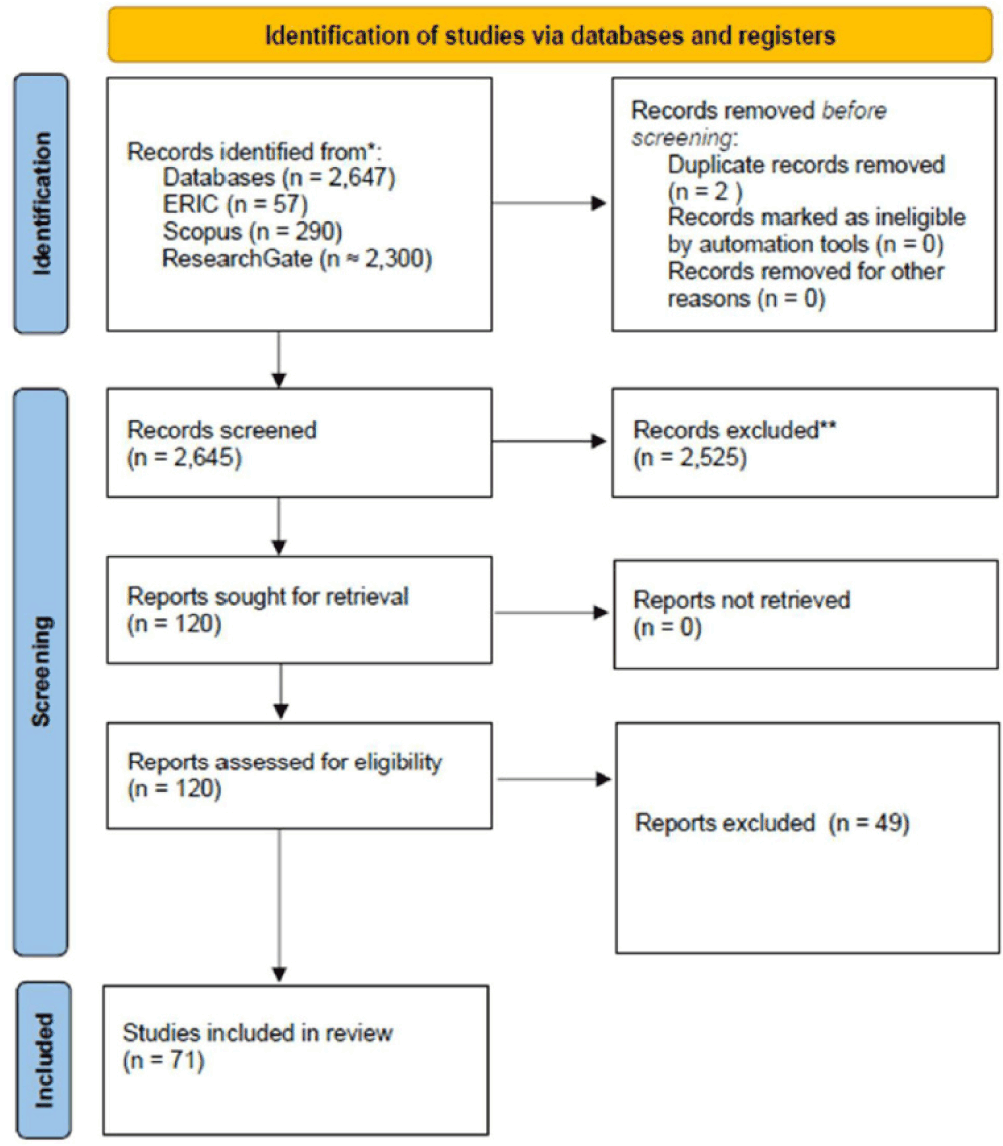
The search utilized keywords related to DRRE and school education, such as “disaster prevention education,” “disaster risk reduction education,” and “emergent learning.” “Emergent learning” was used as a supplementary keyword to comprehensively capture diverse approaches to learning processes in DRRE. As a result, a total of 2,647 records were identified: 290 from Scopus, 57 from ERIC, and 2,300 from ResearchGate. After removing two duplicate records, 2,645 records were screened based on titles and abstracts. At this stage, 2,525 records were excluded, primarily due to a lack of relevance to school-based DRRE, and the remaining 120 records were assessed through full-text review. Following full-text review, records were excluded if they were not peer-reviewed, did not focus on school-based DRRE, or did not target children and students aged 6–18. Ultimately, 71 studies were included in the analysis. The detailed study selection process is presented in Fig. 1 as a PRISMA 2020 flow diagram. In addition to empirical studies, a limited number of review papers were also included to capture broader conceptual and methodological developments in the field. While some studies focused on teachers’ perceptions and institutional contexts, these did not directly examine learning practices. Therefore, they were not categorized under educational approaches but were included to provide additional contextual perspectives on school-based DRRE.
This study systematically reviews, organizes, and compares existing research on next-generation DRRE, focusing on educational approaches, challenges, and the new insights derived from them. To this end, the following three research questions are formulated.
What educational approaches (e.g., knowledge-transfer-based, participatory learning, technology-enhanced learning) have been adopted in prior research on school-based DRRE at the primary and secondary levels, and how are these related to regional contexts and the characteristics of the targeted disasters?
In research on school-based DRRE, how have learning processes such as learner autonomy, situational judgment, and decision-making been positioned? Furthermore, how can these be interpreted as new insights and implications for next-generation DRRE that goes beyond traditional knowledge-transmission and training-centered approaches?
Results
In this study, the 71 peer-reviewed papers analyzed were categorized by country/region and disaster type based on their primary empirical focus. Studies covering multiple countries, or those dealing with international frameworks or conceptual analyses not limited to specific countries, were classified as “Global.”
Table 1 presents the full classification of all reviewed studies (n = 71), which forms the basis of the following analysis.
| No | Authors | Country | Type | Disaster type | Educational approach |
|---|---|---|---|---|---|
| 1 | Sugiyanto et al. [16] | Indonesia | Empirical | Flood | Technology-enhanced |
| 2 | Rosanti et al. [17] | Global | Review | Multi-hazard | Others |
| 3 | He et al. [18] | Global | Empirical | Multi-hazard | Others |
| 4 | Parham et al. [3] | Dominica | Empirical | Multi-hazard | Participatory / interactive |
| 5 | Canlas [19] | Global | Review | Multi-hazard | Others |
| 6 | Kawata et al. [6] | Japan | Empirical | Earthquake | Others |
| 7 | Suarmika et al. [8] | Indonesia | Review | Multi-hazard | Others |
| 8 | Garibay Rubio et al. [12] | Mexico | Empirical | Multi-hazard | Others |
| 9 | Mendonça & Valois [20] | Brazil | Empirical | Landslide | Others |
| 10 | Aghaei et al. [32] | Global | Review | Multi-hazard | Others |
| 11 | Kurniadi & Bahar [21] | Global | Review | Multi-hazard | Others |
| 12 | Uchida et al. [14] | Japan | Empirical | Multi-hazard | Participatory / interactive |
| 13 | Islam [9] | Bangladesh | Review | Multi-hazard | Others |
| 14 | Cabatay et al. [27] | Indonesia | Empirical | Multi-hazard | Others |
| 15 | Seddighi et al. [62] | Global | Review | Multi-hazard | Others |
| 16 | Wahyuningtyas et al. [71] | Indonesia | Empirical | Multi-hazard | Technology-enhanced |
| 17 | Rofiah et al. [28] | Indonesia | Empirical | Multi-hazard | Others |
| 18 | Vu et al. [70] | Vietnam | Empirical | Multi-hazard | Participatory / interactive |
| 19 | Wang et al. [7] | China | Empirical | Multi-hazard | Others |
| 20 | Desilia et al. [22] | Global | Review | Multi-hazard | Others |
| 21 | Cabatay & Baraan-Gonzales [29] | Indonesia | Empirical | Multi-hazard | Others |
| 22 | Septikasari et al. [15] | Indonesia | Empirical | Multi-hazard | Others |
| 23 | Passadelli et al. [23] | Greece | Empirical | Multi-hazard | Others |
| 24 | Libayao et al. [24] | Philippines | Empirical | Multi-hazard | Others |
| 25 | Arıkan et al. [35] | Turkey | Empirical | Multi-hazard | Technology-enhanced |
| 26 | Arwin et al. [36] | Indonesia | Empirical | Multi-hazard | Technology-enhanced |
| 27 | Rachman et al. [61] | Indonesia | Empirical | Earthquake | Instruction-centered |
| 28 | Poliquit et al. [59] | Philippines | Empirical | Multi-hazard | Others |
| 29 | Nurhaliza et al. [56] | Indonesia | Review | Multi-hazard | Others |
| 30 | Salmawati et al. [63] | Indonesia | Empirical | Earthquake | Others |
| 31 | Nakano et al. [10] | Global | Empirical | Earthquake | Participatory / interactive |
| 32 | Shaw et al. [5] | Japan | Review | Multi-hazard | Others |
| 33 | Delicado et al. [43] | Portugal | Empirical | Multi-hazard | Others |
| 34 | Musacchio et al. [55] | Global | Empirical | Earthquake | Technology-enhanced |
| 35 | Hoffmann & Blecha [48] | Global | Review | Multi-hazard | Others |
| 36 | Cabello et al. [42] | Global | Review | Multi-hazard | Others |
| 37 | Torani et al. [67] | Global | Review | Multi-hazard | Others |
| 38 | Sari et al. [64] | Indonesia | Empirical | Flood | Instruction-centered |
| 39 | Tupper & Karacaoğlu [68] | Turkey | Empirical | Earthquake | Others |
| 40 | Tusam et al. [69] | Indonesia | Review | Multi-hazard | Others |
| 41 | Yulianto et al. [75] | Indonesia | Empirical | Multi-hazard | Technology-enhanced |
| 42 | Luthfia [52] | Global | Review | Multi-hazard | Others |
| 43 | Arfianti et al. [37] | Indonesia | Review | Multi-hazard | Others |
| 44 | Park [60] | Global | Review | Multi-hazard | Others |
| 45 | Fitri et al. [44] | Indonesia | Empirical | Multi-hazard | Participatory / interactive |
| 46 | Goswami & Ahmad [30] | India | Review | Multi-hazard | Others |
| 47 | Widowati et al. [72] | Indonesia | Empirical | Multi-hazard | Others |
| 48 | Dwiningtias et al. [31] | Indonesia | Empirical | Multi-hazard | Others |
| 49 | Yetişensoy [74] | Turkey | Empirical | Multi-hazard | Technology-enhanced |
| 50 | Gokmenoglu et al. [25] | Turkey | Empirical | Multi-hazard | Others |
| 51 | Bachri et al. [39] | Indonesia | Empirical | Multi-hazard | Technology-enhanced |
| 52 | Guo et al. [46] | Global | Review | Multi-hazard | Others |
| 53 | Arakawa et al. [38] | Japan | Empirical | Earthquake | Technology-enhanced |
| 54 | Wulandari et al. [73] | Indonesia | Review | Multi-hazard | Others |
| 55 | Kamarudin [26] | Indonesia | Empirical | Multi-hazard | Others |
| 56 | Lai et al. [49] | Global | Review | Multi-hazard | Others |
| 57 | Kimura [47] | Japan | Review | Multi-hazard | Others |
| 58 | Pant [57] | Nepal | Review | Multi-hazard | Others |
| 59 | Lestari & Suwanto [50] | Indonesia | Empirical | Multi-hazard | Instruction-centered |
| 60 | Amri et al. [33] | Global | Review | Multi-hazard | Others |
| 61 | Bernhardsdottir et al. [40] | Global | Empirical | Earthquake | Participatory / interactive |
| 62 | Pfefferbaum et al. [58] | Global | Review | Multi-hazard | Participatory / interactive |
| 63 | Amri et al. [34] | Global | Review | Multi-hazard | Participatory / interactive |
| 64 | Masocha et al. [53] | Global | Review | Multi-hazard | Others |
| 65 | Goswami & Ahmad [45] | India | Review | Multi-hazard | Instruction-centered |
| 66 | Lownsbery [51] | Global | Review | Multi-hazard | Participatory / interactive |
| 67 | Marahatta et al. [54] | Nepal | Empirical | Multi-hazard | Participatory / interactive |
| 68 | Sun et al. [76] | Global | Review | Multi-hazard | Others |
| 69 | Shah et al. [66] | Pakistan | Empirical | Multi-hazard | Participatory / interactive |
| 70 | Scippo et al. [65] | Global | Review | Multi-hazard | Technology-enhanced |
| 71 | Bertoli et al. [41] | Kenya | Empirical | Multi-hazard | Participatory / interactive |
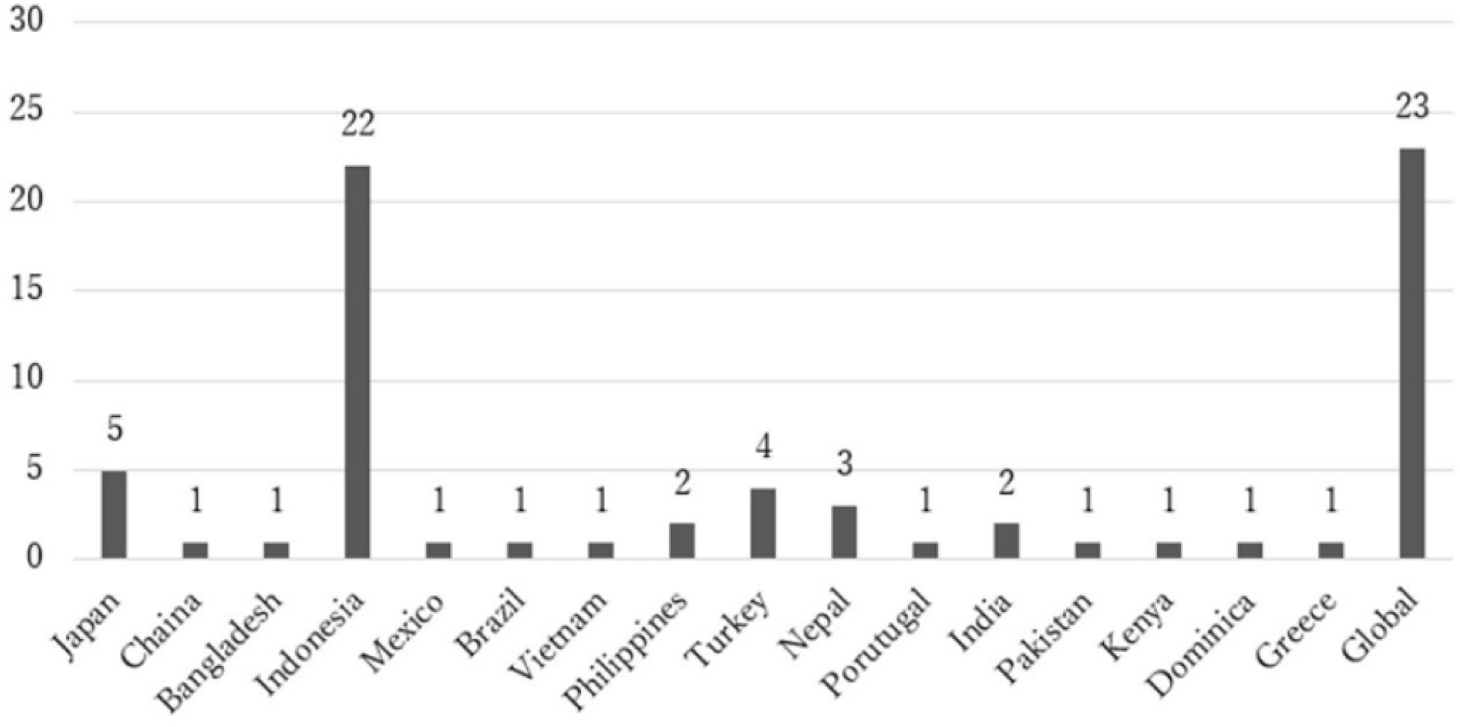
First, Fig. 2 shows the distribution by country and region. The analysis confirms that the papers are concentrated primarily in East Asia, South Asia, and Southeast Asia. In particular, many studies focus on Indonesia, while a substantial number of studies are categorized as “Global.” Japan and Turkey also appear as notable contributors, followed by countries such as Nepal, India, and the Philippines. In addition, a number of studies discuss school-based DRRE from an international or comparative perspective without focusing on specific countries, and these were categorized as “Global.”
Next, Fig. 3 shows the distribution of disaster types addressed. Many of the analyzed papers adopt a multi-hazard perspective that considers multiple disaster risks, rather than focusing on a single hazard. On the other hand, some studies focus on specific disasters such as earthquakes, floods, and volcanic hazards.
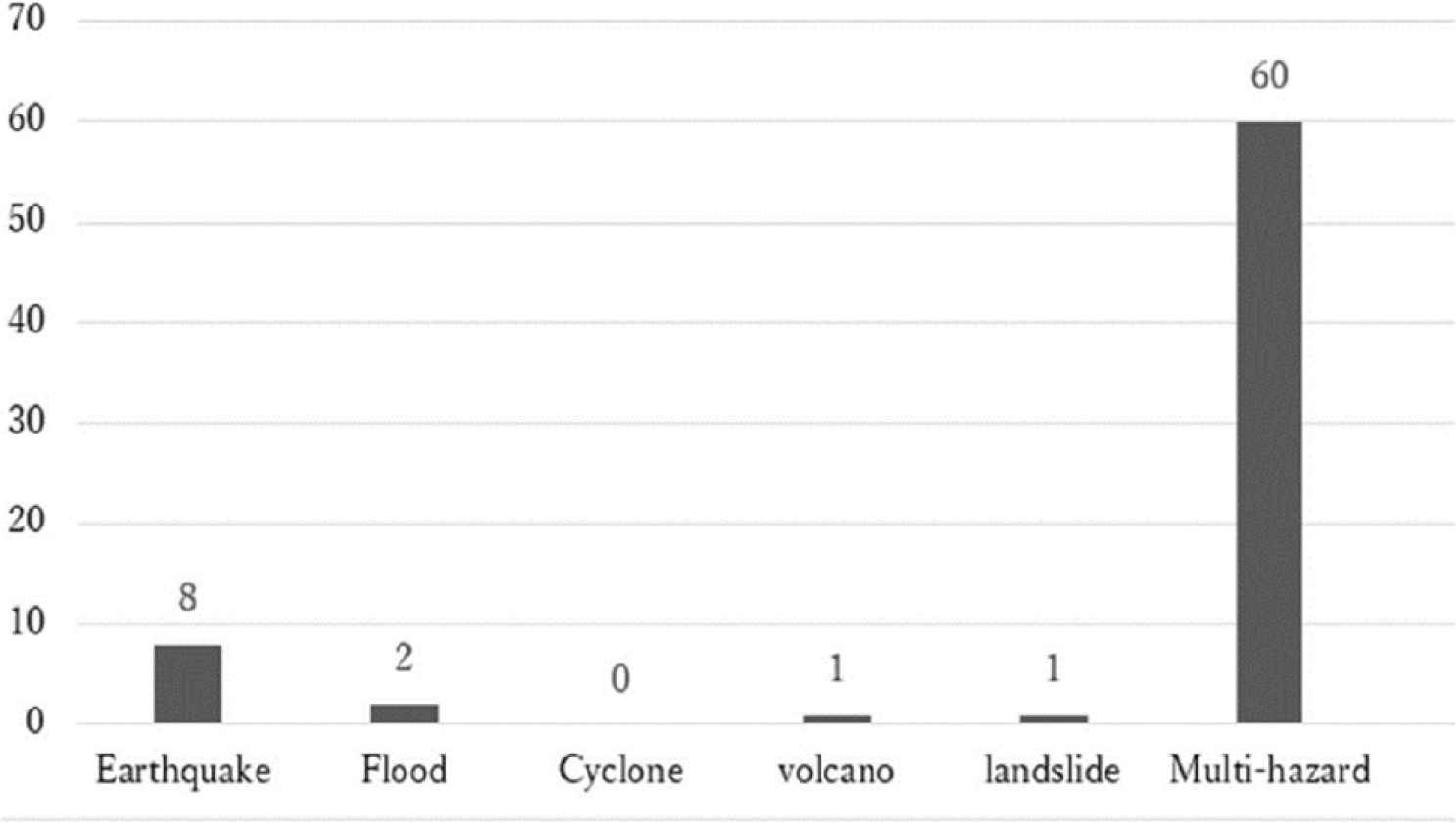
Overall, the prior research on school-based DRRE examined in this study includes both empirical studies focusing on specific countries or hazards and studies adopting broader or multi-hazard perspectives.
In this study, we employed an analytical framework focused on educational orientation to compare the pedagogical characteristics of school-based DRRE. This framework was informed by research trends indicating that traditional disaster education has primarily relied on knowledge transfer and evacuation drills, whereas increasing attention has been given to participatory learning, collaborative learning, information & communication technology (ICT) use, and interactive learning approaches, including extended reality (XR). Accordingly, educational approaches were analyzed based on differences in instructional orientation, particularly knowledge-transfer-based learning, participatory learning, and technology-enhanced learning. In addition, a traditional/drill-based category was included to capture studies centered on evacuation drills, while an others category was used for studies that could not be clearly assigned to the other categories.
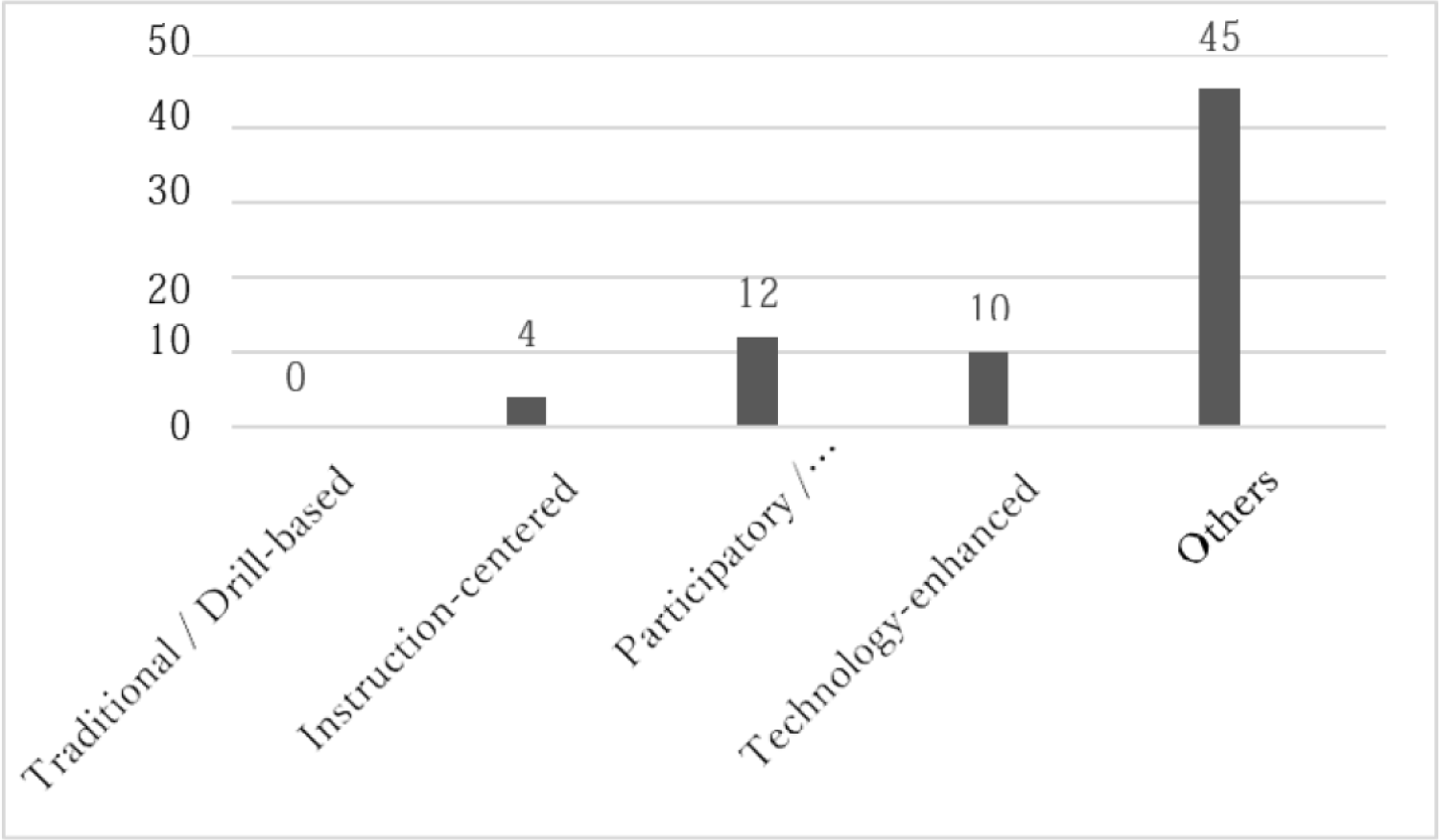
The reviewed studies were classified into five categories according to their dominant educational orientation: (1) traditional/drill-based, (2) instruction-centered, (3) participatory/interactive, (4) technology-enhanced, and (5) others. When a study included multiple approaches, classification was based on the most dominant educational orientation.
Classification was primarily based on explicit descriptions of educational approaches in the abstract and methodology sections of each study. In addition, full texts were carefully reviewed to identify participant engagement, learning activities, and data collection methods in order to determine the most appropriate category.
As shown in Fig. 4, the largest group consisted of 45 studies classified under “Others.” Rather than focusing on specific educational methods or teaching practices such as “Participatory” or “Technology-enhanced,” this category included many studies that conducted cross-cutting analyses of existing curricula and educational frameworks, driven by a critical awareness of the nature of DRRE itself. For example, Studies 3, 16, and 17 discussed how DRRE should be positioned within educational curricula, addressing topics such as curriculum integration—including climate change education and geography education—epistemological perspectives, and the development of disaster literacy and decision-making skills during disasters. Furthermore, studies 6, 11, 18, and 19 examined challenges and areas for improvement in disaster risk and resilience education, the importance of participatory learning, and relationships with local communities by surveying and analyzing existing disaster risk and resilience education practices and strategies. Furthermore, studies such as [9,21–26] provided insights on integrating DRRE into school curricula, designing teaching materials, and how to institutionalize and implement DRRE within the school system. Furthermore, studies such as [27–31] addressed inclusive disaster risk and risk education for children with special needs or disabilities, highlighting the importance of an inclusive perspective in disaster risk and risk education based on past disaster experiences. While these studies do not directly verify the effectiveness of specific teaching methods, they are characterized by presenting important implications for school-based disaster risk and risk education under institutional constraints. Consequently, it was difficult to clearly position them as specific educational practice approaches, and they were classified under “Others.” This study revealed that, despite reviewing such a large number of school-based DRRE studies, research classified under “Others” still accounted for a significant proportion. This suggests that in DRRE research, conceptual and institutional inquiry, curriculum integration, and discussions regarding new approaches to educational design continue to play a major role, alongside the verification of the effectiveness of specific educational practices. On the other hand, the relatively small number of practice-oriented studies may be attributed to the difficulties of implementing disaster risk and resilience education in an experimental or cross-sectional manner within the institutionalized school setting, as well as the existence of institutional constraints.
In contrast, studies focusing on more specific educational practices were identified in the other categories.
A total of four studies were classified as “Instruction-centered,” reporting educational practices aimed at improving knowledge and understanding of DRRE through lectures and instructional materials.
In addition, 12 studies were classified as “Participatory/Interactive,” reporting educational practices that emphasize student engagement, collaborative learning, and interaction with local communities.
Ten studies were classified as “Technology-enhanced,” reporting the use of digital tools and simulations to support learning in DRRE.
Among the literature identified in this study, very few studies explicitly evaluated traditional/drill-based approaches as standalone educational approaches. This may reflect the inclusion criteria adopted in this review, which suggest that recent school-based DRRE research tends to focus on new frameworks and instructional designs for DRRE that take climate change and local issues into account, rather than rejecting traditional/drill-based approaches themselves. However, the purpose of this study is not to evaluate the superiority or transformation of DRRE itself, but rather to organize the educational approaches and research trends in school-based DRRE research.
Based on the analysis in this review, recent research trends suggest that attention is shifting away from demonstrating the superiority of specific educational methods or technologies toward addressing the question of how to overcome the institutional and pedagogical limitations inherent in existing school-based DRRE. Furthermore, in many studies, interactive learning and the use of digital technology are not treated as ends in themselves, but are discussed against the backdrop of concerns regarding the formalization of training and one-way knowledge transfer.
In studies focusing specifically on Japan, the central issue has been how to enhance the effectiveness and quality of learning, based on the premise that disaster risk education has long been embedded within the school system [5]. Consequently, participatory learning and the introduction of technology tend to be positioned not so much as innovative practices to be emphasized, but rather as means to redesign and reinterpret existing educational practices.
In contrast, studies focusing on South and Southeast Asia tended to develop DRRE by linking it to geography, the environment, and disaster-related learning, against the backdrop of regional disaster risks. Furthermore, some studies discussed participation and collaboration as key conditions for supporting learning. In particular, the large number of studies from Indonesia may be understood in the context of the country’s repeated experiences with earthquakes, tsunamis, and volcanic disasters. These experiences have highlighted the vulnerability of schools and children and have contributed to growing attention toward disaster preparedness and resilience building through education. This suggests that school-based DRRE has emerged as an important research agenda in disaster-prone contexts.
However, while the importance of such participatory, interactive learning and the use of technology has been highlighted, research that has continuously and empirically implemented and evaluated these approaches under the institutional framework of school education has been limited. Many studies have remained limited to conceptual frameworks and methodological proposals based on short-term and limited practices, against the backdrop of class time, assessment methods, teacher expertise, and institutional constraints [8,14,15]. This suggests that a significant gap still exists between the ideal learning outcomes sought by disaster education and the feasibility of implementing them in actual school settings.
Furthermore, Table 2 presents the institutional characteristics, educational responses, and impacts on learning processes across the various contexts examined. While studies in East Asia often take place within existing educational systems and focus on improving practices, those in South and Southeast Asia are characterized by their response to regional disaster risks, such as through the use of geographic information, and their integration of DRRE with geography, environmental studies, and disaster-related learning.
| Context observed in reviewed studies | Institutionalcharacteristics andgeneral educationalresponses | Educationalresponses | Implications for learning processes | Representative studies |
|---|---|---|---|---|
| East Asia (e.g.,Japan, China) | DRRE is integrated intoregular educationsystems and supportedby institutionalpartnerships. | ICT utilization,disaster preventionworkshops,workshops utilizinggames, integrationwith existingcurriculum, andregular disaster drills | While disasterpreparedness education canbe conducted on anongoing basis within theexisting educationalsystem, there remainconstraints on theintroduction of new formsof learning. | Uchida et al. [13]Shaw et al. [4];Arakawa et al.[37] |
| South and SoutheastAsia (e.g.,Indonesia, Nepal,Bangladesh) | DRRE is frequentlylinked to geography,environmental, andhazard-related learningin response to localdisaster risks. | Disasterpsychoeducation,geographyeducation,hazard education,environment naturalscience | Supports contextualizedunderstanding of localdisaster risks, but requiresstronger integration intoformal educationalsystems. | Sari et al. [63];Sugiyantoet al. [15],Pant [56],Islam [8] |
| Global and multi-country studies | Frameworks, andinterdisciplinaryapproaches | Climate changeeducation, riskmanagement | While diverse conceptualframeworks have beenproposed, limited evidenceexists regarding theirsustained implementationand long-term educationaloutcomes. | He et al. [17],Nakanoet al. [9],Musacchioet al. [54],Sun et al. [76] |
Furthermore, in global and multi-country studies, there was a tendency to emphasize future directions for DRRE that view DRR from a global perspective, against the backdrop of conceptual frameworks, interdisciplinary perspectives, and broad policy implications. Although these studies were grounded in institutional and socio-educational contexts, they emphasized strengthening the learning process not only through conventional DRRE methods but also as a response to climate change, as highlighted in much of the literature. However, there were only a limited number of studies that continuously and empirically examined improvements in learners’ knowledge and behavioral changes.
Based on the above analysis, it has become clear that recent research on school disaster education encompasses a common challenge, namely, how to foster learners’ autonomy and adaptive judgment under institutional constraints, rather than converging on specific countries or types of disasters. Although digital technologies and interactive learning are repeatedly cited as potential solutions, how to position, evaluate, and sustainably implement them within the context of school education remains insufficiently explored. This point is considered a key issue in considering the next generation of school disaster education.
Discussion
The findings of this study suggest that the distribution of prior research on school-based DRRE is closely related to how disaster experiences have been recognized and articulated as social and institutional issues, rather than simply reflecting differences between countries or regions. In particular, among the literature examined in this study, a relatively large number of studies focused primarily on Indonesia; this may be influenced by the country’s social context, which has repeatedly experienced large-scale natural disasters such as earthquakes, tsunamis, and volcanic eruptions.
An overview of prior research reveals a tendency for disaster education to be reframed as an educational issue following such large-scale disasters, with the necessity of school-based DRRE being emphasized both politically and socially. Consequently, practices and institutional initiatives related to disaster education have come to the forefront as research subjects, serving as a catalyst for the accumulation of academic knowledge. On the other hand, in regions where the frequency of disasters is relatively low or where experience with damage is limited, it is possible that disaster education tends to remain at the level of abstract risk awareness, making it difficult to position it as a priority research topic within school education.
However, it is not appropriate to view the relationship between the presence and scale of disaster experience and the volume and content of DRRE research as a simple causal relationship. In reality, multiple factors—such as the structure of the education system, policy priorities, the allocation of research resources, and the relationship between schools and local communities—are likely to interact in shaping this situation. While the findings of this study do not definitively demonstrate such relationships, they provide important insights for understanding the social catalysts and institutional conditions under which research on school-based DRRE has been formed and accumulated.
As the findings of this study indicate, existing research on school-based DRRE is largely characterized by conceptual and methodological studies, with a limited number of instruction-centered or knowledge-transfer-oriented approaches.
This trend suggests that, rather than the effectiveness of specific educational methods being empirically supported, the institutional context of school education itself may be dictating the research subjects and methods.
First, schools operate under clear institutional frameworks such as curricula, class schedules, and assessment systems, and disaster prevention education is no exception. As many studies point out, disaster prevention education conducted within limited class time tends to converge on content that is relatively measurable and easy to standardize, such as the organization of knowledge and the acquisition of action procedures. Consequently, knowledge-transfer practices—such as lecture-style classes and the use of teaching materials—are considered easier subjects to address in research.
Second, while participatory learning, inquiry-based learning, and disaster education utilizing digital technology emphasize learner autonomy and collaborative processes, they face the challenge of making it difficult to evaluate their effectiveness in the short term or quantitatively. Under the institutional management of school education, where the visualization of learning outcomes and accountability are required, such approaches tend to be handled with caution in both practice and research. This point is particularly evident in research focused on Japan, suggesting a situation where, although there is a shared awareness of the limitations of existing disaster prevention education, it remains difficult to proceed with empirical verification.
Third, the prevalence of conceptual and theoretical studies classified under “Others” can be interpreted as reflecting the current situation where a reexamination of the institutional conditions and frameworks surrounding disaster prevention education is required, rather than the practices themselves. While many studies present an ideal vision of disaster prevention education, they have not yet led to concrete implementation or long-term verification that takes into account the constraints of the school setting. This indicates that, although school disaster prevention education is recognized as “important,” it remains in a stage of exploration regarding its practical feasibility.
In light of the above, the dominance of instruction-centered and conceptual approaches can be understood not as a result of passivity on the part of educators and researchers, but as a consequence of the structural conditions inherent in the institutional environment of schools. Therefore, when discussing the diversification of approaches in school disaster education, it is necessary to focus not only on the innovation of educational methods themselves but also on the institutional and organizational conditions that make such innovation possible.
Implications
Based on the findings and discussion of this study, several implications can be identified for both the practice and research of school-based DRRE. In this chapter, we first outline the practical implications for educational practice and policy, and then present implications for future research.
The analysis in this study suggests that while school-based DRRE is institutionalized in many countries and regions, it faces a common challenge: its implementation tends to remain limited to formal procedures and knowledge-transfer practices. This does not imply that efforts in schools are insufficient; rather, it reflects the current reality that disaster education is conducted under institutional constraints such as limited class time and evaluation systems.
From the perspective of educational practice, it is considered important to position approaches such as participatory learning, inquiry-based learning, and collaboration with the local community not as replacements for existing disaster risk education, but rather as ways to complement and reconfigure the existing framework. In particular, by incorporating opportunities for learner reflection and dialogue into traditional practices such as evacuation drills and lecture-style classes, it may be possible to make the learning process of disaster risk education more visible.
Furthermore, for boards of education and policymakers, a key issue for consideration is how to position disaster prevention education within the curriculum and teacher training, rather than treating it as a one-off event. As confirmed in this study, many previous studies have pointed to a lack of teacher expertise and training opportunities as challenges, suggesting that institutional support and the improvement of the educational environment are likely to influence the quality of disaster prevention education.
In terms of research implications, first, there is a need to accumulate empirical research focusing on learning processes and changes in learners within school disaster preparedness education. While much of the existing literature highlights the importance of disaster preparedness education and presents ideal educational models, a clear understanding of how learners interpret situations, make judgments, and translate these into action remains limited.
Second, regarding technology-based disaster education, which incorporates digital technologies, simulations, and XR, some studies have demonstrated its effectiveness; however, there remains considerable room for examining frameworks for its sustained implementation and evaluation within school education.
The findings of this study further highlight that attention should be directed not to the novelty of the technologies themselves, but to how they are positioned and utilized within existing educational practices.
Furthermore, as the use of artificial intelligence (AI), simulations, and data-driven learning environments continues to expand in educational settings, future research should also examine the ethical use of AI in school disaster education, digital literacy, and the responsible adoption of technology. Although the studies included in this review did not explicitly address these issues, they suggest that these will be important topics for consideration in future research and practice in disaster education.
Future research should examine technology-based disaster education not only as a
standalone practice, but also in relation to how it connects with school systems, curricula, and teachers’ practices. Furthermore, within the framework of school-based disaster education, participatory approaches that strengthen collaboration between schools and local communities should also be explored, as they may contribute to the development of sustainable disaster education.
The potential for regional comparisons is not limited to the scope covered in this study. While many researchers discuss DRRE at each stage of the disaster cycle from diverse perspectives, this study is a review focused specifically on school-based DRRE and thus has the limitation of not covering the entire spectrum of DRRE.
In the future, comparative research that examines factors such as the presence or absence of disaster experience, frequency of disasters, the structure of educational systems, and social contexts across different regions is expected to further deepen our understanding of school-based DRRE.
In particular, comparisons between regions with frequent disasters and those with relatively low incidence rates, as well as between highly institutionalized education systems and community-led educational practices, would be effective in examining the conditions under which DRRE has been formed and transformed. This study provides a foundational framework for such comparative research, and further refinement of analytical frameworks is expected in future studies.
Conclusion
This study conducted a systematic review of school-based DRRE at the primary and secondary levels and organized the educational approaches, challenges, and insights derived from them. An analysis of 71 peer-reviewed articles selected in accordance with PRISMA 2020 revealed that research on school-based DRRE, while reflecting regional disaster characteristics and social contexts, is conducted under common institutional constraints.
The analysis revealed that the East Asian studies included in this review focused primarily on Japan and China, indicating that DRRE is integrated into the education system and that practices centered on evacuation drills and knowledge-transfer practices are shared.
However, empirical examinations of the learning process and the quality of learning were limited. In contrast, studies focusing on South and Southeast Asia reported relatively more instances of collaboration between schools and local communities, as well as participatory educational practices; however, in both regions, the difficulty of continuously implementing and evaluating these practices within the institutional framework of school education was identified as a common challenge.
Furthermore, while much of the existing research on school-based DRRE refers to new possibilities such as participatory learning and the use of digital technology, it tends to remain limited to conceptual frameworks and methodological proposals rather than concrete practices or long-term verification. This trend does not indicate a lack of educational practice; rather, it is thought to reflect the structural difficulties of empirically examining DRRE within the institutional framework of schools.
This study suggests that the central issue in school-based DRRE is not the selection of specific educational approaches, but how learning processes can be fostered and sustained under institutional constraints.
Based on these results, it is suggested that when considering the next generation of school-based DRRE, the focus should not be on the introduction of specific educational methods or technologies as an end in itself, but rather on how to foster learners’ autonomy and adaptive judgment within institutional and social constraints.
Furthermore, given that schools are places where learners spend a significant amount of their daily lives, the results of this study suggest the need to view DRRE within the context of fostering the next generation of disaster risk reduction leaders. In doing so, a key challenge is how to incorporate an understanding of regional characteristics and connections with the local community into the learning process.
This study provides a foundational framework for reinterpreting school-based DRRE not as a fixed body of content, but as a dynamic learning process that evolves and is shaped within institutional constraints and relationships with local communities.
This study has several limitations, including constraints related to the target region and the language used. Nevertheless, the comparative perspective presented in this study reinterprets school-based DRRE as a learning process unfolding within institutional constraints. It provides a basis for its design and evaluation and contributes to future empirical research and comparative studies.


