

Introduction
Disasters are not natural phenomena but socially constructed phenomena, which are influenced by exposure, vulnerability, and preparedness [1–3] According to the World Bank, the average of disasters cost low and middle-income country a direct physical damage of $18 billion a year and the indirect costs have paralyzed the development of these countries in years [4–7]. These dangers are further exaggerated by the IPCC, which notes that the world is prone to more climate variability, which puts the most vulnerable population at risk [8–11]. In this context, the dynamic capacity of accessing and perceiving, evaluating, and acting on hazard information has been included as a non-negotiable part of sustainable development and risk governance [12,13]. It develops and extends the notion of disaster literacy beyond the understanding of threats towards the active knowledge of being aware, critically minded, and able to make decisions in a stressful situation [14].
In developing nations, though, hazard literacy is a poorly theorized, poorly measured, and generally confused concept with basic awareness. As the national and international investment in communication technologies, early warning systems, and school safety programs is growing, the results are often disappointing, based on mere awareness without practical changes [13,15]. In one groundbreaking study in Bangladesh, the institute discovered that 85 percent of the residents were able to recognize cyclones as a key hazard, although only 35 percent had a prepared evacuation kit, and only 18 percent were able to identify an effective evacuation route. It is also true that a study conducted in the Philippines after the Typhoon Haiyan in 2013 found that 70% of schools had some level of awareness about earthquake and typhoon drills, and only 22% of households had practiced a family emergency plan. This ongoing gap of knowing and doing- the awareness action paradox can be explored as a complicated mixture of cognitive biases, affective lack of connection, communicative failure, and in-depth systemic limitations [14,16].
This study, therefore, aims to conceptualize and operationalize a holistic framework of measurement of hazard literacy that clearly crosses the awareness/ action divide barrier. It combines psychological, sociological, communicative, and behavioral economic approaches in the conceptualization of hazard literacy as a multi-dimensional, context-dependent, and dynamic construct. By doing so, it will address an urgent theoretical clarity need, a practical measurability need, and an innovative approach to the study of Disaster Risk Reduction (DRR), especially in the heterogeneous and resource-constrained environment of the Global South.
Methods: Systematic Review, Thematic Extraction, and Conceptual Synthesis
The present study is based on a conceptual synthesizing approach, supported by analytical solutions derived from data science to keep a high level of theoretical rigor and an empirical foundation.
The systematic review was performed on Scopus and Web of Science databases, with the inclusion criteria being studies about disaster literacy, risk perception, preparedness behavior, and risk communication in developing countries from 2000 to 2024. Over 200 journal articles (including those in Disaster Prevention and Management and International Journal of Disaster Risk Reduction) and key gray literature (such as those published by UNDRR, IPCC, and the Indian National Disaster Management Authority [NDMA]) were considered [17–19]. NVivo 14.0 was utilized to code this corpus to derive content as well as latent themes and conceptual relationships. Conceptually, the derivation of the four core domains was guided by hierarchical models such as Nutbeam’s three-level health literacy model (functional, interactive, critical), which provided the theoretical foundation for an interactive literacy framework. We acknowledged the shortcomings of the purely rationalist approach and used the concepts of behavioral economics and the Protection Motivation Theory [20]. This was done through the study of the role of heuristics (e.g., optimism bias, normal bias) and factors such as perceived self-efficacy and response efficacy as mediation between awareness and action, most often in the Affective and Behavioral Literacy domains.
The nine cases (India, Philippines, Haiti, etc.) were chosen through a maximum variation sampling strategy to enhance the comparative logic and to test for the framework’s applicability in varying settings within the Global South. The criteria included: a) Hazard Diversity: Cases are from various primary hazards (e.g., Cyclone in Odisha, Earthquake in Uttarakhand, Landslide in Manizales, Colombia). b) Literacy Profile Diversity: Cases that differ by profile of domain strengths (e.g. strong Behavioral Literacy in the Philippines vs. Affective Literacy deficiency in the Himalayan region). c) Geographical and Governance Spread: Cases (Haiti), different parts of the world and differing institutional capacities and levels of trust (e.g., high trust in community-based models in Manizales vs. trust crises in Chennai and Haiti).
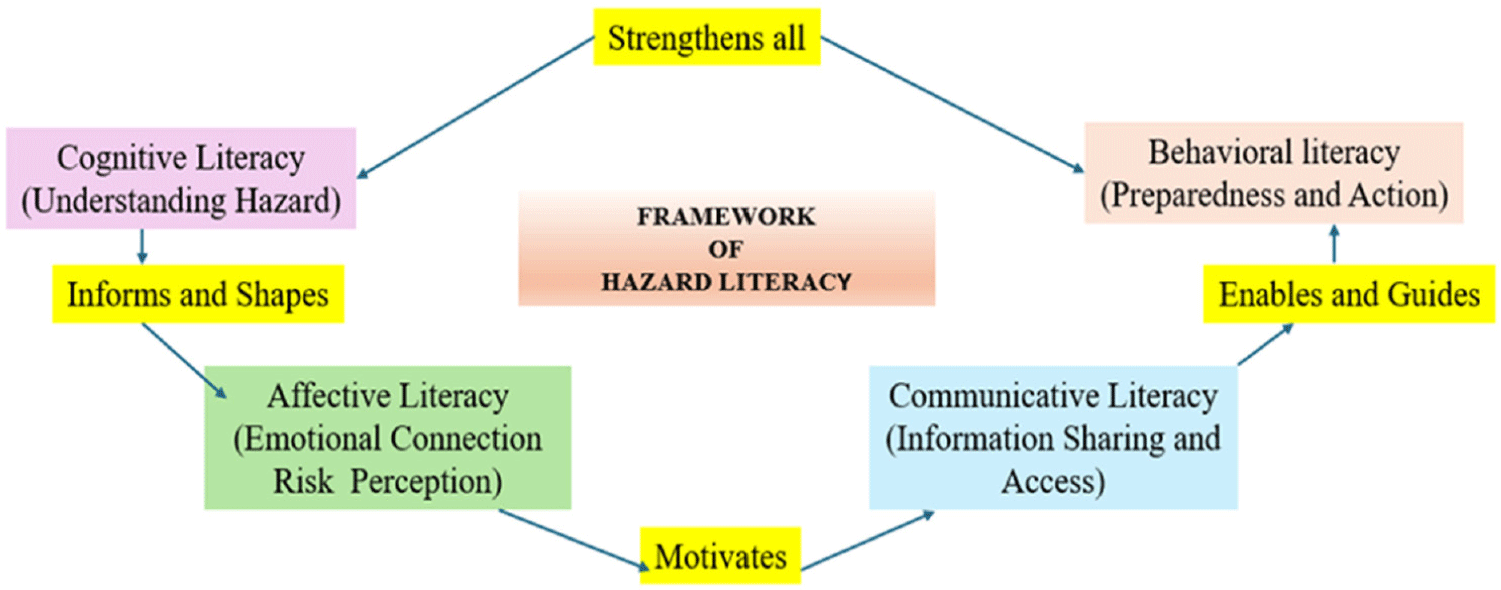
This stage uses causal inference techniques to establish the suggested non-linear and non-sufficient relationships between the HLF domains. Granger Causality Testing might be employed to empirically test the hypothesized directional relationships between the four domains, as visually represented in Fig. 1 (e.g., Cognitive Informs and Shapes Affective; Affective Motivates Communicative).
Results: The Hazard Literacy Framework (HLF)
Similarly, Hazard Literacy Framework (HLF) is a theorization of hazard literacy as a 4-domain continuum that may evolve in a non-linear manner and ultimately transition to the longer-term adaptive action (Fig. 1). A complex of contextual factors fills all these areas that are all necessary, but not sufficient, conditions for each other (Table 1).
The process of transitioning in the HLF is not arbitrary; this has complex social ecology mediating the process. Our case studies cast the following:
-
Socio-economic Status: In a survey study on Uttarakhand, India [10], it was indicated that the predictors of cognitive literacy (0.28, p<.01) and behavioral literacy (0.32, p<.01) were statistically significant, and it was the monthly household income. Poverty imposes a cost of preparedness that takes the form of modern economic survival is not compatible with future and risk-averse investment.
-
Cultural Worldviews and Religious Beliefs: In the Sundarbans of India and Bangladesh, the communities that were more dedicated to the divine will (fatalism) and affective literacy (r=–0.45, p<.05) as well as motivation to take new preparedness actions, were negatively correlated. On the other hand, Odisha has experienced a massive success in integrating the local deities and rituals to the state administered awareness to enhance confidence and interest in it.
-
Institutional Trust: This can be the most significant one. Surveys of Chennai, following the 2015 floods, revealed that trust in the city municipal corporation was the most predictive (= 0.61, p<.001) of the likelihood of the household subsequently following evacuation warnings. Corruption and bad performance in the past had destroyed this trust.
-
Gender and Social Equity: It was established that the rural Bihar women had 30 percent less access to mobile phones as the primary source of early warnings and this poses an extreme deficit in communicative literacy [21,22]. However, effective literacy is more expensive to the same women, since they are the ones that are likely to be aware of the slightest environmental var0iation to know the presence of a flood.
Theoretical and Empirical Validation: Comparative Analysis of the Eight Case Studies
A ferocious Super Cyclone ravaged Odisha, claiming over 10,000 lives and leaving communities in ruins in 1999 [23]. By 2019, when Cyclone Fani hit, the outcome was strikingly different shy of 100 people losing their lives. This change wasn’t accidental, but Odisha’s leadership and residents took lessons from past, determined to prevent another tragedy. Rather than just sharing information, they got innovative, urging villagers to tell heartfelt stories of past storms and thus making everyone understand the stakes on a personal level. They also spread the word in every way possible blasting out 2.5 million text messages, sending 43,000 volunteers into the streets with megaphones, and airing constant radio updates. All this paid off: over 1.5 million people moved to safety before Fani hit. Our research backs this up, showing that villages where folks regularly practiced evacuation drills were the ones who got out fastest, with a strong connection between those practice runs and successful escapes (r=0.89, p<.001). It’s a story of people coming together, learning from the past, and saving lives.
In contrast, our studies in Himachal Pradesh and Uttarakhand reveal a dangerous disconnect. Here, cognitive literacy is high; 88% of survey respondents knew their home was in a high seismic zone [24]. However, affective literacy is critically low due to the “rare event effect.” Return period of major earthquakes is long. This leads to low perceived personal vulnerability (mean score of 2.1/5 on a risk perception scale). This affective gap holds back action, resulting in terrible behavioral literacy which is less than 10% of households in a 2023 survey had undertaken any form of seismic retrofitting, despite state subsidies [25]. This case clearly points out that providing information (Cognitive) without addressing risk perception (Affective) is a futile exercise(Table 2) [26-28].
The 2023 Chennai floods exposed gaps related to how information was shared. The city’s weather forecasts were accurate (high potential Cognitive Literacy), but the communication didn’t work well [29–31]. An analysis of about 15,000 flood-related tweets found people were adopting and displaying negative sentiments like anger & confusion because official alerts were “vague and contradictory” [32,33]. Looking at the same data, local influencers and citizen journalists were better at sharing trusted information than official sources during the worst of the crisis [34]. This shows that sharing information isn’t always effective unless it is credible, clear, and broadcast by trusted networks [35].
In the arid Sahel region of Niger and Mali, pastoralist communities face increasing drought frequency. Cognitive literacy here is bifurcated: scientific literacy from satellite-based forage forecasts provided by agencies like AGRHYMET, and indigenous literacy based on observing animal behavior, wind patterns, and specific tree flowering. The affective literacy, the palpable anxiety of losing livestock, is high [36–38]. The communicative literacy challenge is to integrate these two knowledge systems. A successful initiative used community radio to share scientific weather forecasts along with interviews of local elders. Having their experience, they interpreted the local signs, creating a trusted source of information. This helped people act faster by selling their livestock and moving to safer grounds in time. This significantly reduced losses during the 2021 drought. The HLF shows how blending different types of knowledge and clear communication can lead to better actions.
Freetown serves as an example of a special kind of cognitive literacy gap following the tragic mudslide in 2017-in this case, an understanding of land-use and watershed interactions [3,29,36,37]. Migrants in informal settlements on steep hillsides have a high level of affective literacy (cognizance of the fear of rain) but a lower degree of cognitive knowledge associated with their risk location [1,16]. Communicative literacy can be constrained by the informal nature of these settlements, which makes it difficult to provide official dissemination of warnings. Behavioral literacy (e.g., relocation) can be limited due to a lack of affordable options. The commune’s initiative to develop builds cognitive literacy through mapping settlements and training community “land-use scouts.” This foundational cognitive literacy can be viewed as any other protective or positive action strategy. This case will also provide an argument that hazard literacy must include an understanding of environmental and spatial concepts (Table 3) [2,11,38-41].
The Philippines experiences an average of twenty typhoons every year, and as a result has instilled disaster preparedness in its national character. The country would reinforce cognitive and affective literacy through frequent lived experiences [7,10]. The greatest strength of the Philippines lies with the intentional development of behavioral literacy, in particular the program “Operation L!STO” ((“Ligtas, Iwas, Sama-Sama, Tulong-Tulong” — meaning Ready) [38,39]. Operation L!STO has mobilized national standardized drills in all schools and barangays that are not simple announcements or exercises - they encompass simulations that engage action with role-plays, first aid, and evacuation rotary [15,40]. Repetitive and applied practice creates automaticity and enables action when faced with the awareness-action gap. At the basic level of communication literacy, there are nationally recognized signals and protocols that facilitate responses [36]. The HLF analysis indicates that when behavioral literacy is drilled to the point of muscle memory, it can offer a safety net to overcome panic in an emergency [16,20].
The Andean city of Manizales is always under threat of a landslide. Their approach to risk reduction is a unique example of distributed communicative and behavioral literacy. The city equipped communities of hig h landslide risk with a network of low-cost accelerometers and tiltmeters on slopes. Local volunteers were trained as “community monitors” to actively watch the data and, when necessary, check for any physical signs of cracks. The model converted abstract risk (cognitive literacy) from official risk communication into a collective, tangible responsibility (affective & communicative literacy). If any data goes beyond a threshold, the monitors can then each directly and without fear notify their neighbors, triggering collective evacuation (behavioral literacy) [42]. This model builds tremendous institutional trust, the “institution” being the community. The HLF reveals how to monitor risk and communicate risk in a way that is most helpful to the community, trusting a sophisticated model of devolved responsibilities made for an adaptive system.
The government and non-governmental organizations (NGOs) have innovated around cognitive literacy by embedding culturally grounded narratives. Instead of simply providing future data about sea-level rise, they work with turagani koro (traditional elders) to plot future inundation alongside sacred sites and burial sites for ancestors. This approach amplifies affective literacy by creating a bridge between the abstract risk of cultural loss - years in the future - to palpable, cultural loss. Communicative literacy is channeled through these trusted leaders and behavioral literacy (e.g., managed retreat) is framed as their duty to protect heritage for future generations. The HLF illustrates how communicating hazard science with the values that are deeply held within cultures can be a powerfully fertilizing experience for deliberate practices.
The earthquakes that struck Haiti in 2010 and 2021 vividly exemplify the ways that poor governance cripples every aspect of hazard literacy. While some cognitive literacy exists related to earthquake risk, the capacity to act on that knowledge is crippled by an extreme lack of resources and institutional capacity. Affective literacy in relation to seismic risk is dominated by a sense of fatalism, combined with disregard for the state’s ability to assist, which dampens the intrinsic motivation for community response and preparedness. The most critical failure is in communicative literacy; official warnings and standards for building codes are simply not reliably or effectively communicated or implemented, and dangerous rumors and misinformation replace official information. Therefore, behavioral literacy - whether it be building earthquake - resistant structures or evacuating in an organized manner - is atrociously low. This case exemplifies that without some level of trusted institutions and minimal resources; it will be near impossible to build hazard literacy across all aspects of literacy.
Theoretical and Empirical Validation of the Hazard Literacy Framework
The nine case studies reveal four key affirmations of the HLF’s form and function:
-
The Primacy of Trust: Institutional trust in government (Odisha), community networks (Manizales, Colombia) or traditional leaders (Fiji) is the compromise that binds the domains of the HLF together. Low-trust cases (Chennai, pre-initiative Freetown) are where communicative and behavioral literacy disasters have taken place, regardless of cognitive awareness.
-
The Lever of Affective Literacy: Experience in the Himalayas and Sahel imply that Affective (cultural connection, or threat to livelihood) literacy may be the first, and strongest, motivator for action among moderate levels of formal Cognitive Literacy.
-
Action as a Skill: The successful introduction of behavioral change in the Philippines and Odisha reaffirms that behavioral literacy is a skill that has to be acquired through lived experience that is by living it repeatedly in one’s environment and community.
-
Specificity of Knowledge: The cognitive framework should recognize various kinds of cognitive literacy - scientific, indigenous, and spatial/land- use (e.g. as demonstrated in the Sahel and Freetown studies), which means that trying to make everyone think the same way is beyond the realm of reality.
The HLF theoretical value is supported by the fact that all eight case studies present a specific pattern and specific knowledge:
The “Literacy Lags” and the Non-Linearity of Progress
The case studies show the non-linear nature of the HLF in addition to confirming the necessity of all four domains. There are clear “Literacy Lags” that need to be addressed: A) Cognitive-Affective Lag: This is particularly evident in the Himalayan Region (Uttarakhand), where low Affective Literacy (low perceived personal vulnerability) prevents high Cognitive Literacy (88% awareness of seismic risk) from resulting in a motivated response. According to the data, knowledge is inert if it lacks emotional salience. B) Communicative-Behavioral Lag: Highlighted in Chennai, where a trust crisis prevented timely official alerts (potential Communicative) and precise scientific forecasts (potential Cognitive). Poor adherence to evacuation warnings resulted from a lack of trust in the source, which broke the link despite awareness.
Future Research Pathways and Methodological Innovations
The HLF is configured in a way that can be operationalized through novel methodology, which surpasses the traditional surveys. To promote effective application of empirical HLF, future research should embrace methodological innovation, including A)Development of Hazard Literacy Index (HLI): The next important step is to develop a standardized HLI. This would involve the formulation of validated scales in each of the four domains, and later the Confirmatory Factor Analysis (CFA) tests the four-factor structure in the other cultures. The HLI would make it possible to develop benchmarking and track the degree of literacy. B) Digital Phenotyping of Behavioral Literacy: Future study can be anchored upon the anonymity of mobile phone information (with moral consent) to replicate the response of behavioral extent. An example of how to provide real-time, objective information of behavioral literacy in a population can be given using aggregate movement trends based on location information during an evacuation order [43]. C) Agent-Based Modeling (ABM): To acquire knowledge about the process of the diffusion of literacy among communities, ABM can be used to simulate the process of information transfer and the change of behavior in a virtual population of people to understand how various communication strategies can be effective in different aspects of HLF until it is implemented in the real world. D) Ethnographic Network Mapping and Participatory Geographic Information Systems (PGIS): In other such situations as in Fiji and in the Sahel, intensive ethnographic research integrated with Social Network Analysis may accurately list crucial cultural brokers and knowledge holders to communicate with[44,45]. Similarly, PGIS in Freetown and Manizales allows communities to map their hazards in the process of building cognitive, communicative, and behavioral literacy [46]. E) Educational and Policy Implications: To the policymakers, the HLF serves as a diagnostic tool. They can pose questions such as where the literacy breakdown is rather than asking people whether they are aware or not. Is it a cognitive failure, the inability to make the risk real (affective), a failed communication system, or an insufficient supply of resources to act (behavioral) [47,48]. F) Curriculum Integration: HLF offers a prepared framework on how to construct holistic school programs based on the Education of Sustainable Development by United Nations Educational, Scientific and Cultural Organization (UNESCO). They can be based on lessons which involve shift of knowledge (Cognitive) to empathy and motivation (Affective) to role-playing communication (Communicative) and eventually to arranging school drills and community projects (Behavioral). G) Program Evaluation: The HLF can be used by programs such as the Aapda Mitra (Disaster Friend) in India [49,50]. The concrete evidence of program efficacy may be presented by a pre- and post-training assessment of all four domains, which can be conducted with the help of a paired-sample t-test to identify which aspect of literacy the program can strengthen the most [51,52].
Conclusion
The paper has proposed and defined a universal, new, and evidence-based conceptual design of understanding and measuring hazard literacy. We introduce the combination of cognitive, affective, communicative, and behavioral elements into the developing HLF to offer a therapeutic and strategic tool that best exemplifies the complex process of understanding how to become a person who acts. The HLF paves the path to a future where greater hazard literacy would be directly converted to saving lives, livelihoods and indeed resilient communities.


