

Introduction
Art and culture play a crucial role in enhancing community resilience to disasters [1,2]. They not only serve as powerful tools for communication, education, and memory preservation but also foster emotional healing and strengthen social cohesion in the aftermath of crises [1,3]. Through storytelling, visual art, performance, and digital media, communities can process shared experiences, maintain cultural identity, and mobilize collective action for disaster preparedness, response, and recovery [4,5]. These creative expressions make disaster risk reduction (DRR) more accessible, inclusive, and culturally relevant [6].
The significance of art and culture in DRR has long been embedded in indigenous practices and local traditions [7]. Over generations, indigenous and local communities have successfully employed traditional methods to prepare for and respond to disasters [8]. Even before the advent of modern technological systems, many communities relied on ancestral knowledge passed down through generations [9], including intangible cultural heritage such as performing arts, which reinforced resilience and ensured survival [10]. At the global level, the importance of art and culture has also been acknowledged in major policy instruments such as the Hyogo Framework for Action (2005–2015) and the Sendai Framework for Disaster Risk Reduction (2015–2030), which emphasize the integration of local knowledge and cultural heritage into DRR strategies [11–14].
These global frameworks highlight that effective DRR requires not only technical and scientific solutions, but also culturally embedded approaches that enhance public understanding, community engagement, and locally grounded resilience. This provides a strong rationale for examining how arts and cultural practices can function as mechanisms for translating risk knowledge into meaningful social action. This recognition highlights the potential of cultural resources in resilience-building. However, despite such policy acknowledgment, the integration of art and culture into DRR remains fragmented, with limited practical application and insufficient academic exploration. In this regard, the United Nations Office for Disaster Risk Reduction (UNDRR) advocates for combining scientific approaches with cultural perspectives to empower communities and strengthen people-centered resilience [15].
Despite growing recognition, the roles of art and culture in DRR remain underexplored and fragmented across different contexts. Existing initiatives often focus on specific art forms or isolated case studies, without a comprehensive framework to assess their impacts across various DRR phases. Moreover, there is limited evidence on which types of art are most effective under different cultural and hazard conditions, and how these approaches can be scaled or adapted to diverse communities. This gap hinders the development of coherent strategies that fully harness the potential of art and culture in building disaster resilience.
More specifically, existing studies tend to remain descriptive, with limited attention to the underlying mechanisms through which different art forms influence risk awareness, community participation, and resilience outcomes. In particular, the role of engagement and co-creation in shaping the effectiveness of arts-based approaches remains insufficiently theorized.
This study aims to develop a conceptual framework for integrating art and culture into DRR, drawing from practice-based insights across different contexts.
Rather than addressing the broad question of whether art contributes to DRR, this study focuses on how and under what conditions different forms of art influence DRR through distinct mechanisms of engagement and levels of community participation.
The research addresses the following questions:
-
How do art and culture influence DRR through mechanisms of engagement and levels of community participation?
-
How are different forms of art applied across DRR phases, and what types of impacts do they generate?
-
What factors influence the effectiveness of arts-based approaches, and how can these practices be adapted or scaled across different contexts?
By adopting a structured literature review and developing a conceptual framework, this study moves beyond descriptive synthesis to provide a mechanism-based and comparative understanding of how and why arts-based approaches contribute to disaster resilience.
This paper comprises five sections. The Introduction outlines the background, research gaps, and questions. The Methodology explains the two-stage qualitative design. The Conceptual Framework classifies art into traditional, modern, and digital forms, analyzing their impacts across DRR phases. The Results and Discussion examine each category and offer a comparative synthesis. The Conclusion highlights the main findings and practical implications for integrating art and culture into DRR.
Methodology
This study employs a qualitative approach to explore the role of art and culture in DRR. The research design is structured in two complementary stages.
The first stage focuses on developing a conceptual framework that connects art, culture, and DRR. This framework is constructed through the synthesis and interpretation of existing concepts and theories in the fields of cultural studies, the arts, and disaster risk management, with particular attention to perspectives from risk communication and participatory approaches.
Foundational policy instruments (such as the Hyogo Framework for Action and the Sendai Framework for Disaster Risk Reduction), together with relevant academic works, are reviewed to identify the theoretical dimensions through which art and culture contribute to strengthening resilience and reducing risks.
The framework was not fixed at the outset but was iteratively refined during the literature review process. Initial categories, including art forms, DRR phases, and impact domains, were adjusted as patterns emerged from the empirical studies analyzed in Stage 2.
The framework serves as an analytical lens to classify and interpret how different forms of art contribute to DRR across phases and impact domains.
The second stage involves conducting a structured literature review to substantiate the conceptual framework with empirical evidence and practical illustrations. Searches were carried out across major databases, including Scopus, Web of Science, and Google Scholar, using combinations of keywords such as “art AND culture,” “disaster risk reduction,” “community resilience,” and “co-creation AND DRR.”
The literature selection process followed a multi-step screening procedure, as illustrated in Fig. 1 (PRISMA flow diagram). A total of 413 records were initially identified (383 from databases and 30 through citation searching). After removing 37 duplicates, 376 records remained for screening.
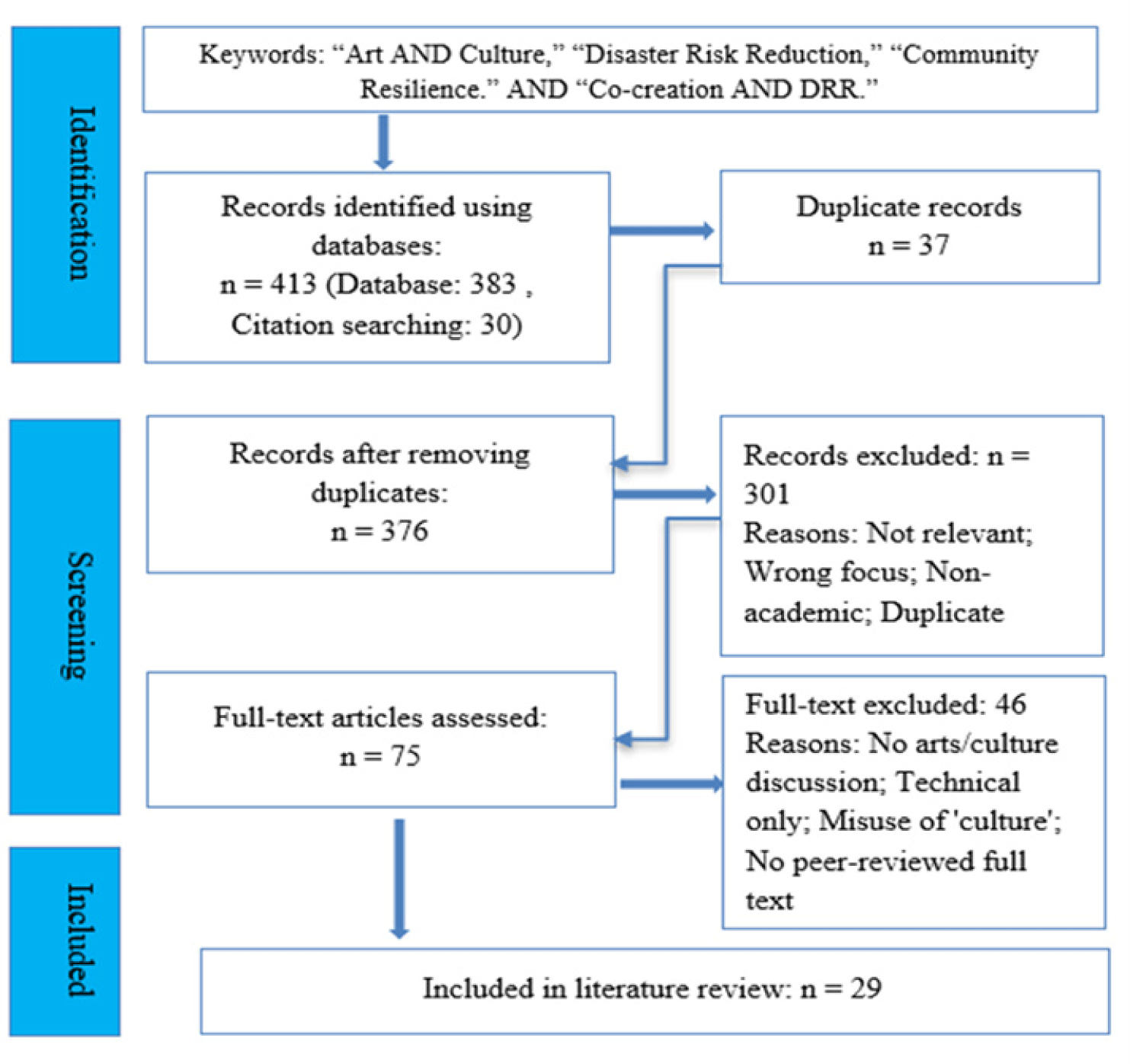
During the screening stage, 301 records were excluded based on title and abstract review due to lack of relevance, inappropriate focus, non-academic sources, or duplication. Subsequently, 75 full-text articles were assessed for eligibility. Of these, 46 articles were excluded for reasons including absence of explicit discussion on art and culture in DRR, purely technical focus, misuse of the concept of culture, or lack of peer-reviewed full text. Finally, 29 studies were included in the analysis.
Selection criteria included publications from 2015 to 2025 that explicitly addressed the role of art and/or culture in disaster preparedness, response, or recovery, including empirical studies, case studies, and conceptual contributions. The starting point of 2015 was chosen because it marks the adoption of the Sendai Framework for Disaster Risk Reduction (2015–2030), which emphasizes the integration of cultural resources, local knowledge, and community participation into resilience-building.
In addition to academic publications, reports from international organizations (e.g., UNDRR, United Nations Educational, Scientific and Cultural Organization (UNESCO), and non-governmental organizations) were consulted to capture applied perspectives.
The selected materials were analyzed using thematic analysis. Key information from each study was systematically extracted and coded, including art form, DRR phase, type of impact (cognitive, psychosocial, institutional), and level of community participation. Themes were identified through an iterative coding process, allowing patterns to emerge across studies.
The identified themes were used to operationalize and refine the conceptual framework developed in Stage 1, ensuring alignment between theoretical constructs and empirical evidence.
By integrating theoretical synthesis, structured literature analysis, and empirical evidence, this study demonstrates how art and culture can be systematically incorporated into DRR strategies.
Conceptual Framework
Based on theoretical synthesis and empirical evidence, this study proposes a conceptual framework that classifies art in DRR into three categories: (1) Traditional and community-based arts (storytelling, folk songs, folklore, community practices), which preserve collective memory, cultural identity, and social cohesion [16,17]. (2) Modern non-digital arts (film, music, visual and performing arts), which strongly evoke emotions and raise awareness but are often one-directional in communication [18,19]. (3) Digital and technology-based arts (virtual reality [VR], augmented reality [AR], artificial intelligence [AI], and social media platforms), which expand outreach and enhance interactivity, yet face challenges of sustainability and accessibility [20,21].
This classification is analytically useful for DRR because different forms of art vary in their modes of communication, levels of community participation, and potential for scalability. Traditional arts are typically embedded in local contexts and collective practices, modern arts rely more on symbolic and aesthetic expression, while digital arts enable wider outreach and interactive engagement.
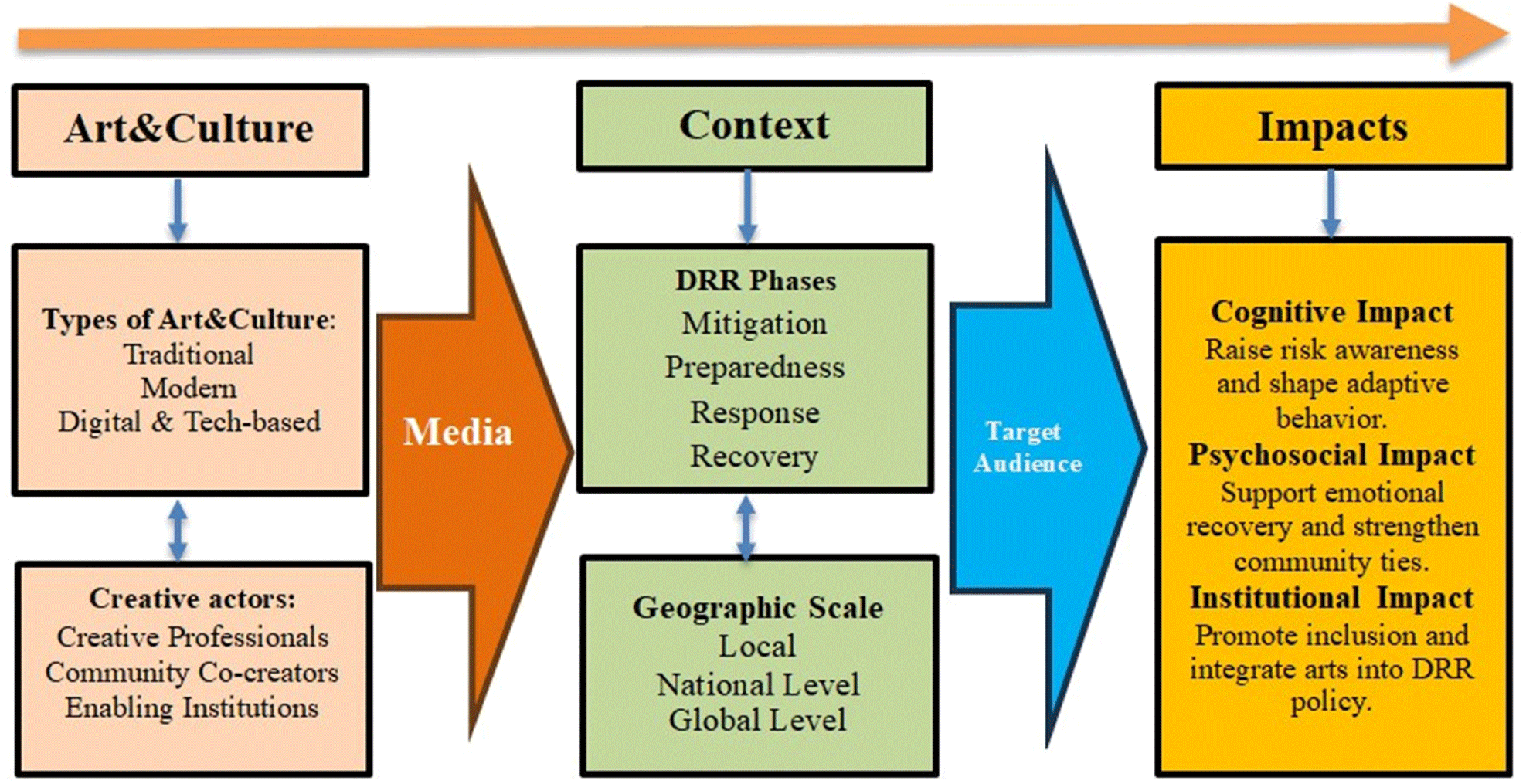
Art and culture can be systematically integrated into DRR process across four key phases: prevention, preparedness, response, and recovery [22]. In the prevention phase, artistic practices and cultural heritage help sustain historical memory and cultivate community risk awareness [23,24]. During the preparedness phase, arts-based activities facilitate interdisciplinary learning and strengthen community education, thereby consolidating adaptive capacity [25]. In the response phase, art serves both as an emergency communication medium and as a psychosocial resource, supporting emotional recovery and fostering social connectedness within affected communities [26]. Finally, in the recovery phase, creative and cultural practices contribute to psychological healing and the reconstruction of community identity, thus reinforcing long-term resilience [27,28]. This integrated perspective underscores how art and culture function as cross-cutting resources throughout the DRR cycle.
The proposed conceptual framework identifies three main domains of impact through which art and culture contribute to DRR. First, cognitive impacts relate to enhancing risk awareness, acquiring knowledge, and shaping adaptive behaviors in disaster education [25,29]. Second, psychosocial impacts encompass the role of artistic practices in alleviating stress, supporting emotional recovery, and strengthening community cohesion in post-disaster contexts [30,31]. Third, institutional impacts emphasize the integration of cultural and artistic approaches into DRR governance and policies, thereby promoting the mainstreaming of culture within resilience-building agendas [1,12].
These three domains operate at interconnected analytical levels. Cognitive impacts primarily influence individual awareness and knowledge, psychosocial impacts shape collective experience and social cohesion, while institutional impacts relate to the integration of these processes into governance structures and policy frameworks. Together, they represent a progression from individual understanding to collective engagement and ultimately to systemic change.
Art and culture influence DRR through several key mechanisms. First, they translate complex risk information into culturally meaningful and accessible forms, enhancing cognitive understanding. Second, they foster emotional engagement and shared experiences, which strengthen psychosocial resilience and community cohesion. Third, participatory and co-creative processes enable communities to actively engage with risk knowledge, increasing ownership and trust. Finally, when these practices are embedded in institutional contexts, they can contribute to policy learning and the integration of cultural approaches into DRR governance.
Overall, these three dimensions situate artistic practices and creative actors within the multi-level structure of DRR, while providing an integrated analytical lens to assess the effectiveness of diverse art forms in enhancing community resilience. This framework also provides a basis for analyzing empirical cases in the following section.
Results and Discussion
Across traditional and community-based arts, a consistent pattern is the use of storytelling, collective memory, and participatory practices to strengthen culturally embedded risk awareness and social cohesion. These approaches are particularly effective in preparedness and recovery phases, where local knowledge and shared experiences play a central role.
This section focuses on papers that studied the role of traditional art and culture in DRR. The papers selected for this category studied traditional art forms like storytelling, folk art and participatory community performances. Apart from the specific art form and medium of dissemination, the papers are analyzed below based on the geographic location of the study areas, the target DRR phase, the target audience, and the overall impact.
In Japan, Iizuka et al. demonstrated how local performing arts, such as the lion dance in tsunami-affected communities, supported recovery by restoring cultural identity, strengthening social bonds, and providing psychosocial support for evacuees [17]. Similarly, in the Pacific context, Janif et al. highlighted the role of elders in Fiji who use oral narratives and songs to transmit disaster memories and coping strategies [16]. This practice functions as a preparedness tool, raising awareness of risks among younger generations while preserving traditional knowledge and strengthening community cohesion.
These cases illustrate how traditional arts operate through culturally grounded communication and participatory mechanisms, enabling communities to internalize risk knowledge (cognitive impact) while reinforcing collective identity and social cohesion (psychosocial impact) over time.
Beyond oral and performative traditions, creative industries have also contributed to resilience-building. Fahmi et al. examined arts and crafts enterprises in post-disaster Indonesian villages, showing how cultural production supported recovery by enhancing local economic resilience, sustaining cultural identity, and fostering community empowerment [32]. Meanwhile, innovative approaches such as participatory theatre have been evaluated as tools for risk communication [4]. Bubeck et al. found that community-based theatre in Vietnam increased disaster risk perceptions and promoted collective engagement, particularly through women’s groups, thereby strengthening preparedness at the local level [4].
The potential of creative practice for resilience is not limited to Asia-Pacific. Griffin et al. explored art-based engagement in flood-prone communities in the UK, showing how participatory arts increase awareness and build long-term resilience capacities, particularly among youth [33]. Similarly, Cosgrave et al. emphasized the value of performing arts including theatre and dance in conveying embodied disaster experiences and linking them to preparedness and resilience outcomes [34].
Taken together, these studies show that traditional and creative cultural practices can operate at multiple scales local, regional, and national while addressing different DRR phases, from preparedness to recovery. Across contexts, their impacts are consistently associated with strengthening community identity, increasing awareness of risks, fostering empowerment, and enhancing psychosocial support.
Despite these strengths, institutional impact remains limited. This may be due to the localized and informal nature of traditional practices, which are often difficult to translate into formal policy frameworks or scalable DRR programs.
Traditional methods are time tested, and they usually have a good impact on the communities [35]. The impact was particularly significant in case of studies that focused on art forms that involve community participation. Engaging with residents directly seems to be the most effective approach to co-produce and facilitate creative practices, rather than relying on a formalized and formulaic methodology [33]. Especially in the recovery phase, participatory art forms can provide an important opportunity for community members to meet.
This highlights the importance of co-creation in traditional arts-based DRR practices. When communities actively participate in the design and implementation of artistic activities, they are more likely to develop a sense of ownership and trust, which facilitates the translation of risk awareness into collective action.
However, activities involving community members are often difficult to organize. Reaching out to people and getting them to show up can be a challenge. Besides, they often require appropriate venue and adequate funds. It is important for these activities and practices to commence from local specificities, collaborating with the resources and capabilities unique to the site and location.
These challenges suggest that the effectiveness of traditional arts in DRR lies not in their scalability through standardization, but in their adaptability to local contexts. Future approaches should therefore prioritize flexible frameworks that support locally grounded implementation rather than uniform replication.
Modern art forms such as film, music, dance, theatre, and visual arts have been employed in DRR to evoke emotional resonance and foster social cohesion, particularly in disaster prevention education and risk communication. Studies highlight their potential to enhance public awareness and stimulate creativity; however, most initiatives remain constrained by one-way communication, limited public participation, and challenges of sustainability [18,36].
Unlike traditional arts, modern arts primarily operate through aesthetic and emotional mechanisms, using visual and performative expression to capture attention and stimulate awareness. However, their largely one-directional communication limits deeper community engagement and long-term behavioral change.
These mechanisms primarily influence cognitive and psychosocial dimensions by increasing risk perception and emotional awareness. However, without participatory elements, such impacts often remain short-term and do not necessarily lead to behavioral change or community-level resilience.
Several illustrative cases demonstrate these dynamics. In Japan, Tosa et al. developed the Sound of Ikebana project, in which simulated tsunami sounds were transformed into floral patterns and later applied to disaster-prevention signboards. This approach reframed potentially traumatic disaster experiences into aesthetic encounters that stimulated imagination, although audience interaction remained limited [19]. This example also highlights the emergence of hybrid approaches that combine modern and digital elements to enhance interactivity and engagement.
In the United Kingdom, Smith et al. examined Flood Lights, a large-scale public art installation that used light and sound to communicate flood risks. The project engaged thousands of residents and elicited strong emotional responses; however, its long-term sustainability and capacity to translate awareness into behavioral change remain uncertain [30]. In the United States, Colavito et al. reported on Fires of Change, a collaborative exhibition in which scientists, managers, and artists co-produced multimedia works on wildfire and climate change [36]. While the project enhanced understanding of fire regimes and strengthened stakeholder networks, its evaluation relied on small samples and descriptive data, limiting the robustness of its conclusions.
These cases indicate that while modern arts are effective in attracting attention and generating emotional responses, audiences often remain passive recipients. This limits opportunities for co-creation, reducing the likelihood that awareness will translate into sustained engagement or collective preparedness.
Taken together, these studies show that modern arts can play a vital role in raising disaster awareness through aesthetic expression and emotional impact. However, their inherent limitations, such as expert-led design, short-term exhibitions, and the lack of sustained community engagement, restrict their long-term effectiveness.
From an institutional perspective, the impact of modern arts also remains limited. Although some initiatives contribute to public engagement and interdisciplinary collaboration, their integration into formal DRR governance and policy frameworks is often weak, as many projects remain temporary and lack long-term institutional support.
This suggests that emotional engagement alone is insufficient to sustain long-term behavioral change and resilience outcomes. Instead, the effectiveness of modern arts in DRR is contingent upon their integration with participatory mechanisms and hybrid approaches that enhance interactivity and sustainability.
Digital and technology-based arts, ranging from immersive media such as VR and AR to social-media-enabled participatory arts and audio-visual innovations, are increasingly mobilized in DRR to enhance communication, interactivity, and preparedness. Unlike traditional and modern forms, digital arts allow multi-sensory engagement, large-scale outreach, and simulation of extreme events, making them particularly effective for awareness raising and experiential learning. However, their reliance on technological infrastructure, financial resources, and digital literacy raises important concerns of sustainability and inclusiveness.
Across the reviewed studies, digital arts exhibit a distinct analytical pattern in DRR, where their effectiveness is shaped less by the technology itself and more by the mode of engagement they enable. In particular, the level of interactivity and the extent of community co-creation play a critical role in determining whether digital initiatives lead to short-term awareness or more sustained behavioral and social outcomes.
Empirical studies highlight the diversity of digital arts in DRR. In the UK, Angel et al. developed audio-based flood vignettes that transformed community testimonies into soundscapes, demonstrating how sonic arts can evoke empathy and deepen understanding of vulnerability and resilience beyond text-based research [37]. In Canada, Pickering et al. experimented with Photovoice combined with Instagram exhibitions, enabling youth to act as co-researchers in DRR and to share their perspectives widely even during pandemic restrictions. This project underscored the potential of digital platforms to strengthen youth agency, build social capital, and facilitate policy dialogue [21].
Digital arts also intersect with immersive technologies. Surtiari et al. reported on VR/AR applications in tsunami-prone Indonesian communities, where hazard simulations supported preparedness training and experiential learning, significantly improving community engagement and perceived self-efficacy [20]. Similarly, Tosa et al. extended the Sound of Ikebana project by embedding AR markers in disaster-prevention signboards, enabling passersby to access tsunami-inspired videos on their smartphones, thus linking aesthetic expression with everyday disaster awareness [19]. At a more systemic level, Del Favero et al. outlined how advanced visualization systems, AI-generated simulations, and interactive installations can help communities “pre-visualize” climate extremes such as fires and floods, providing novel tools for rehearsal and preparedness strategies [38].
These examples suggest that digital arts primarily operate through cognitive and experiential mechanisms. By transforming abstract risk information into immersive and sensory experiences, they enable users to internalize hazard knowledge more effectively. However, the depth of this impact depends on the level of user engagement: highly immersive but expert-driven technologies such as VR and AR often enhance individual understanding, yet may not necessarily translate into collective action without participatory elements.
In contrast, participatory digital platforms demonstrate a different mechanism of impact. By enabling users to act as co-creators rather than passive recipients, these approaches foster ownership, trust, and social learning. This shift toward co-creation enhances not only psychosocial outcomes, such as community cohesion and empowerment, but also increases the potential for sustained engagement and knowledge exchange across networks.
Despite these promising cases, recurring limitations exist. Digital initiatives often depend on short-term projects, external technical expertise, and costly equipment, which limit their scalability and sustainability. Furthermore, unequal access to digital tools risks reinforcing social exclusion, particularly for marginalized groups. Questions of ethics, data protection, and long-term maintenance also remain unresolved.
These limitations also help explain why the institutional impact of digital arts in DRR remains uneven. While digital tools can facilitate communication and engagement, their integration into formal governance structures is often constrained by issues of scalability, resource dependency, and policy alignment. As a result, many initiatives remain project-based and fail to translate into long-term institutional change.
Taken together, digital and technology-based arts demonstrate significant potential to reshape DRR by fostering immersive learning, empowering youth participation, and bridging scientific knowledge with community experience. Yet, to maximize their contribution to resilience-building, future initiatives must integrate participatory co-design, ensure inclusivity through low-tech alternatives, and embed digital tools within broader cultural and institutional frameworks of disaster preparedness [39].
Overall, the effectiveness of digital arts in DRR is contingent not simply on technological innovation, but on the interaction between technological design, level of co-creation, and socio-cultural context. Approaches that combine high interactivity with inclusive participation and institutional embedding are more likely to generate sustained and scalable resilience outcomes.
The comparative analysis of the three art categories, namely traditional, modern, and digital, reveals that each possesses distinct characteristics while simultaneously sharing important contributions to DRR. Across all categories, artistic practices have been shown to serve as effective tools for enhancing risk awareness, preserving collective memory, and reinforcing social cohesion [17,18,21]. Through diverse modes of expression, they create spaces for dialogue, facilitate psychosocial recovery, and foster collective action across different phases of the DRR cycle [20,33].
Across the three categories, a consistent analytical pattern emerges in which the effectiveness of arts in DRR is shaped not only by the type of art form, but more importantly by the mode of engagement and the level of community participation they enable. This highlights that differences in impact are better understood in terms of underlying mechanisms rather than artistic categories alone.
Nevertheless, clear differences are evident. Traditional arts are characterized by their deep integration with local life and their ability to sustain cultural identity, though their impact is often limited to community-level dissemination [16,35]. Modern arts, in contrast, generate strong aesthetic and emotional effects [18,19], yet they are frequently delivered through top-down approaches, resulting in limited community interaction and challenges to long-term sustainability [30,36]. Digital and technology-based arts expand outreach by enabling multisensory experiences and high levels of interactivity [20,21], but they are constrained by dependence on technological infrastructure, financial resources, and digital literacy, thereby risking the exclusion of vulnerable groups [39].
These differences can be interpreted through three primary mechanisms identified in this study. Traditional arts operate through culturally embedded and participatory mechanisms, enabling deep internalization of risk knowledge and sustained social cohesion. Modern arts primarily rely on aesthetic and emotional mechanisms, which are effective for raising awareness but less effective in generating long-term engagement without participatory components. Digital arts, meanwhile, function through interactive and technological mechanisms that can scale communication and engagement, but require adequate resources and inclusivity to be effective.
The effectiveness of these art forms is significantly mediated by the degree of community participation in co-creation. In traditional arts, communities inherently act as the primary creators [16,17], which explains the depth and sustainability of their impact. Modern arts, however, achieve more substantial outcomes only when community members are actively engaged in the processes of design or performance [33,36], rather than restricted to passive spectatorship. Digital arts, meanwhile, provide unprecedented opportunities for participatory co-creation, particularly through social media and online platforms [21,38], enabling communities to become producers of content and agents of communication. Yet, these opportunities can only translate into inclusive practices if barriers related to digital infrastructure and skills are adequately addressed [20,39].
This comparison further suggests that co-creation functions as a critical mediating factor linking artistic practices to DRR outcomes. Higher levels of participation tend to strengthen ownership, trust, and social learning, thereby increasing the likelihood that awareness will translate into collective action and long-term resilience. Conversely, approaches characterized by passive engagement are more likely to result in short-term awareness without sustained impact.
Taken together, the three art categories can be regarded as complementary rather than mutually exclusive. Traditional arts preserve local memory and indigenous knowledge [16], modern arts amplify symbolic and aesthetic dissemination [18], and digital arts expand outreach and foster interactivity [20,21]. Their integration offers a multi-layered approach to DRR that ensures cultural sustainability while enhancing broad-based community mobilization. Importantly, no single art form is universally superior; their effectiveness depends on socio-cultural context, the phase of DRR, and the characteristics of the targeted groups. Effective strategies should therefore be grounded in integration, co-creation, and inclusivity. Such an approach not only maximizes the individual contributions of each art form but also provides pathways for developing culturally embedded DRR strategies with long-term adaptability and sustainability [12,22].
From an institutional perspective, this also implies that integrating different art forms into DRR requires not only combining their functional strengths, but also aligning them with governance structures, resource availability, and local capacities. Without such alignment, even innovative and participatory approaches may remain fragmented and fail to achieve long-term policy impact.
Conclusion
This study has developed a conceptual framework to analyze the role of art and culture in DRR, focusing on three categories: traditional, modern, and digital arts, and examining three domains of impact: cognitive, psychosocial, and institutional. The findings indicate that each category offers distinct strengths but also notable limitations: traditional arts preserve memory and strengthen social cohesion but have limited policy influence; modern arts evoke emotions and raise awareness but often lack sustainability and meaningful community engagement; while digital arts expand outreach and interactivity, they face challenges related to infrastructure, cost, and inclusivity.
Beyond this classification, the study contributes conceptually by demonstrating that the effectiveness of arts in DRR is not determined solely by the type of art form, but by the mechanisms through which they operate, particularly the mode of engagement and the level of community participation they enable.
The comparative analysis demonstrates that no single art form is universally superior; rather, effectiveness depends on context, DRR phase, and most importantly, the degree of co-creation among communities, artists, and stakeholders. When creative processes are co-designed, arts and cultural initiatives tend to achieve deeper, more sustainable impacts and contribute more directly to community resilience.
In this regard, co-creation emerges as a critical mediating factor linking artistic practices to DRR outcomes. Higher levels of participation strengthen ownership, trust, and social learning, thereby increasing the likelihood that awareness is translated into collective action and long-term resilience.
From a practical perspective, this framework underscores the need to mainstream artistic and cultural practices into DRR strategies, encourage hybrid approaches that combine different art forms, develop inclusive mechanisms, and strengthen co-creation processes. Such efforts can help transform art and culture from peripheral interventions into core, sustainable, and contextually grounded resources for building disaster resilience.
At the institutional level, the findings also highlight the need to better integrate arts-based approaches into formal DRR governance. Without alignment with policy frameworks, resource structures, and local capacities, many initiatives remain project-based and fragmented, limiting their long-term impact.
This study has several limitations. First, the analysis is based on a structured review of a relatively limited number of studies, which may not fully capture the diversity of global practices. Second, the evaluation of impacts is largely based on qualitative evidence, with limited longitudinal data on long-term outcomes. Future research should therefore focus on developing more systematic evaluation methods, examining long-term impacts, and exploring how arts-based approaches can be scaled and embedded within institutional frameworks across different contexts.


