

Introduction
Since the 1.5-degree goal proposed in The Paris Agreement in 2015, countries have made various efforts to deal with climate change and introduced various adaptation and mitigation strategies. IPCC [1] provides a report on the impacts of a 1.5-degree Celsius in global temperature compared to pre-industrial levels and associated greenhouse emission pathways, in the context of global response to climate change and sustainable development. In response to the 1.5-degree target and the mitigation of climate change, IGES [2] proposed the concept of ‘1.5-degree lifestyle’, that is, a green lifestyle that supports sustainable development, a low-carbon lifestyle. According to IGES [2], the 1.5-degree lifestyles seek to simultaneously reduce the carbon footprint of nutrition (foods), housing, mobility (transport), consumer goods, leisure and services, as these six sectors account for more than 75% of an individual’s lifestyles carbon emissions. HotorCool [3] report examines the 1.5-degree lifestyle approach, which uses a consumption-based accounting approach to examine greenhouse gas emissions and mitigation potential, analyzing the lifestyle carbon footprint of 10 sample countries (high, middle and low-income countries) and identifying hotspots or areas of consumption that have the greatest environmental impact.
Changing consumption patterns and domain lifestyles to reduce carbon emissions are key to achieving the transition to a sustainable and more fulfilling society [2–4], which makes changes in the lifestyles of large groups of people important for the environment and sustainable development. The potential of demand-side mitigation strategies (lifestyle changes) to reduce emissions across all sectors is confirmed by the IPCC 6th Assessment Report [5], and demand-side measures and new ways of delivering end-use services could reduce global GHG emissions from the end-use sectors (buildings, surface transport, food) by 40%–70% by 2050 [6]. Moreover, the IPCC [6] report indicates a high level of confidence in reducing energy demand to mitigate climate change, which requires strong demand-side management from government and increased public awareness of lifestyle changes to help the public reduce energy use from the ‘housing’ aspect and lower their lifestyle carbon footprint, strongly supporting the 1.5-degree lifestyle potential.
‘Carbon footprint’ generally refers to the emissions of gases associated with human production and consumption activities [7]. IGES [2] and HotorCool [3] explained the contribution of people’s lifestyle carbon footprint by measuring and calculating the six aspects (nutrition, housing, mobility, consumer goods, leisure and services) of carbon footprint, so as to discuss how much lifestyle carbon footprint reduction and how to reduce the carbon footprint can achieve the 1.5-degree goal in these six aspects. Changing lifestyles to reduce the carbon footprint of living is almost equivalent to reducing the carbon emissions of living, such a low carbon lifestyle is a 1.5-degree lifestyle. It is essential to understand the contributors to the carbon footprint in order to identify which aspects, which actions, which lifestyle changes are more effective in reducing the carbon footprint. Therefore, understanding the contributors to the carbon footprint is key to promoting a 1.5-degree lifestyle.
The report states that in addition to the need for citizens to start a low-carbon lifestyle as soon as possible, sustainable development policies need to be changed in governance. In other words, the government shall create the conditions for people to change their habits and lifestyles [2]. Japan aims to reduce greenhouse gas emissions by 46% from 2013 levels by 2030, an ambitious target that is in line with the long-term goal of net zero emissions by 2050 [8]. More than 250 local authorities take up the climate challenge and begin the transformation to a zero-carbon city. According to the OECD [9], Japan has made far more mitigation efforts than adaptation. The policies of climate change in Japan are more focused on mitigation, rather than adaptation at the local level [10,11].
Achieving the 1.5-degree goal requires not only individual behavioral efforts, but also policy measures are essential. The whole society needs to coordinate and make changes from both the political and individual sectors, such as adjusting policies, technological innovation [12,13], improving citizens’ awareness and so on.
In order to comprehensively assess the variation of 1.5-degree lifestyles in Japan, this study adopts four perspectives: an urban/rural perspective, an age perspective, a gender perspective and a perspective on the role of information and communication technology (ICT). Each perspective is supported by existing empirical and theoretical studies demonstrating its relevance to lifestyle-related carbon footprints and behavioral change. Examining these four perspectives together illuminates how spatial context, demographic factors and technology shape variations in individuals’ willingness and ability to live sustainably. This reveals diverse opportunities and challenges for achieving low-carbon lifestyles in line with the 1.5-degree target.
Even though climate change is not directly linked to the migration of people from rural to urban areas in developed countries, the chain reaction caused by climate change due to population migration and urbanization has different impacts on urban and rural areas [14]. Specifically, urbanization is bringing more and more people to cities, resulting in much larger carbon footprints and emissions in cities than in rural areas. In Japan, Tokyo is the largest carbon emitter [15]. On this basis, the practice of climate change mitigation in urban and rural areas could be very different. Therefore, an urban and rural perspective is very important and will be one of the dimensions of this study.
The second focus of this study is the gender dimension. Although it has been decades since feminism proposed to engage gender issue with environment-related policy, in practice, policies are still inadequate [16]. Climate change exacerbates existing gender inequalities [17]. The inclusion of a gender perspective in this study is grounded in existing scholarship demonstrating that gender significantly shapes vulnerability, adaptive capacity, and behavioral responses to climate change [18,19]. While gender equality is recognized as a core objective under sustainable development goals (SDG) 5 [20], research has consistently demonstrated that gender dimensions remain inadequately integrated into climate change adaptation and mitigation and policy frameworks [21–23]. It is significant that a gender perspective is incorporated into climate change research in order to address the persistent analytical and policy gap that has been identified.
Gender and age differences in the context of Japan, will to some extent lead to a lifestyle gap and a gap in willingness to change behavior, which is also an important topic for 1.5-degree lifestyles. Age perspective is the third dimension that this study to address. UN [24] claims that engaging the younger generation to take action towards a low-carbon lifestyle is extremely important, and there is evidence that by increasing the agency of young people, education can be effective [25]. In Japanese context, Japan is an aging country [26], which is particularly important group of people that need to be consider. Therefore, this study believe that address age perspective is necessity.
Lastly, the important dimension addressed by this research is ICT, which is a powerful tool that enable to connect and communicate [27]. ICT is growing rapidly and is likely to continue to grow in the next decade [28]. Additionally, the ICT perspective is an engagement with the current digitization process, which is worth discussing the impact of ICTs on people’s willingness and practices towards 1.5-degree lifestyles, and it is important to recognize the role that ICT brings to the dynamics of climate change mitigation [29].
The main idea of this study is to understand people’s willingness and ability to consider the potential for people to change their lifestyles to a 1.5-degree lifestyle. While the present manuscript does address issues of demand-side mitigation, the focus is on discussing people’s aspirations and the potential of 1.5-degree lifestyles. Besides, the perspectives chosen are relatively objective social identities. Besides, the perspectives chosen are relatively objective social identities. The gap in these four perspectives may lead to the gap in people’s thoughts and actions, and may also lead to different responses to 1.5-degree lifestyles and different intentions and actions to change their lifestyles and live a green life to mitigate the climate challenge. Therefore, it is crucial to choose these four perspectives [30–32].
Although existing studies have established the 1.5-degree lifestyle framework and quantified major consumption sectors, few have integrated key social dimensions, such as urban–rural context, gender, age and ICT, into a single analytical framework. In Japan, despite the availability of rich data and ambitious mitigation targets, there has been limited research into how these factors influence individuals’ willingness and ability to adopt low-carbon lifestyles. Furthermore, although household income is widely recognized as a primary driver of lifestyle-related carbon emissions [30–32], it has not been adequately explored in this context. Addressing this gap is crucial for understanding differentiated behavioral responses and designing equitable mitigation strategies. Japan is a valuable case study because of its demographic and urbanization challenges, and because its insights can inform broader global efforts to transition towards sustainable lifestyles in other high-income societies facing similar socio-economic and technological transformations.
This study is going to review the climate change mitigation practices, especially focusing on the 1.5-degree lifestyles practices and the evaluation of achieving 1.5-degree goal in Japan. The study will broadly draw 4 perspectives to discuss the potential of 1.5-degree lifestyles in Japan, which are ICT as the role in promoting 1.5-degree lifestyles, gender perspective, age perspective (ageing/traditional population and generation Z/younger generation), urban and rural perspective. This study aims to explore the feasibility and difficulties of living a 1.5-degree lifestyle in Japan from these four perspectives, also to understand people’s willingness and ability to consider the potential for people to change their lifestyles to a 1.5-degree lifestyle from four perspectives.
Methods
This paper is based on secondary research. In order to understand the current climate change mitigation strategies and practices of 1.5-degree lifestyles in Japan, 4 perspectives have been proposed: The role of ICT perspective; Urban and rural perspective; Gender perspective; Age perspective (ageing/traditional population and generation Z/younger generation). The literature will be collected related to the above concepts.
The following keywords were used to search for relevant literature: Climate change, 1.5-degree lifestyle, ICT, urban and rural, gender, age, Japan. Entering all these keywords in the advanced search panel of the database resulted in a small selection of literature.
The literature sampling method is database search. To ensure transparency and replicability in the literature review process, the screening followed the PRISMA 2020 guidelines [33]. A systematic search was conducted across three academic databases ProQuest, Scopus and Web of Science, to identify relevant studies published between 2018 and 2023. Combinations of keywords related to 1.5-degree lifestyles, climate change, urban and rural contexts, gender, age, ICT and Japan were used in the search.
26,431 articles were found by the initial search. After removing articles not written in English and those published outside the specified timeframe, 9,784 articles remained for screening. The titles and abstracts of these records were then screened to exclude studies unrelated to climate change mitigation or lifestyle-related fields, resulting in 572 potentially relevant articles. Full-text screening was subsequently conducted based on the predefined inclusion criteria. First, not relevance to 1.5-degree lifestyles or climate-related behavioral change. Second, not relevance to the Japanese context. Although comprehensive search strategies were used, many of the articles found did not meet the predefined eligibility criteria. Following screening of titles, abstracts and full texts, finally, a total of 24 articles were eligible for final analysis. The PRISMA flow diagram (Fig. 1) illustrates the entire selection process.
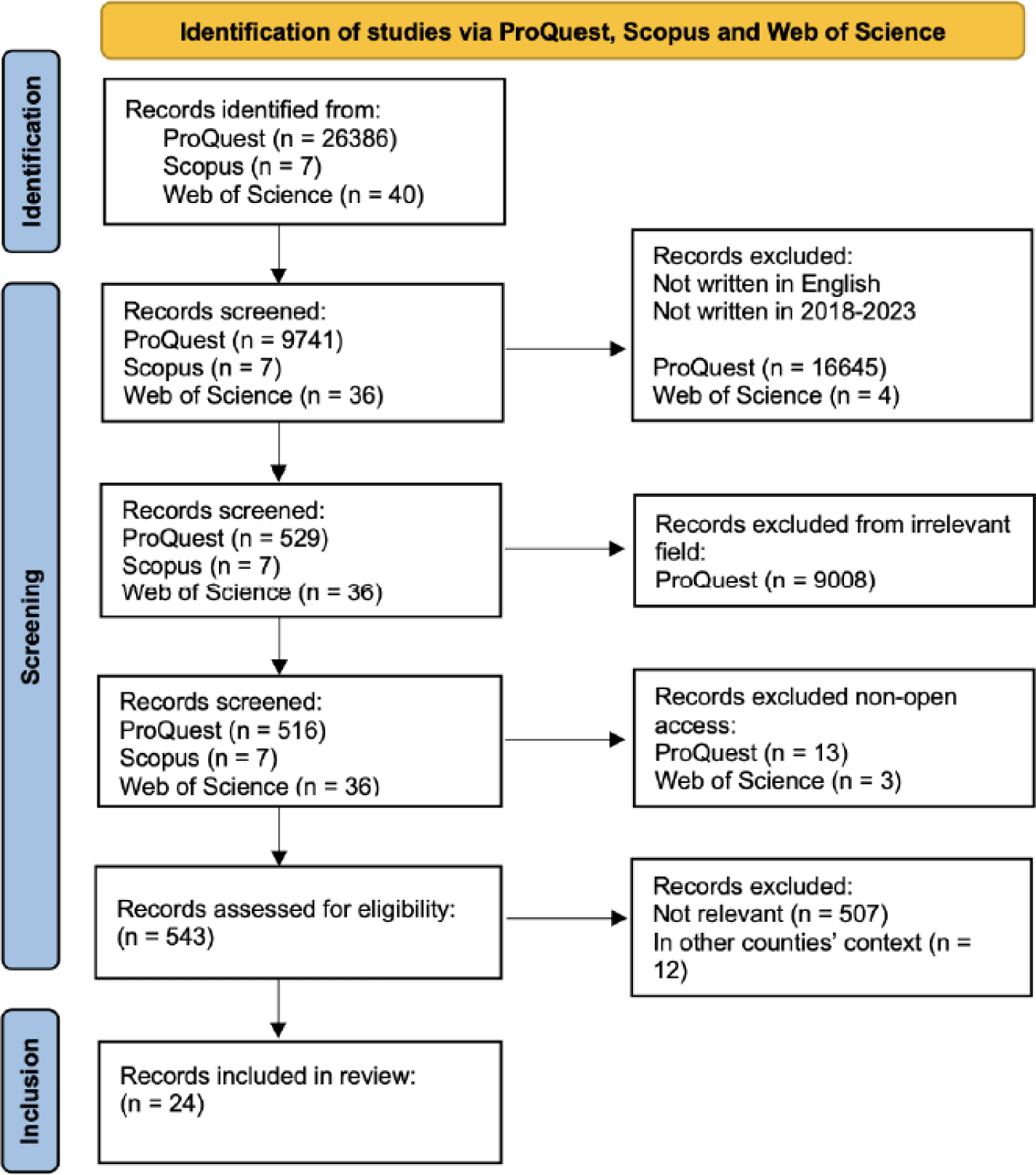
In this study, systematic review is used to analyze the accessed literatures. Because this paper wants to include multiple perspectives, and because of the positioning of the articles on the 1.5-degree lifestyle in Japan, it is impractical to obtain a large number of articles with the same perspective, so a meta-analysis approach is adopted. This article reviewed the selected articles by classification and summarized the discussion from four perspectives, and explored the feasibility and difficulties of living a 1.5-degree lifestyle in Japan from these four perspectives. In this way, some reflections were made after the data analysis and some thoughts and suggestions were made.
Results and Discussion
The selected articles have been intensively read and classified. It is divided into three categories, starting with the public (will of the people), government (governance and policy) and other. As the literature on 1.5-degree lifestyles is very limited, articles mentioning the four directions are marked separately. The following table was designed and complied by the authors and clearly shows the emphasis and summary of the general idea of each article (Table 1).
| Sector | Emphasis | Summary | Perspective incl. | Author | Year | Ref. |
|---|---|---|---|---|---|---|
| Public | Behavior change,citizen engagement,carbon footprints | The study conducts 2 workshop and follow up with a 2-week household experiments in 4 cities in Japan, with 84 participants. The study recorded the implementation of 1.5-degree lifestyles in each participant based on the experimental feedback, and provide an analysis on the challenges and opportunities for implementing 1.5-degree lifestyles household practices. | Urban, age, gender, ICT | Liu & Yamabe-Ledoux | 2023 | [12] |
| Systemic changes,citizen engagement, carbon footprints | The study presents and accesses 3 approaches of using carbon footprints with different purposes, time frame, and design of participants’ discussion to promote citizen engagement with the 1.5-degree lifestyles. The study identifies the benefits and limitations of the 3 strategies, and explores the component of citizens engagement of certain ideas and the behavior changes, also explores the possibility of policy making (strategy design) to determine actions. | Urban, ICT | Watabe & Yamabe-Ledoux | 2023 | [13] | |
| Urban lifestyle change, carbon footprints,household consumption | The study analyzed 52 Japanese cities (65 options for change in consumption, transportation, housing, food, etc.) to explore ways to reduce the carbon footprint through lifestyle changes. The study claims to select the most effective strategies based on the local situation, and calls for the establishment of clear targets to promote consumption-oriented mitigation policies and stakeholder action to address the climate impacts of urban consumption. | Urban | Koide et al. | 2021 | [34] | |
| Carbon footprints,climate mitigation,sustainable lifestyles,household consumption | This study introduces an approach for assessing lifestyle carbon footprint and lifestyle change options aimed at achieving the 1.5-degree goal through participatory stakeholder studies. The study states the gaps between current lifestyles carbon footprints and the 1.5-degree goal, and needs a solid 60% to 80% carbon footprints reduction to achieving the goal. | Urban | Koide et al. | 2021 | [35] | |
| Sustainable consumption,lifestyles, climate change | This article reviews the political, economic, technological and societal structural factors identified in the literature as influencing the sustainability of consumption and lifestyles compatible with the 1.5-degree target. | - | Hirth et al. | 2023 | [36] | |
| Climate change,social media,soft power public perceptions | This study focuses on social media and explores the role of social media as a soft power tool in influencing people’s awareness and participation in climate change. The study states there is a clear link between social media and changes in public perception, and public opinion has the potential to influence political decision-making. | ICT | Mavrodieva et al. | 2019 | [37] | |
| Carbon footprint, household consumption, lifestyles | This study uses multiple regression analysis and exploratory factor analysis to explore the lifestyle factors of high-carbon households based on researching 47,000 Japanese households’ carbon footprints. The gaps between current footprints and mid- to long-term de-carbonization targets are examined in the study. | Gender, age | Koide et al. | 2019 | [38] | |
| Household carbon footprint, lifestyle,regression analysis | This paper examines approximately 42,000 consumer expenditures, linked to regional input-output in Japan, to accurately estimate the magnitude of household carbon footprints reductions associated with individual lifestyle choices and socioeconomic factors. This study uses regression models to estimate household carbon footprints. | - | Shigetomi et al. | 2021 | [39] | |
| Public | Urban household,carbon footprint,emission reduction | The study presents the carbon footprint of household consumption behavior in 11 major metropolitan cities in Japan, and finds household carbon footprint is linked to time-spent. | Urban | Huang et al. | 2023 | [40] |
| Climate change adaptation and mitigation,gender equality,policy | This study takes a gender perspective and discusses how gender equality and women’s rights perspectives can be incorporated into climate change policies at international and national levels and in different parts of the world. The study suggests the need for more effective gender and climate adaptation and mitigation strategies. | Gender, rural | Huyer et al. | 2020 | [16] | |
| Gov | Behavior change, governance | The article reviews the ‘behavior’ change across several scales: behavioral economics, psychology, sociology and social practice, and political economy, and demonstrates how these approaches highlight different drivers of behavior change, which in turn leads them to create different policies to reach the 1.5-degree goal. | Urban and rural | Newell et al. | 2021 | [41] |
| Climate change policy, socioeconomic scenarios | The study introduces and examines six interventions and determines through three indicators (scenario assumptions; endogenous outcomes from the main REMIND–MAgPIE framework; results from downstream models.) that the last two are effective for inclusive implementation and contribute to progress towards the UN 2030 Agenda goals for climate (achieving the1.5-degree goal) and SDGs. | Urban and rural | Soergel et al. | 2021 | [42] | |
| Behavior change,lifestyle transformation,mitigation pathways | The study reviews the system policies and mitigation strategies (common types of lifestyle changes) by using two models (integrated assessment and energy-system models) and finds that modal shift to public and active transport, shared mobility and eco-driving would have the greatest impact in the transport sector. In the household sector, measures to reduce demand for space and hot water and the circular economy were the most effective practices. | Urban | Andreou et al. | 2022 | [43] | |
| Climate mitigation policies lifestyle, behavior | This article reviews 78 studies on social and political dimensions of large-scale greenhouse gas removal (GGR), and suggests 2 insight: Six dimensions of GGR’s viability (economics and incentives; innovation; societal engagement; governance; complexity and uncertainty; ethics, equity and justice.), and 3 frameworks to build biomass energy with carbon capture and storage (BECCS) and afforestation/reforestation (AR) and their feasibility. | ICT | Waller et al. | 2020 | [44] | |
| Climate mitigation policy, achieving 1.5°C goal | The study believes the available evidence does not yet show that the world is seriously committed to achieving the 1.5-degree target, and the key to achieving this goal lies in improving political, technological and social systems. | ICT | Matthews & Wynes | 2022 | [45] | |
| Emission reduction policy, SDGs,integrated assessment modeling | This study introduces a set of policies (direct sector-level regulation, early mitigation actions, and lifestyle changes) in the integrated energy-economic-land use model system REMIND-MAgPIE and examines the impact of these policies on non-climate sustainability issues when average warming is held to below 2 or 1.5-degree. | - | Bertram et al. | 2018 | [46] | |
| Gov | Net-zero emission,climate change mitigation | This study based on decomposition analysis to examine the important contributions to changes in greenhouse gas emissions in different scenarios (SSP2 baseline, 1.5-degree renewable scenario and 1.5-degree lifestyle scenario). | - | Chen et al. | 2021 | [47] |
| Climate change mitigation,sectoral mitigation,energy scenarios | The study uses 6 assessment models to reveal the challenges of decarbonization in the energy system. The study finds that Japan’s emission reduction scenario comes with high marginal emission reduction costs. | Urban and rural,age | Sugiyama et al. | 2019 | [48] | |
| Greenhouse gas emissions,household consumption,city-level estimation,decarbonization policy | The study provides a disaggregated estimate of indirect and direct urban greenhouse gas emissions from household consumption in 51 major Japanese cities in 2011. The study examines the relationship between household sector emissions and the socio-economic, demographic and climatic characteristics of Japanese cities using regression analysis. | Urban,age | Jiang et al. | 2020 | [49] | |
| Other | Climate-resource nexus, material efficiency | This study introduces models to assess the potential impact of the linkages between climate change mitigation and material efficiency. The study claims the renewable energy with 0 emissions likely feasible, but the key is in economics (investment and technological development) and local circumstances. | - | Neumann & Hirschnitz-Garbers | 2022 | [50] |
| Lifestyle changes, buildings’ energy demand | This study introduces the Energy demand generator (EDGE) for global energy demand for buildings, and proposes 3 energy consumption profiles that can be adopted by individuals in rich areas. The paper shows that profound changes in energy practices will lead to significant reductions in energy demand, if a set of policies is described that will enable these changes to be put in place. | Urban | Levesque et al. | 2019 | [51] | |
| Socioeconomic factors, 1.5-degree goal, computable general equilibrium model | This study uses the Asia-Pacific Integrated Model/Computable General Equilibrium (AIM/CGE) to assess the role of socioeconomic factors, in changing mitigation costs and achieving the 1.5-degree and 2-degree targets. The study finds technological progress of low-carbon energy supply technology is the most important factor to reduce emission reduction costs. | - | Liu et al. | 2018 | [52] | |
| SDGs,climate change mitigation,integrated assessment model | The study presents the SDG impacts associated with carbon emission reduction. The study combines the Asia-Pacific Integrated Model modelling framework with other modelling tools for scenario quantification to assess the impacts of climate change mitigation and other social and environmental changes on the achievement of SDGs. | - | Fujimori et al. | 2020 | [53] | |
| Climate change anxiety,pro-environmental behavior,mental health | The study is a multi-national study covering four countries, investigating climate change anxiety in four of the world’s top emitters: China, India, Japan, and the U.S. The study recruited 4000 participants to complete Climate Change Anxiety Scale surveys. | Age | Tam et al. | 2023 | [54] |
Several studies conduct models to study current household carbon footprints [12,34,35,38–40,49] to find the correlation between household carbon footprints and various other sectors, or to find certain rules among mitigation strategies. Mitigation strategies are also used to test which strategies can be better implemented and more efficient to achieve the 1.5-degree target [42,47,53]. A study shows that Japan will need to reduce its carbon footprint by at least 56 percent to meet the 1.5-degree goal [34].
In general, most of carbon footprint comes from housing, mobility, food [38,40] and personal care [40]. To be specific, the following factors are the biggest contribute to a high carbon footprint, meanwhile, are the biggest challenges for people to practice 1.5-degree lifestyles: living in a large house, living far from the workplace, living in cities, long-distance commuting, and long-distance travel [12,35,47]. Therefore, support measures such as policy and financial support are needed leading to public’s behavioral change [12,35], as the shift to a less carbon-intensive lifestyle for individuals is largely limited to the consumption of goods and services [36]. Based on that, scholars suggest that it cannot simply rely on behavioral change by citizens, but on systemic change, inviting government, business, Non-Governmental Organization (NGOs) and citizens to work together to create 1.5 lifestyles [12,45].
None of the selected studies specifically focused on urban and rural areas, but some of them include a certain degree of urban perspective. A study suggests lower propensity for carbon footprints in the suburbs than in the city [12]. In other words, estimated emissions are much higher in rich areas than in poor areas [7,41–43]. Some indirect evidence for rural carbon emissions is that households with fewer electronics have a smaller household carbon footprint [39].
It is precisely because of the large carbon emissions of cities that the likelihood of reducing carbon emissions through lifestyle changes is relatively greater, but also full of challenges. Andreou et al. [43] believe lifestyle changes in transport modes are more effective in reducing energy demand and carbon emissions, especially in developed regions. However, as mentioned above, urban living is a major challenge in terms of carbon emissions due to long commutes and long distances between homes and workplaces. Some scholars have suggested updating technology and developing renewable energy to create the conditions for emission reduction [52]. Some scholars are concerned that resources and policies will be tilted towards the rich, and called for rural areas and marginalized populations to also be taken into account [41].
The impact of climate change on women is an important but overlooked issue. However, scholars have not stopped researching gendered perspectives, although the numbers are small. Only three of the selected articles have an inclusive gender perspective. Koide et al.’s [38] study states female consume less carbon. However, Jiang et al. [49] argues that there is no significant relationship between gender and greenhouse gas emission. Regarding 1.5-degree lifestyles practices, females are more proactive to advance their behavior to 1.5-degree lifestyles [12,55].
In the Japanese context, Japan was ranked 125th in the world according to the Global Gender Gap Report of measuring gender equality [56], which was the lowest among the developed countries. The share of housework is influenced by stereotypes under deeply patriarchal social systems [57], and the historical inertia of women’s long exclusion from workplace [58]. Women are disadvantaged in society and are particularly vulnerable to natural disasters [22], including climate change [17]. Therefore, combined studies can observe that women have great potential for reducing carbon emissions and living at 1.5-degree lifestyles.
Five of the selected studies have an inclusive age perspective. Koide et al.’s [34] study shows older people consume less carbon than other age group. Meanwhile, older population, have spare money and time are more likely to enhance their 1.5-degree lifestyles’ daily practice [12,55]. First, food category, there is a positive correlation between the proportion of people over 65 and the greenhouse gas emissions from per capita food consumption [49], and individuals aged 50 years and older have a higher carbon footprint than individuals aged 20–40 years [12]. Second, mobility category, older people living in densely populated cities have lower carbon footprints, presumably because of convenient public transportation [49].
The number of children in a household is a positive driver of household carbon emissions [39]. Also, households with fewer electronics have a smaller household carbon footprint [39]. Besides, most elderly do not rely on the Internet, and barely use the Internet [12]. Therefore, it can be inferred that children consume higher carbon emissions and rely on electronic products to lead to a high carbon footprint.
Five of the studies in the selection have an inclusive age perspective. Among them, only 1 study focuses entirely on ICT (social media) [37]. Although the number of studies that explicitly address ICT in the context of 1.5-degree lifestyles is limited, this perspective is retained on purpose because it is very important for the future. Most of the studies argue citizen do not have enough knowledge on how and why to take concrete sustainable action is a common barrier [12]. This indicates a low level of knowledge and awareness about climate change mitigation or 1.5-degree lifestyles. Therefore, it becomes a challenge for people to practice 1.5-degree lifestyles.
The elderly rarely use electronic products [12]. On the one hand, they exercise 1.5-degree lifestyle, but on the other hand, they lack one of the ways to obtain more information. Mavrodieva et al.’s [37] argues there is a clear link between social media and changes in public perception, and public opinion has the potential to influence political decision-making. Therefore, it is concluding that ICT as a communication tool could be improved. While referring to the development of science and technology, techno-economic and other frameworks to face climate mitigation [44], the development of information technology also needs to be considered.
Chen et al. [47] argues the most effective way to reduce carbon emissions is through lifestyle changes and renewable energy, and the final energy consumption can be immediately reduced [46]. Numerous studies have pointed to the need to create environments where people can practice 1.5-degree lifestyles without affecting their everyday lives. Some study states policies are needed to support the process of achieving the 1.5-degree target [50,51]. However, more studies have identified the need for social reform to integrate sustainable institutions [41], shift power, create new regulatory pathways and political spaces for greater citizen participation in decision-making to enable more radical social change and more favorable daily practice in behavior change actions [34–36].
Reflection
The study proposed some reflection of recommendation based on an Education Technology Governance Framework proposed by Australian National University [59] to enhance 1.5-degree lifestyles. Creating an environment where people are more willing to change their lifestyles is part of making the 1.5-degree lifestyle more inclusive. Environmental education and early exposure to the knowledge of 1.5-degree lifestyles from elementary school can build people’s awareness of low-carbon life. Increase access to education on climate change and 1.5-degree lifestyles. Moreover, increase the promotion of 1.5-degree lifestyles by institutions, local communities, and the media to raise public awareness. Although there is some inequality in educational resources, urban residents and males have higher educational resources than rural residents and females, which requires government support and will be discussed later. As the study shows Women are more proactive in changing their behavior to move towards a 1.5-degree lifestyle [12,55], women are more accepting of lifestyle changes, and women are more likely to be the main drivers of a 15-degree lifestyle. In this sense, environmental education is significant for all genders, as women may be more receptive and proactive, and men should not be excluded.
Although Japan’s emission reduction scenario comes with high marginal emission reduction costs [48], and IPCC [6] confirms that energy demand reduction is highly effective, the technological aspect is an important part that can provide guarantees and remove barriers. First, the development of renewable energy technologies to transform energy systems that are more environmentally friendly and contribute more to reducing carbon emissions. Second, the development of ICT to reduce the technological and digital divide. For example, developing software or websites to provide a communication platform where the public can get information on 1.5-degree lifestyles and government can receive feedback on personal perception and practices. Third, promote digital technologies such as big data. The development of science and technology plays a major role in encouraging both urban and rural residents to adopt 1.5-degree lifestyles. The carbon footprint of urban residents is large, and the use of renewable technologies can greatly reduce the carbon footprint of urban residents in terms of ‘housing’ and ‘mobility’. For rural residents, scientific and technological development can narrow the gap between urban and rural areas and make it easier for residents to live a green lifestyle.
Effective governance is essential for translating individual willingness into sustained behavioral change. First, local governments need to strictly regulate existing policies [60], such as waste sorting, which can help reduce the carbon footprint of ‘housing’. Second, the government may need to improve social welfare to enable good conditions for citizens to live a 1.5-degree lifestyle [61]. For example, to achieve an equitable distribution of resources, the distribution of resources in rural areas should be ensured. Policies should guarantee gender equality and protect women’s rights and interests [62]. National environmental strategies highlight the importance of ensuring that renewable energy development and infrastructure investments generate local economic and social benefits, particularly in rural regions [63]. Such approaches align with findings that unequal access to infrastructure and public services can undermine the feasibility of low-carbon lifestyles. In addition, the government can develop policies to ensure that the daily needs of the public are met in order to support the practice of 1.5-degree lifestyles. Finally, the government shall strengthen two-way communication. In particular, it is necessary to increase women’s participation in decision-making processes related to climate and environmental issues [64].
Conclusion
The study aims to review the current climate change mitigation practices of 1.5-degree lifestyles in Japan at the beginning. However, limited studies have been found. From the existing evidence, first, although most people are aware of the issue of climate change, and even have climate change anxiety [54], they lack knowledge about how to contribute to it. ICT can play a good role in this process, but the current utilization is far from enough. Second, women’s issues have not been highlighted seriously in climate change. Generally speaking, developed countries usually finished its transition from the pursuit of economic development to the stage of sustainable development (economy growth, social equality and environmental protection) [65,66], but Japan’s performance in the pursuit of social equality in sustainable development is unfortunately not outstanding. Third, most of the discussion focuses on urban areas, while rural areas are rarely mentioned. As Newell et al. said [41], it is necessary to pay attention to rural areas to avoid exacerbating resource divide. Fourth, As Japan is an aging country, it is also important for the elderly to engage in climate change mitigation. In addition, the contrast between old people and young people is also worth discussing. This can be helpful to the social stratification of age class division, and it is also conducive to the formulation of more targeted and helpful policies or strategies in the future.
Based on existing climate change mitigation actions and policies, and taking into account the findings, it is essential to use the Education Technology Governance (ETG) framework to summarize the potential actions that can be taken. It is relatively important for the policy suggestion that enable to improve the 1.5-degree lifestyle practices of citizens.
Shallow structural levels can hinder or facilitate lifestyle changes towards sustainable development, but the importance of deep-rooted barriers and underlying power relations in social structures has become part of the debate about the failures of climate governance in recent decades [36]. It is therefore important to understand how citizens perceive and practice the 1.5-degree lifestyles and how they respond to mitigation policies. This is conducive to better advocacy programs and policy development, and even social change.
Although the ICT perspective is included as one of the key analytical dimensions, the available evidence is more limited than that for other perspectives. Only a small number of studies explicitly examine the role of ICT in influencing 1.5-degree lifestyles, which limits the depth and generalizability of the conclusions that can be drawn in this area. Consequently, findings related to ICT should be interpreted as exploratory rather than definitive, reflecting emerging trends rather than established causal relationships. This limitation also highlights a critical research gap, emphasizing the need for further empirical investigation into how digital technologies influence 1.5-degree lifestyles.


